
News
Zelensky Proposes NATO Membership as Path to Peace, Raises Theoretical Scenario

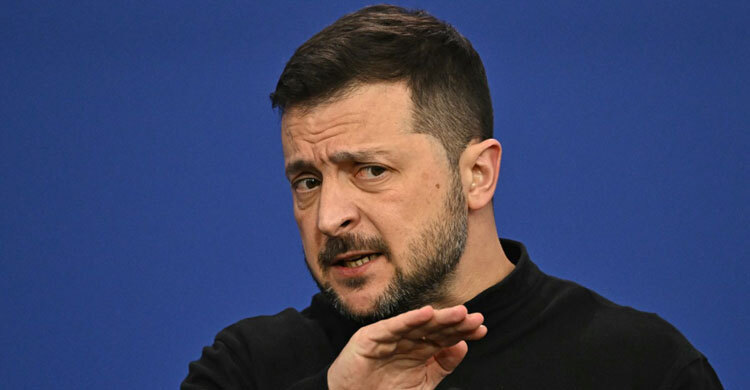
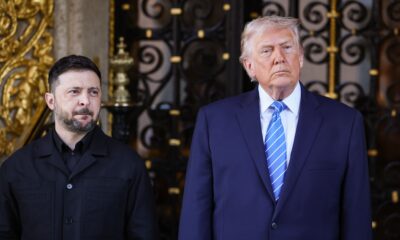
Ukrainian President Volodymyr Zelensky has suggested that NATO membership for unoccupied Ukraine could bring an end to the active phase of the war with Russia. Speaking in an interview with Sky News, Zelensky proposed that Kyiv could attempt to negotiate the return of Russian-occupied territories diplomatically, provided NATO guarantees Ukraine’s security.
Zelensky emphasized that such a scenario is hypothetical, as no formal offer from NATO has been made. He argued that NATO membership must be extended to the entirety of Ukraine, including Russian-occupied areas, within internationally recognized borders. Accepting membership for only parts of Ukraine, he said, would imply recognition of Russian control over the occupied regions.
“You can’t give [an] invitation to just one part of a country,” Zelensky stated. “Because thus, you would recognize that Ukraine is only that territory of Ukraine, and the other one is Russia.”
The Ukrainian leader underscored the importance of NATO membership as the only viable security guarantee against future Russian aggression. While ceasefires have been proposed, Zelensky argued they lack mechanisms to prevent renewed attacks. He expressed confidence that the war could conclude within the next year if Ukraine’s allies maintain firm support.
Zelensky’s remarks come amid reports of behind-the-scenes discussions among Western nations regarding a “West German model,” where NATO membership is extended to a divided country. However, no formal proposals have been presented to Ukraine, and the prospect remains uncertain.
While Zelensky’s proposal underscores Ukraine’s desire for a secure and lasting resolution, the feasibility of integrating a war-torn and divided Ukraine into NATO remains a significant challenge.






Plans for renewed negotiations between the United States and Iran remain uncertain, as Tehran accuses both Washington and Israel of violating the terms of the fragile ceasefire.
Iranian officials said recent developments have undermined confidence in the diplomatic process. Mohammad Bagher Ghalibaf, Tehran’s chief negotiator with the U.S., stated that it was “not possible” to reopen the Strait of Hormuz under current conditions, citing alleged ceasefire breaches.
Iranian President Masoud Pezeshkian echoed those concerns, saying that U.S. naval actions, threats, and what he described as a “breach of commitments” were major obstacles to restarting talks.
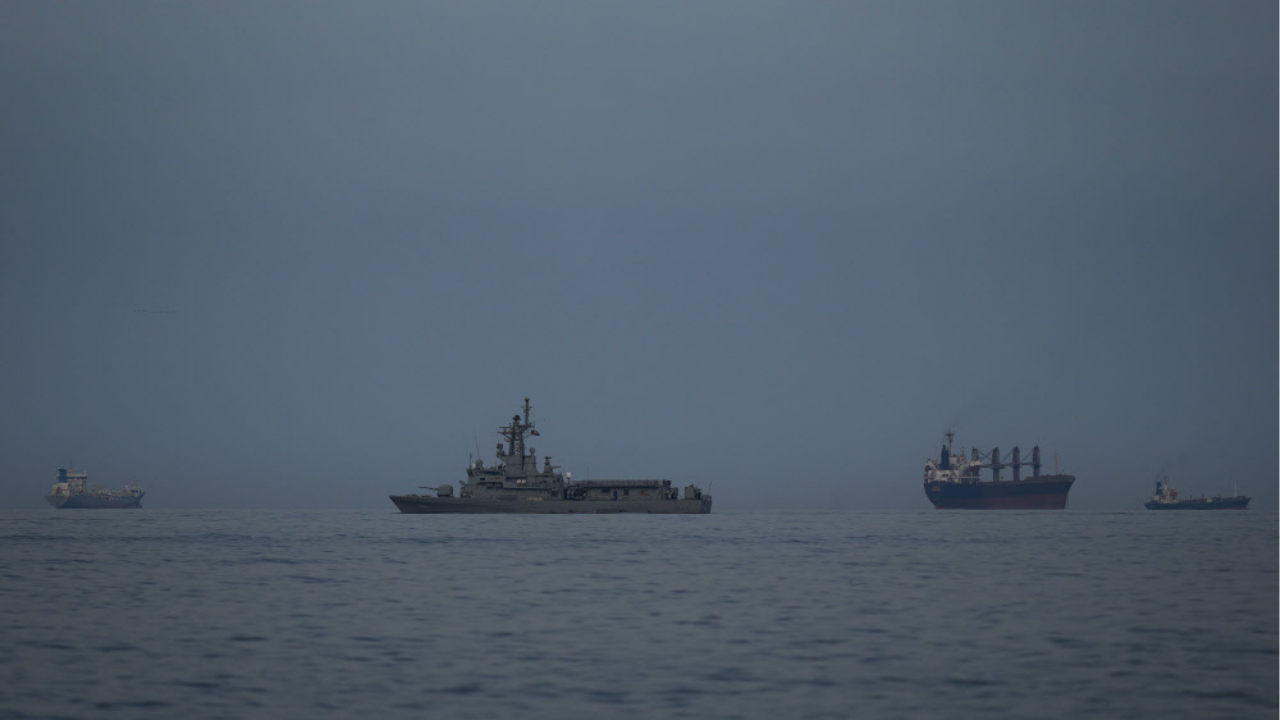
The tensions follow an incident earlier on Wednesday in which Iranian forces targeted three cargo vessels in the Strait. Two ships were reportedly seized for inspection by the Islamic Revolutionary Guard Corps navy, further raising fears about the security of one of the world’s most critical maritime corridors.
Despite the escalation, Donald Trump indicated that a resumption of talks could still be possible, suggesting negotiations might restart as early as Friday.
Elsewhere in the region, diplomatic efforts continue between Israel and Lebanon. Lebanese President Joseph Aoun said discussions are underway to extend the current ceasefire deadline.
However, the situation on the ground remains volatile. Aoun also condemned the killing of a second French peacekeeper after a United Nations patrol was struck over the weekend. Emmanuel Macron blamed the Iran-backed group Hezbollah for the attack, an allegation the group has denied.
Further violence was reported in southern Lebanon, where two people were killed in a strike on a vehicle. The Israel Defense Forces said it carried out the attack, claiming the vehicle posed a threat to its troops.
The European Union has moved to approve a €90bn (£78bn) financial package for Ukraine after the resumption of Russian oil flows through a key pipeline ended months of political deadlock.
Ukrainian officials confirmed that oil transit had restarted through the Druzhba pipeline into Hungary and Slovakia, clearing a major obstacle that had delayed the funding.
Shortly after the restart, EU ambassadors meeting in Brussels gave preliminary approval to the loan, alongside a new package of sanctions targeting Russia. Final approval is expected to follow shortly.
The funding had originally been agreed in December but was blocked in February by Hungarian Prime Minister Viktor Orbán, who objected after oil supplies were disrupted due to damage from Russian strikes inside Ukraine.
Orbán had insisted that deliveries resume before Hungary would lift its veto. His recent election defeat has also helped ease tensions, with incoming leader Péter Magyar signalling a desire to improve relations with Brussels.
EU foreign policy chief Kaja Kallas said the loan was crucial for Ukraine and demonstrated that Russia could not outlast Kyiv economically.
Ukrainian Deputy Prime Minister Taras Kachka described the funding as “a matter of life and death,” noting that around two-thirds would be directed toward defence, with the remainder supporting broader economic needs.
Energy operators said pressure was being restored to the pipeline, with oil expected to begin reaching Slovakia and Hungary within hours. Hungarian energy company MOL Group said it anticipated receiving supplies by Thursday.
The disruption had significantly strained energy supplies in the region, with Hungary and Slovakia heavily reliant on pipeline imports. Orbán had previously accused Ukraine of imposing an “oil blockade,” a claim Kyiv denied, pointing instead to infrastructure damage caused by ongoing conflict.
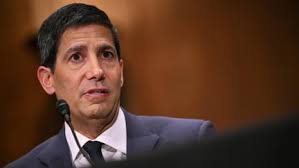
Former Federal Reserve official Kevin Warsh has pushed back against concerns over his independence, telling lawmakers he would not act as a “sock puppet” for Donald Trump if confirmed as chair of the Federal Reserve.
Appearing before a Senate committee, Warsh faced questions about his conversations with Trump, who has repeatedly called for interest rate cuts. Democratic senators expressed concern that the nominee might align monetary policy too closely with the president’s preferences.
Warsh said he had never advised Trump on where interest rates should be set, arguing that policymakers should avoid publicly pre-judging such decisions.
“That’s unhelpful,” he told the hearing, adding that central bankers should remain flexible and responsive to incoming economic data rather than committing to positions in advance.
He also denied striking any agreement with Trump to lower rates if confirmed, stressing the importance of maintaining the Fed’s independence.
Despite inflation remaining above the Fed’s long-term target in recent years, Warsh signalled a willingness to reassess how inflation is measured, saying he had limited confidence in traditional indicators. His comments suggested that elevated inflation alone might not necessarily prevent rate cuts under his leadership.
In his opening remarks, Warsh highlighted the cost of living as a central concern for Americans, noting it may be the most pressing economic issue facing the country.
While he described the broader economy as being close to full employment, Warsh acknowledged that many Americans continue to feel the strain of rising prices.
Responding to questions from Andy Kim, he said policymakers should not dismiss public perceptions of economic hardship.
“Central bankers should not be second-guessing what people feel and see in their own lives,” Warsh said.


Manchester City Go Top as Burnley Relegated After Turf Moor Defeat

Iran says reopening Strait of Hormuz ‘impossible’ amid US blockade

EU Approves €90bn Ukraine Loan as Oil Pipeline Restart Breaks Deadlock


-

 General6 days ago
Israel-Lebanon talks will happen today as Leaders Signal Possible Direct Contact
-

 Entertainment6 days ago
‘Cool Hand Luke’ Actress Joy Harmon Dies Aged 87
-
 News5 days ago
Oil Prices Tumble as Iran Reopens Strait of Hormuz During Ceasefire
-
 News5 days ago
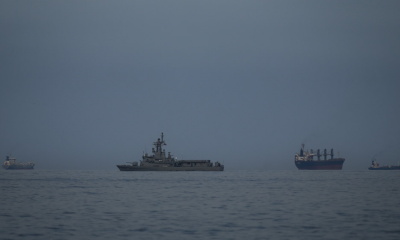
Strait of Hormuz ‘completely open’ to commercial ships
-
 News6 days ago
South African opposition figure Malema sentenced to five years in prison
-

 Entertainment5 days ago
US Singer D4vd Arrested on suspicion Over Teen Girl’s Death
-

 Entertainment1 week ago
South Korea Jails American YouTuber Johnny Somali for Public Nuisance
-
 Business1 week ago
IMF Warns Prolonged Iran Conflict Could Push Global Economy Toward Recession