
News
Pakistan Declares ‘Open War’ as Cross-Border Strikes Escalate Tensions with Afghanistan

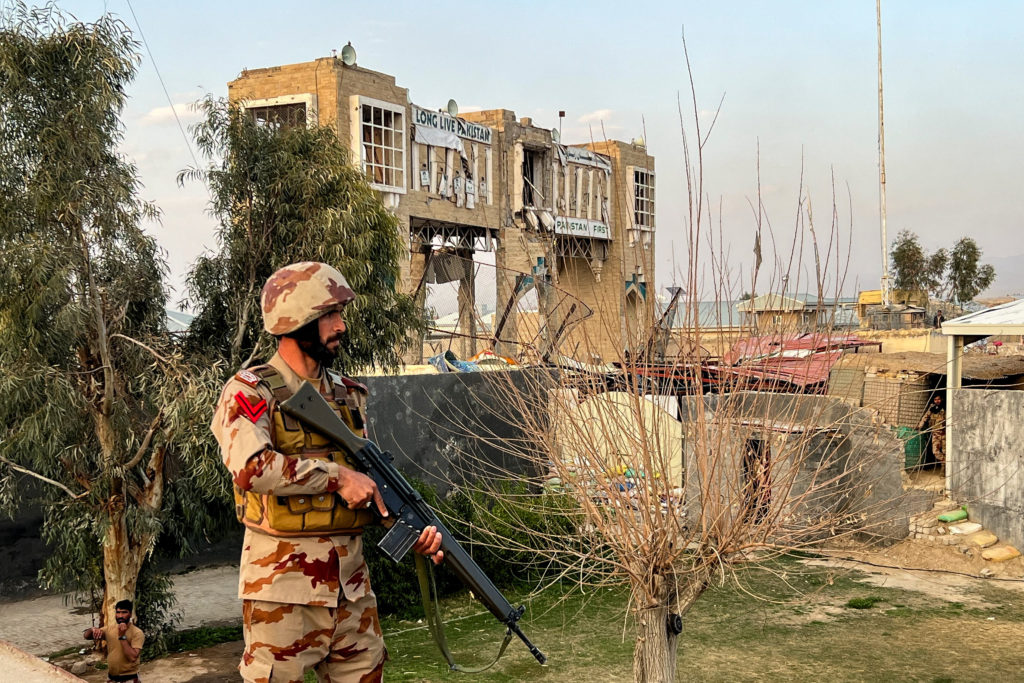
A sharp escalation in hostilities has pushed relations between Pakistan and Afghanistan into a dangerous new phase, with Pakistan’s defence minister stating the country is now in what he described as an “open war” following a series of cross-border strikes.
Defence Minister Khawaja Muhammad Asif made the declaration after Islamabad launched airstrikes targeting locations in Kabul as part of a broader military response.
The strikes came shortly after the Taliban announced a major offensive against Pakistani military posts along the border late on Thursday night.
The renewed clashes mark the most serious deterioration in relations since the fragile ceasefire agreed in October. Previous negotiations aimed at ending hostilities broke down last year, with both sides accusing each other of failing to engage constructively.
The Taliban said it had initiated what it called a “retaliatory operation” on Thursday evening. Pakistan responded swiftly, accusing Afghan forces of opening unprovoked fire across multiple locations in the north-western province of Khyber Pakhtunkhwa.
Islamabad described its military response as “immediate and effective,” followed by air raids in the early hours of Friday targeting sites in Kabul, Kandahar and Paktika — all near the rugged 2,600km border shared by the two nations.
Pakistan’s military spokesman Ahmed Sharif Chaudhry said 22 Afghan military targets were struck, claiming more than 200 Taliban fighters were killed. He also reported the loss of at least 12 Pakistani soldiers.
However, Taliban spokesman Zabihullah Mujahid disputed those figures, stating that 13 fighters had been killed and 22 injured, while also reporting civilian casualties.
In a brief post later removed from social media, Mujahid said Afghan forces had launched retaliatory strikes on Pakistani military positions in Kandahar and Helmand. Taliban sources indicated these attacks involved drones launched from Afghan territory.
Pakistan’s Information Minister Atta Tarar said the country’s military successfully intercepted Afghan drones targeting Swabi, Nowshera and Abbottabad — the latter home to Pakistan’s military academy.





Israel has instructed residents in several southern suburbs of Beirut to evacuate, citing plans to carry out further strikes targeting what it describes as Hezbollah “military infrastructure.”
According to the Israel Defense Forces, the directive was communicated by spokesperson Avichay Adraee, who stated that the evacuation is intended to minimize civilian harm. He emphasized that Israel “does not intend to harm you,” urging residents to leave the affected areas immediately as a precaution.
The evacuation order applies to multiple neighborhoods in the southern part of the Lebanese capital, including Haret Hreik, Ghobeiry, Al-Lilaki, Hadath, Borj el-Barajneh, Tahwitat al-Ghadir, Shiyyah, and Al-Janah—areas known to be densely populated.
The announcement signals a potential escalation in military activity, with heightened concerns for civilian safety as tensions continue in the region.

Greece has announced plans to ban social media access for children under the age of 15, in a move aimed at addressing growing concerns over the impact of online platforms on young people’s mental health.
Prime Minister Kyriakos Mitsotakis said the restriction, set to take effect from January next year, is intended to tackle rising levels of anxiety, sleep disruption and what he described as the “addictive design” of social media applications.
In a video message shared on TikTok, Mitsotakis said many young people feel overwhelmed by constant comparisons and pressure to remain online, while parents have raised concerns about poor sleep and increased anxiety among their children.
He described the planned measure as “difficult but necessary,” stressing that the goal is not to distance young people from technology entirely, but to protect them from harmful digital environments. “The addictive design of certain applications… takes away your innocence and your freedom,” he said.
The move places Greece among a growing number of countries seeking stricter controls on children’s use of social media. Australia recently introduced a law requiring platforms such as TikTok, YouTube and Snapchat to remove accounts held by users under 16 or face heavy fines. Other European nations, including France, Austria and Spain, are also pursuing similar restrictions.
In the United Kingdom, the government has launched a consultation on a potential ban for under-16s, while Ireland and Denmark are considering comparable measures.
However, social media companies have pushed back against blanket bans, arguing they may be difficult to enforce and could inadvertently isolate vulnerable teenagers. Reddit is currently challenging Australia’s law in court.
Mitsotakis also signalled Greece’s intention to pursue action at a broader European level. In a letter to Ursula von der Leyen, he called for a unified EU framework to strengthen protections for minors online.
Proposals include mandatory age verification systems for users under 15, a potential Europe-wide ban for that age group, and requirements for platforms to re-verify users’ ages every six months.
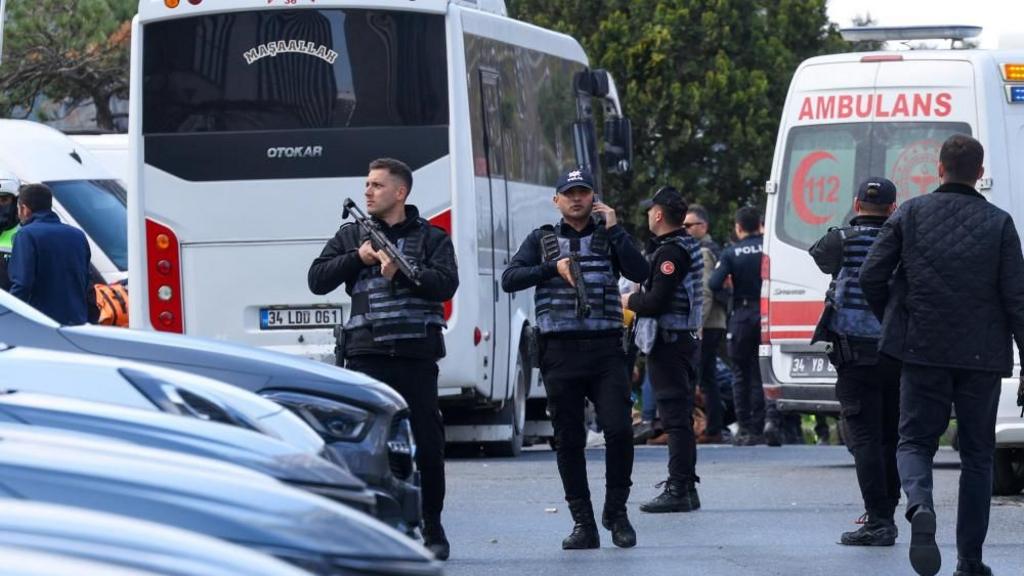
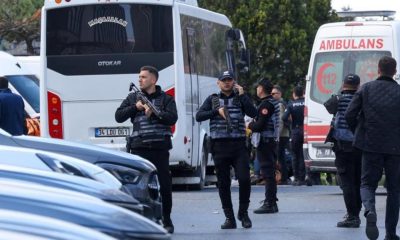
A gunman has been killed and two suspects injured following a shootout near the Israeli consulate in Istanbul, in what Turkish authorities have described as a terrorist attack.
Turkish President Recep Tayyip Erdogan condemned the incident as a “heinous act of terror,” vowing that such attacks would not undermine national security. Interior Minister Mustafa Ciftci confirmed that two police officers were also injured in the exchange of gunfire, though their injuries were not life-threatening.
According to officials, the attackers had travelled to Istanbul from the city of Izmit in a rental car, with two of the suspects identified as brothers. The interior ministry named the deceased gunman as Yunus E.S., stating that he had links to a terrorist organisation “that exploits religion,” a phrase widely understood to refer to the Islamic State group. No organisation has officially claimed responsibility for the attack.
Authorities clarified that only one attacker was killed, correcting earlier reports that suggested two fatalities. The two injured suspects, identified as Onur Ç and Enes Ç, remain in custody as investigations continue.
Officials said the attackers were armed with rifles and pistols and engaged police in a gunfight in broad daylight near the consulate, located in Istanbul’s central Besiktas district. Footage circulating on social media appears to show the moment one of the gunmen was shot by police.
Governor Davut Gul confirmed that no Israeli diplomatic staff were present at the consulate at the time of the incident. The building has reportedly been unoccupied for more than two years amid strained relations between Turkey and Israel over the war in Gaza.
The interior ministry said investigators had uncovered “intensive digital communication” between the suspects and that interrogations of the wounded attackers were ongoing.
“We will not allow the climate of trust in Turkey to be damaged by such vile provocations,” Erdogan said, stressing the government’s determination to maintain stability.


Israel Orders Evacuation in Beirut Suburbs as Safety Warnings Issued Ahead of Planned Strikes

Leicester City Lose Appeal Against Points Deduction

Greece to Ban Social Media Access for Under-15s in Push to Protect Youth


-
 News6 days ago
Netanyahu claims most of Iran’s steel production destroyed as Tehran targets Gulf energy sites
-

 Sports1 week ago
Ghana sack manager Addo Just 72 days before World Cup
-

 Entertainment1 week ago
Céline Dion Announces Comeback Shows After Health Battle: “I’m So Ready for This”
-

 Sports1 week ago
Cyclist killed at Worlds not found for 82 minutes
-
 News1 week ago
Donald Trump to Address Nation on Iran War Amid Uncertainty Over Next Move
-
 News6 days ago
French Court Clears Muslim Gathering in Paris, Upholding Civil Liberties
-
 News4 days ago
Trump Escalates Pressure on Iran With Final Deadline Over Strait of Hormuz
-
 News2 days ago
Gunman Killed in Shootout Near Israeli Consulate in Istanbul, Two Officers Injured