
News
LA Fires Death Toll Rises to 16 as Evacuation Orders Expand and Health Warnings Intensify

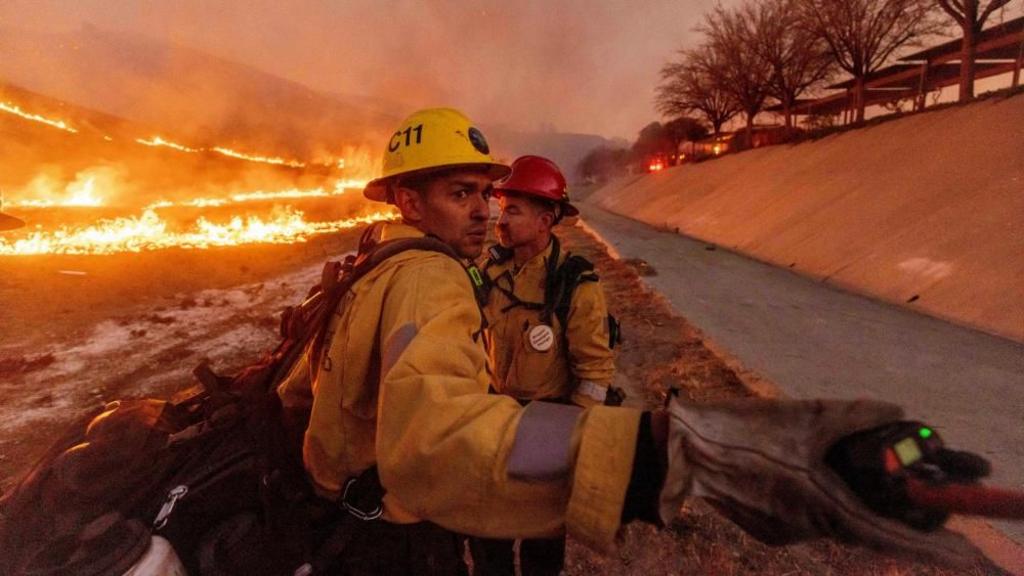
The death toll from the ongoing wildfires in Los Angeles County has risen to 16, as evacuation orders now affect 150,000 residents. The Palisades and Eaton Fires continue to wreak havoc, prompting emergency measures and public health advisories.
According to the California Governor’s Office of Emergency Services (Cal OES), over 700 displaced residents are being sheltered in nine facilities across the county. Evacuation orders remain in effect for areas at immediate risk, while evacuation warnings advise nearby residents to prepare to leave if conditions worsen.
The Kenneth and Hurst Fires have seen progress in containment, allowing authorities to lift evacuation orders and warnings in affected areas.
In addition to evacuation efforts, officials have issued critical health warnings:
- Residents in and around Pacific Palisades have been advised not to consume tap water due to potential fire-related contamination. Bottled water is being distributed at the Westwood Recreation Center and near the Brentwood Country Club.
- The use of power air blowers, including leaf blowers, has been banned countywide to reduce the spread of ash, smoke, and particulates harmful to respiratory health.
- The public health department has issued warnings against swimming, surfing, or entering ocean waters along a 20-mile stretch from Surfrider Beach to Dockweiler State Beach. Officials caution that these waters may pose health risks to those who come into contact with them.
Amid the crisis, officials have warned against looting in evacuated areas and price hikes at hotels housing displaced residents. Authorities are working to ensure safety and fair treatment for those affected by the disaster.
With containment efforts ongoing and weather conditions remaining unpredictable, authorities urge residents to stay informed and adhere to all evacuation and health advisories. Resources, including shelters and bottled water distributions, will continue to support those impacted by one of Los Angeles County’s most devastating wildfire events in recent history.




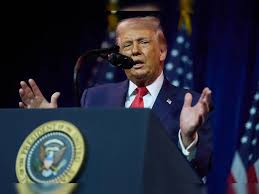
Donald Trump is set to deliver a high-stakes primetime address on the ongoing conflict with Iran, as global audiences await clarity on whether the war is nearing resolution or heading toward further escalation.
The speech comes at a pivotal moment, with the administration signalling that no major announcement may be forthcoming, even as speculation grows about a potential shift in strategy. Trump’s approach—often marked by unpredictability and limited disclosure beyond a close inner circle—has left both allies and adversaries uncertain about the next phase of the conflict.
Domestically, pressure is mounting. Public opinion in the United States has increasingly turned against prolonged military involvement. Recent polling indicates that a significant majority of Americans favour a swift conclusion to the war, even if key military objectives remain unmet.
Economic concerns are also intensifying, particularly with rising fuel prices. Petrol costs have surged past $4 per gallon, complicating a key political narrative for Trump, who previously highlighted lower energy prices as a measure of economic success.
According to Imran Bayoumi of the Atlantic Council, the combination of domestic opposition and economic strain presents a growing political challenge, especially with midterm elections on the horizon.
Trump’s messaging on the conflict’s trajectory has shifted repeatedly. He has moved from calls for Iran’s “unconditional surrender” to suggesting a possible negotiated outcome, and more recently indicated the war could conclude within “two to three weeks.” In a separate statement, he claimed Iran had sought a ceasefire, though he tied any consideration of that request to the reopening of the Strait of Hormuz.
The White House has indicated the address will highlight military achievements, including efforts to weaken Iran’s naval forces, missile systems, and nuclear capabilities.
As the speech approaches, attention remains focused on whether Trump will outline a clear endgame—or continue to keep the path forward deliberately ambiguous.
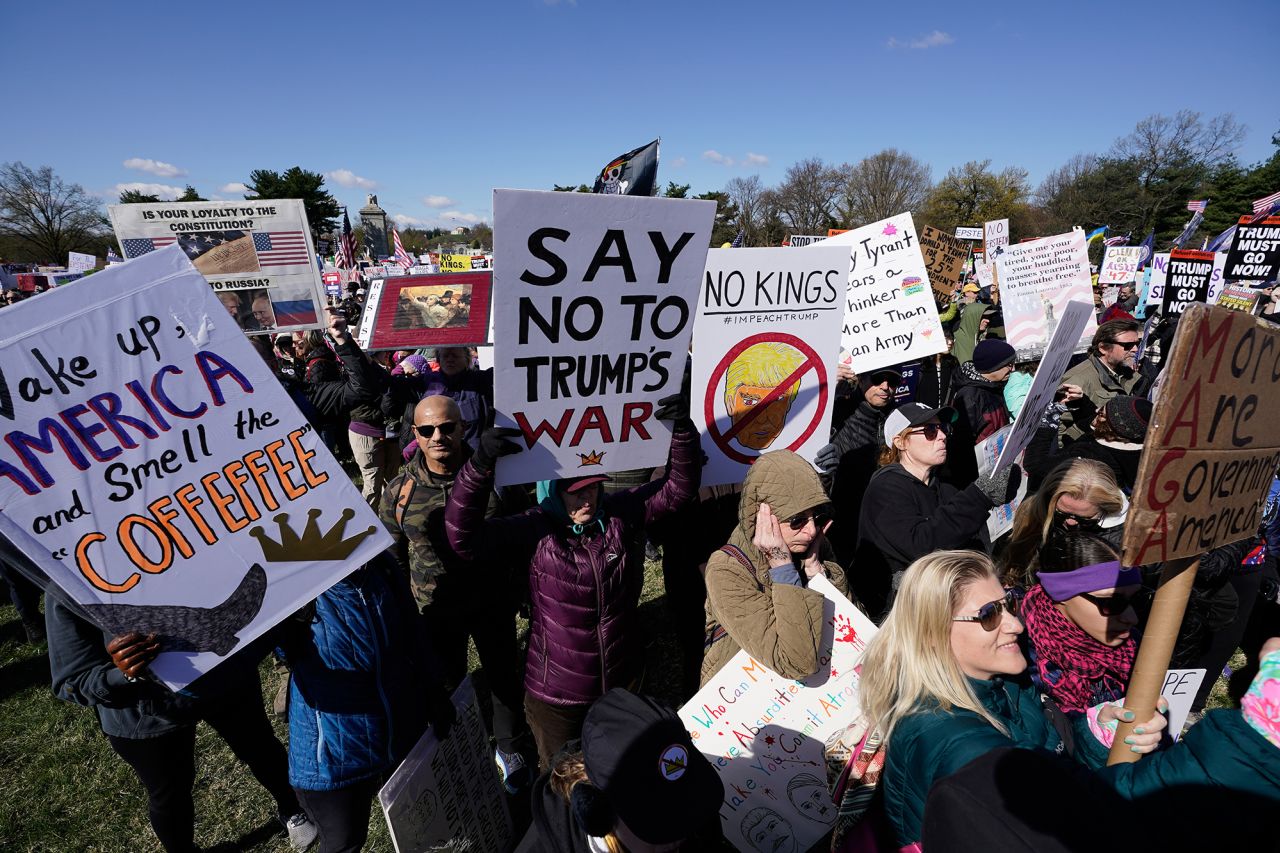
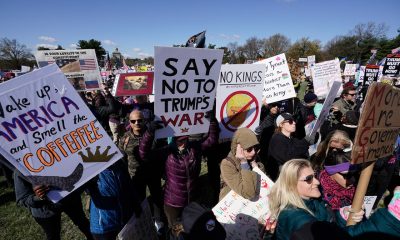
Large-scale “No Kings” protests have erupted across the United States, with demonstrators rallying against policies introduced by President Donald Trump during his current term in office.
Organisers say the demonstrations—taking place in major cities including New York City, Washington, D.C., and Los Angeles—are aimed at opposing issues such as the war involving Iran, stricter federal immigration enforcement, and the rising cost of living.
Crowds have already gathered in Washington, where protesters marched in from nearby Arlington and assembled at landmarks including the Lincoln Memorial and the National Mall.
The rallies mark the third iteration of the “No Kings” movement, which organisers say has previously drawn millions nationwide. Demonstrators carried signs and effigies depicting Trump, Vice President JD Vance, and other administration figures, calling for their removal from office.
Organisers framed the protests as a response to what they describe as an expansion of presidential powers since Trump returned to the White House in January, including the use of executive orders and the deployment of National Guard troops to cities despite objections from some state leaders.
Trump allies have criticised the demonstrations, labelling them a “hate America rally” and alleging links between participants and far-left groups such as Antifa. Protest organisers, however, insist the events are peaceful in nature.
The protests also come amid heightened tensions following controversial incidents earlier this year, including the fatal shooting of two civilians by federal immigration agents in Minneapolis, which sparked widespread outrage.
Despite the criticism, Trump has defended his actions, arguing they are necessary to address national challenges. He has rejected claims that he is governing like a monarch, dismissing such accusations as exaggerated.
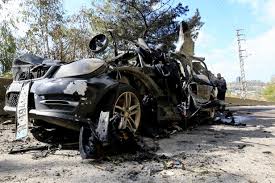
An Israeli air strike in southern Lebanon has killed three journalists and a paramedic, according to local reports, intensifying concerns about the safety of media workers in conflict zones.
Among those killed was Ali Shoeib, a reporter for Al Manar TV, along with two journalists from Al Mayadin, identified as Fatima and Mohamed Fetoni. The strike reportedly hit a clearly marked press vehicle in the town of Jezzine, also wounding several other journalists.
Joseph Aoun condemned the attack, calling it a “blatant crime” and a violation of international law, which provides protections for journalists operating in war zones.
The Israel Defense Forces confirmed carrying out a strike that killed Shoeib but alleged he was a member of Hezbollah posing as a journalist—an accusation that has not been independently verified.
The incident follows another recent strike in which Lebanese presenter Mohammad Sherri and his wife were killed, adding to growing allegations that journalists are being targeted in the conflict. Israel has consistently denied deliberately targeting civilians or media personnel.
According to reports, more than 1,100 civilians—including children and paramedics—have been killed in Israeli air strikes across Lebanon since the escalation began.
The developments come amid broader regional tensions involving Iran and its allies, with fears mounting that the conflict could widen further across the Middle East.


Donald Trump to Address Nation on Iran War Amid Uncertainty Over Next Move

Cyclist killed at Worlds not found for 82 minutes

Ghana sack manager Addo Just 72 days before World Cup


-

 General1 week ago
Ex-Taiwan presidential Candidate sentenced to 17 years for corruption
-
Entertainment1 week ago
Oil Trades Surge Minutes Before Donald Trump Iran Announcement
-

 News1 week ago
Ferdinand Marcos Promises Oil Supply as Philippines Declares Energy Emergency
-

 Sports1 week ago
Fans Group Files Complaint Against FIFA Over ‘Excessive’ World Cup Ticket Prices
-
 News1 week ago
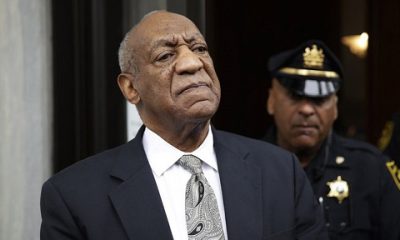
Jury Orders Bill Cosby to Pay $19m in Decades-Old Assault Case
-

 Entertainment1 week ago
BTS Comeback Concert on Netflix Draws 18.4 Million Global Viewers
-
 News1 week ago
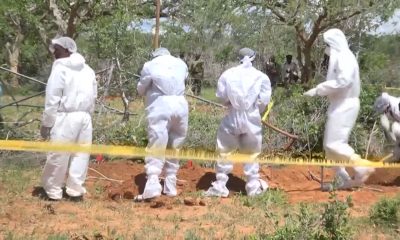
Dozens of Bodies, Mostly Infants, Found in Mass Grave in Kenya
-

 Sports6 days ago
Woods charged with driving under the influence after crash