
News
Harris Leads Trump in Key Battleground States, New Poll Shows

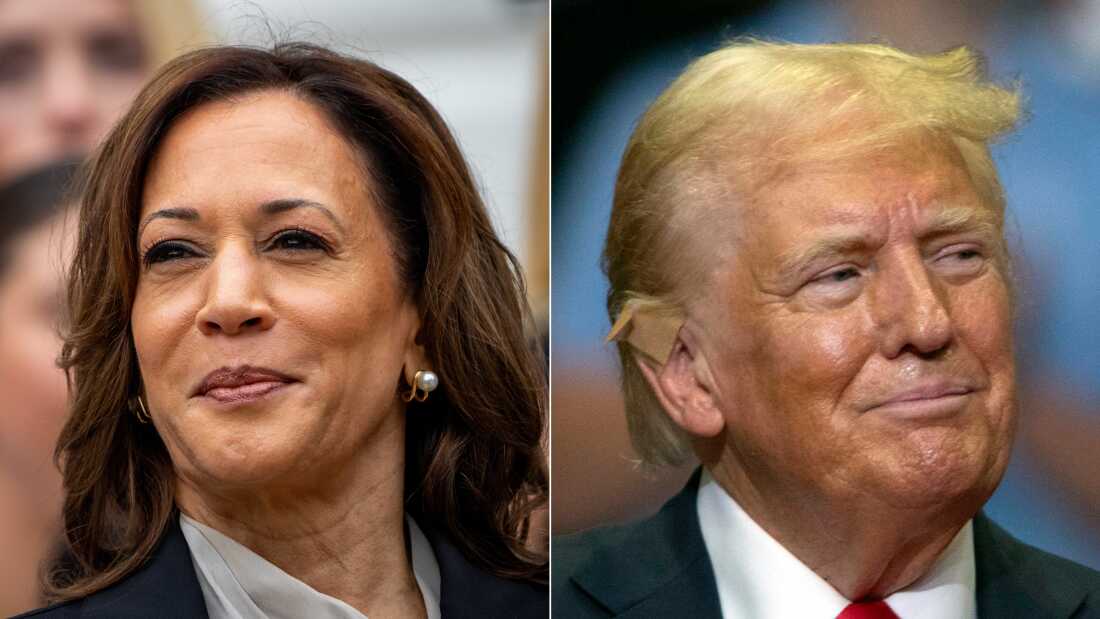
Vice President Kamala Harris is leading former President Donald Trump in three crucial battleground states—Michigan, Wisconsin, and Pennsylvania—according to a recent New York Times/Siena College poll. The poll reveals Harris ahead of Trump by 50% to 46% among likely voters in these states, although the margins of error make these leads statistically narrow.
The poll, conducted among registered voters earlier this week, indicates that Harris has gained significant ground since President Joe Biden endorsed her as the Democratic nominee after dropping out of the race in July. The poll reflects a shift in the race dynamics, with Harris now overtaking Trump in key states where the two candidates had previously been neck-and-neck.
Despite the encouraging numbers for Harris, the Trump campaign has disputed the poll results, claiming they “dramatically understated” support for Trump. They argue that the polls are designed to dampen enthusiasm for the former president, particularly as he maintains a nine-point lead over Harris on economic issues—a top priority for voters.
Additionally, Harris’ selection of Minnesota Governor Tim Walz as her running mate has garnered attention, with Walz’s favorability rating matching that of Trump’s running mate, Ohio Senator JD Vance, according to the poll. Harris’ campaign has seen a surge in donations, volunteer sign-ups, and rally attendance, signaling growing momentum as the election nears.
With less than three months until the election, Harris emphasized the importance of maintaining this momentum, acknowledging the challenges ahead while expressing confidence in her campaign’s progress.




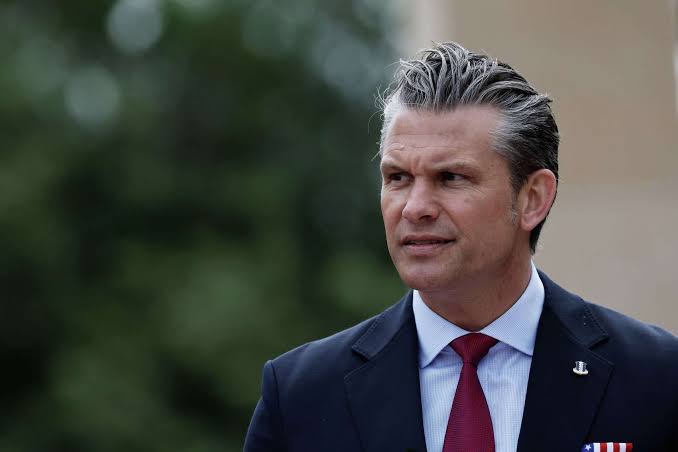
US Defense Secretary Pete Hegseth has used a D-Day anniversary speech in France to criticize European governments over migration, warning that parts of the continent are facing what he described as an “invasion” of migrants arriving by sea.
Speaking in Normandy during commemorations marking 82 years since the Allied landings that helped liberate Nazi-occupied Europe during World War II, Hegseth drew a controversial comparison between the historic military operation and modern migration flows into Europe.
“Sadly, today, different European beaches are stormed by different dangerous ideologies,” Hegseth said. Referring to migrant arrivals on the shores of Spain, Italy, Greece and Bulgaria, he asked: “When will European capitals do something about that invasion?”
Migration remains one of the most significant political issues across Europe, with several parties advocating stricter border controls and tougher immigration policies gaining support in recent years.
According to international migration data, sea arrivals into Europe reached their highest levels during the 2015 migration crisis, when more than one million people crossed the Mediterranean. Between April 2025 and March 2026, a combined 169,341 people arrived by sea in the UK, Greece, Italy, Spain and Cyprus, with crossings to the UK accounting for roughly 23% of the total.
During his address, Hegseth argued that some European countries had become too comfortable with freedoms secured through past sacrifices.
“The men who fought and died here restored freedom to Europe,” he said. “That freedom must be maintained by this generation of leaders and war fighters or what they fought for was merely temporary.”
The ceremony commemorated the historic D-Day landings of 6 June 1944, the largest seaborne military operation in history. The operation saw tens of thousands of Allied troops from the United States, the United Kingdom and Canada land on five beaches in Normandy as part of the campaign to liberate Western Europe from Nazi occupation.
Official figures show that between 1 January and 3 June 2026, 9,142 people crossed the English Channel in small boats from France to the UK, representing a 38% decline compared with the same period a year earlier.
Hegseth’s remarks are the latest criticism of European migration policies from senior members of the administration of US President Donald Trump.
Earlier this week, US Vice President JD Vance linked the fatal stabbing of British student Henry Nowak in Southampton to what he called a “mass invasion of migrants,” arguing that the appropriate response was “righteous anger.”
The comments drew criticism from the British government. A spokesperson for Downing Street said the victim’s family had expressed opposition to the case being used to deepen political divisions and criticized attempts by outside figures to interfere in British democratic debate.
Trump has also repeatedly criticized European immigration policies, previously telling the United Nations that several European countries were suffering the consequences of uncontrolled migration.
In response to similar remarks in the past, British Prime Minister Keir Starmer rejected the characterization of Europe while acknowledging the need to address illegal migration, particularly small-boat crossings across the English Channel.

China has imposed a one-year travel ban on four New Zealand lawmakers following their visit to Taiwan, marking the first known instance of New Zealand Members of Parliament facing such restrictions over a trip to the self-governed island.
New Zealand’s foreign ministry confirmed the move, with local media reporting that the MPs were informed of the ban after returning from their visit in May. According to reports, the Chinese Embassy indicated that the restriction could potentially be reduced or lifted if an apology were issued.
China considers Taiwan part of its territory and has consistently opposed official engagements with the island by foreign politicians and governments.
However, New Zealand officials noted that parliamentary visits to Taiwan have taken place for decades and are not viewed as inconsistent with New Zealand’s longstanding One China policy.
A spokesperson for New Zealand’s foreign minister, Winston Peters, said the decision came as a surprise.
“New Zealand MPs have visited Taiwan for decades and such visits are not inconsistent with New Zealand’s One China policy,” the spokesperson said.
In a statement, the Chinese Embassy in New Zealand said the restrictions were imposed because the lawmakers proceeded with the visit despite China’s objections. Beijing argued that the trip sent what it described as the wrong message to Taiwan’s ruling political leadership and supporters of Taiwanese independence.
China also maintained that the visit amounted to interference in its internal affairs.
The delegation included lawmakers from New Zealand’s governing coalition—Maureen Pugh, David Wilson and Laura McClure—alongside opposition Labour Party MP Duncan Webb.
McClure, a member of the ACT Party, rejected suggestions that she should apologise for the trip. Speaking to local media, she described the ban as a form of foreign interference and stressed that she had no regrets about visiting Taiwan.
She also expressed surprise at the decision, noting that similar parliamentary visits had taken place for many years without triggering such action.
According to McClure, New Zealand lawmakers have the right to travel internationally and engage with partners around the world as part of their role in a democratic society.
In response to the development, Peters has directed officials in both Beijing and Wellington to engage with Chinese authorities to gain a clearer understanding of what New Zealand views as a departure from previous practice.
New Zealand established formal diplomatic relations with China in 1972 and has since adhered to the One China policy, recognising Beijing as the sole official government of China. Under that policy, New Zealand maintains formal diplomatic ties with Beijing rather than Taipei.
At the same time, New Zealand has continued to maintain regular economic, cultural and parliamentary exchanges with Taiwan, reflecting its broader engagement with partners across the Asia-Pacific region.
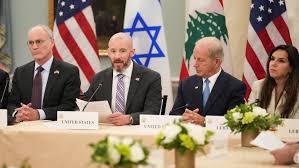
Israel and Lebanon have reached a new agreement aimed at strengthening their fragile ceasefire, with plans to establish a number of pilot security zones inside Lebanon where Hezbollah operatives would not be permitted to operate, according to an announcement from the US State Department.
In a joint statement, the parties said the arrangement is dependent on a “complete cessation” of attacks by the Iran-backed Hezbollah movement, along with several other conditions intended to reduce tensions and improve security along the border.
The statement also emphasized a shared commitment by the three countries to reject “any attempt, by any state or non-state actor, to hold Lebanon’s future hostage,” highlighting ongoing diplomatic efforts to support stability in the region.
The announcement was made in Washington on Wednesday following a day of violence in which Israeli strikes killed at least nine people in southern Lebanon, while Hezbollah launched rockets into northern Israel.
Despite the new diplomatic breakthrough, Lebanese state media reported that Israeli strikes continued in southern Lebanon on Thursday, with at least one attack resulting in casualties.
Hezbollah, a Shia Muslim militia, political party and social movement, remains the most influential armed group in Lebanon. Backed by Iran, it has developed military capabilities that surpass those of the Lebanese army and has engaged in multiple conflicts with Israel over the years. The group is designated as a terrorist organization by Israel and several other countries, including the United Kingdom and the United States.
The latest agreement, reached after a fourth round of talks mediated by the United States, requires the withdrawal of all Hezbollah operatives from the area between the Israeli border and the Litani River, located about 30 kilometers (19 miles) north of the frontier. The area is currently occupied by Israeli ground forces.
Under the arrangement, the United States will assist in guiding the creation of pilot zones where the Lebanese Armed Forces will exercise exclusive authority and control, preventing the presence of non-state armed groups.
While the agreement outlines the framework for these zones, it does not include maps identifying their exact locations, nor does it provide detailed explanations of how they will function operationally.
The deal follows a partial ceasefire announced on Monday. Lebanese officials said that arrangement would see Israel refrain from carrying out strikes on the capital, Beirut, while Hezbollah would halt attacks on Israeli territory.
Representatives from Israel and Lebanon are scheduled to meet again on 22 June for further negotiations, with the goal of advancing toward a broader and more comprehensive agreement that could contribute to a more durable peace.
Lebanon became directly involved in the wider conflict between the United States, Israel and Iran on 2 March after Hezbollah launched rockets into Israel following an Israeli strike that killed Iran’s supreme leader. Israel subsequently responded with an extensive air campaign across Lebanon and launched a ground operation in the country’s south.
Earlier efforts to halt the fighting, including a US-brokered ceasefire reached on 16 April, were unable to bring a lasting end to hostilities. More recently, Prime Minister Benjamin Netanyahu instructed the Israeli military to intensify operations against Hezbollah and expand its advance into southern Lebanon following drone and rocket attacks on communities in northern Israel.
According to Lebanon’s health ministry, at least 3,516 people have been killed in the country since the conflict began. The ministry’s figures do not differentiate between civilians and combatants.


Hegseth Criticises Europe’s Migration Policies in D-Day Speech

West Ham Co-Chairman David Sullivan Steps Down Amid Allegations

China Bans Four New Zealand MPs Over Taiwan Trip


-

 Entertainment6 days ago
KSI Announces Departure from Sidemen After 13 Years
-

 Sports1 week ago
Sinner Shock Exit Blows French Open Wide Open After Five-Set Defeat
-
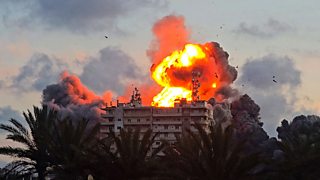
 News1 week ago
Israeli Strike Hits Beirut as Tensions Escalate Despite Ceasefire
-

 Sports1 week ago
Paris Saint-Germain Retain Champions League Crown After Shootout Victory Over Arsenal
-

 News4 days ago
Police Conduct Under Review After Murder of Southampton Student Henry Nowak
-

 News4 days ago
White House Correspondents’ Dinner Rescheduled Following Security Incident
-
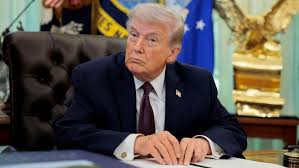
 News1 week ago
Trump in ‘excellent health’ but should lose weight and exercise more, his doctor says
-
General4 days ago
Bodycam Footage Reveals Final Moments Before Arrested Man Became Unresponsive