
News
Hegseth Criticises Europe’s Migration Policies in D-Day Speech

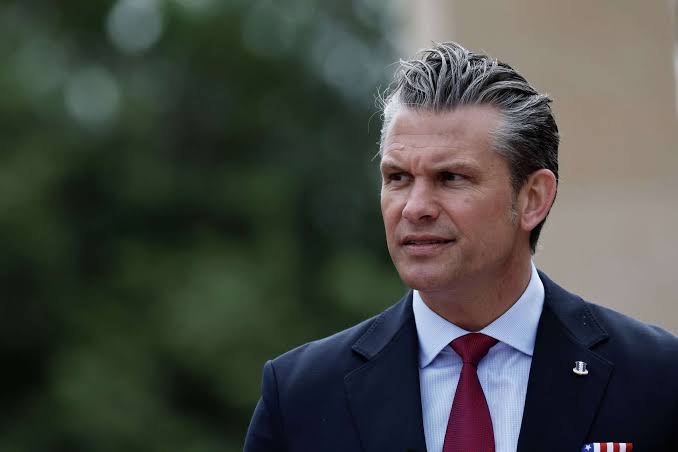
US Defense Secretary Pete Hegseth has used a D-Day anniversary speech in France to criticize European governments over migration, warning that parts of the continent are facing what he described as an “invasion” of migrants arriving by sea.
Speaking in Normandy during commemorations marking 82 years since the Allied landings that helped liberate Nazi-occupied Europe during World War II, Hegseth drew a controversial comparison between the historic military operation and modern migration flows into Europe.
“Sadly, today, different European beaches are stormed by different dangerous ideologies,” Hegseth said. Referring to migrant arrivals on the shores of Spain, Italy, Greece and Bulgaria, he asked: “When will European capitals do something about that invasion?”
Migration remains one of the most significant political issues across Europe, with several parties advocating stricter border controls and tougher immigration policies gaining support in recent years.
According to international migration data, sea arrivals into Europe reached their highest levels during the 2015 migration crisis, when more than one million people crossed the Mediterranean. Between April 2025 and March 2026, a combined 169,341 people arrived by sea in the UK, Greece, Italy, Spain and Cyprus, with crossings to the UK accounting for roughly 23% of the total.
During his address, Hegseth argued that some European countries had become too comfortable with freedoms secured through past sacrifices.
“The men who fought and died here restored freedom to Europe,” he said. “That freedom must be maintained by this generation of leaders and war fighters or what they fought for was merely temporary.”
The ceremony commemorated the historic D-Day landings of 6 June 1944, the largest seaborne military operation in history. The operation saw tens of thousands of Allied troops from the United States, the United Kingdom and Canada land on five beaches in Normandy as part of the campaign to liberate Western Europe from Nazi occupation.
Official figures show that between 1 January and 3 June 2026, 9,142 people crossed the English Channel in small boats from France to the UK, representing a 38% decline compared with the same period a year earlier.
Hegseth’s remarks are the latest criticism of European migration policies from senior members of the administration of US President Donald Trump.
Earlier this week, US Vice President JD Vance linked the fatal stabbing of British student Henry Nowak in Southampton to what he called a “mass invasion of migrants,” arguing that the appropriate response was “righteous anger.”
The comments drew criticism from the British government. A spokesperson for Downing Street said the victim’s family had expressed opposition to the case being used to deepen political divisions and criticized attempts by outside figures to interfere in British democratic debate.
Trump has also repeatedly criticized European immigration policies, previously telling the United Nations that several European countries were suffering the consequences of uncontrolled migration.
In response to similar remarks in the past, British Prime Minister Keir Starmer rejected the characterization of Europe while acknowledging the need to address illegal migration, particularly small-boat crossings across the English Channel.


France has suspended the use of stun grenades during student protests after a 15-year-old boy lost his hand in an incident in the northern city of Lens.
Interior Minister Laurent Nuñez said he had ordered the suspension while authorities establish what happened during Monday’s incident, amid conflicting accounts from protesters and officials.
Several groups have accused police of using disproportionate force against teenagers taking part in demonstrations.
The protests continued on Wednesday, with more than 500 schools fully or partially closed. Prime Minister Sébastien Lecornu is expected to address the school protests in an evening speech.
Education Minister Édouard Geffray told France’s National Assembly that 24 schools had been “set alight or vandalised” so severely that they would remain closed for several weeks, affecting about 30,000 pupils.
Hundreds of thousands of people took part in demonstrations on Tuesday, calling for improved school conditions. Tear gas and water cannon were deployed in some cities, while the interior ministry said 488 people had been arrested and 43 security personnel injured.
Nuñez told French radio RTL that the police watchdog, IGPN, had opened 18 investigations into whether officers had used proportionate force during the demonstrations.
The protests have expanded beyond high school pupils to include parents, university students and trade unions.
“There is a police action that raises questions for all of us within the Ministry of the Interior; it’s what happened in Lens,” Nuñez said.
He confirmed that the use of stun grenades was being suspended “until the facts surrounding this case have been clarified”.
The teenager’s hand was torn off after an anti-encirclement grenade exploded near Auguste Béhal High School in Lens, near Lille.
Authorities said the boy picked up the grenade before it exploded, while students alleged that he was directly hit after an officer fired it.
According to the local prefect, police had been confronted by around 200 to 250 students who were throwing stones and fireworks.
The stun grenade is classified as a non-lethal weapon and releases small rubber pellets when it detonates.
“When there is suspicion of disproportionate force, there are always judicial investigations,” Nuñez said, adding that the government was “here to protect high school students”.

US death row inmate Christa Pike is conscious and speaking after surviving a failed execution attempt in Tennessee, her lawyers say.
Pike, 50, remains in hospital receiving critical medical care and is being kept “handcuffed and shackled to the bed”, according to a statement from her legal team.
An anaesthesiologist advising her lawyers said that Pike is able to communicate in a “basic way”, although she does not appear to remember the execution attempt.
Pike was sentenced to death for the 1995 murder of Colleen Slemmer, whom she killed with her then-boyfriend. She survived two attempts to administer a lethal injection on 30 September in Tennessee.
Her apparent recovery has been described by medical and legal experts as unprecedented.
Pike is believed to be the only person to survive after a lethal injection was successfully administered. The failed execution was described as a “mess” by Slemmer’s mother, who had supported Pike being put to death.
After it became clear that Pike would not die, she was taken to hospital, where she remained unconscious for several days while medical staff worked to remove the injected chemical from her body.
Her lawyers said on Tuesday that her prognosis remained uncertain and that they expected “at a minimum, a long recovery”.
An anaesthesiologist advising Pike’s legal team said the chances of recovering from a lethal injection were extremely low.
“Most people who get lethal injection die from it,” he said, adding that there were still significant unknowns, including how much pentobarbital entered Pike’s system.
“I would not, in any way, say at this point that all the big risks are behind her,” he said.
“They did everything they were supposed to do as part of the execution process, and it simply didn’t work,” she said. “This has never happened before.”
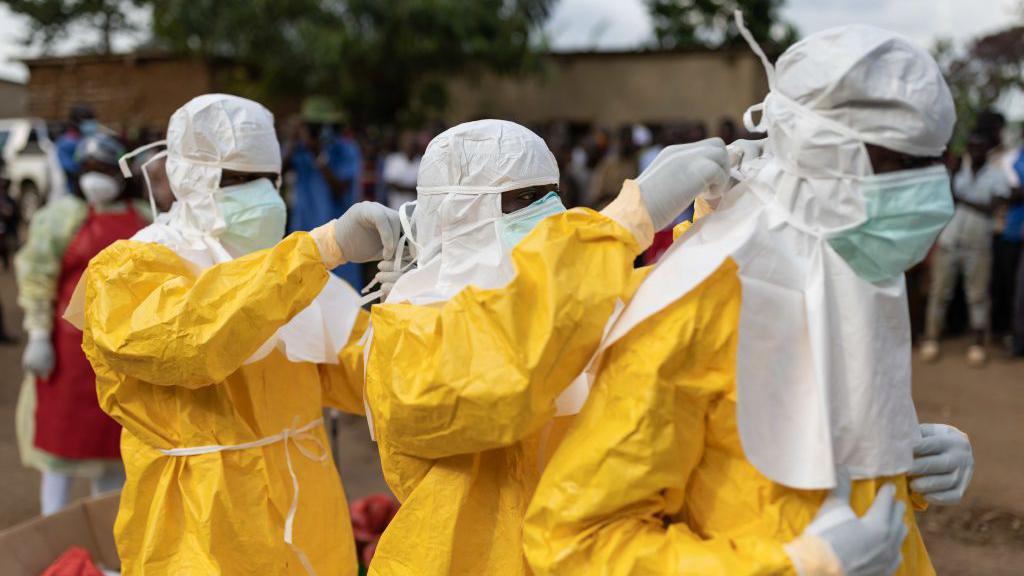
Kenya has confirmed its first Ebola case, involving a Kenyan citizen who had been living in the Democratic Republic of Congo (DRC) for the past seven years.
Health Minister Aden Duale said the patient, who had fallen ill about a month ago and received treatment at several hospitals in the DRC, died days after arriving in Nairobi.
Mr Duale said the patient travelled to Kenya by plane on Saturday and underwent routine public health screening at Nairobi’s main airport before being taken to a hospital in the city by a relative.
Tests later confirmed that the patient had Ebola caused by the Bundibugyo virus.
Authorities are monitoring the situation as concerns grow over the potential spread of the virus following the confirmed case.
More than 4,000 people have died from Ebola in the Democratic Republic of Congo this year, making the outbreak the second-deadliest known outbreak of the disease.


Mikel Arteta signs new contract with Premier League champions Arsenal

France suspends stun grenade use after teenager loses hand during protests

Christa Pike awake and speaking after failed execution, lawyers say


-

 News1 week ago
UK-Iranian man arrested in RAF Fairford terror investigation
-

 Entertainment1 week ago
Kanye West’s Russia concerts officially cancelled after weeks of uncertainty
-

 News5 days ago
US withdraws all bombers from RAF Fairford amid security concerns
-

 Business5 days ago
Trump appoints top intelligence official to lead new AI taskforce
-

 News1 week ago
Netanyahu says Flydubai attacker had ‘Islamist radical indoctrination’
-

 Sports4 days ago
Jannik Sinner ends season early to undergo knee treatment
-
 News4 days ago
Kenya confirms first Ebola death as outbreak spreads
-
News3 days ago
Christa Pike awake and speaking after failed execution, lawyers say