
News
Eleven Killed in Gaza Strikes as Ceasefire Tensions Persist

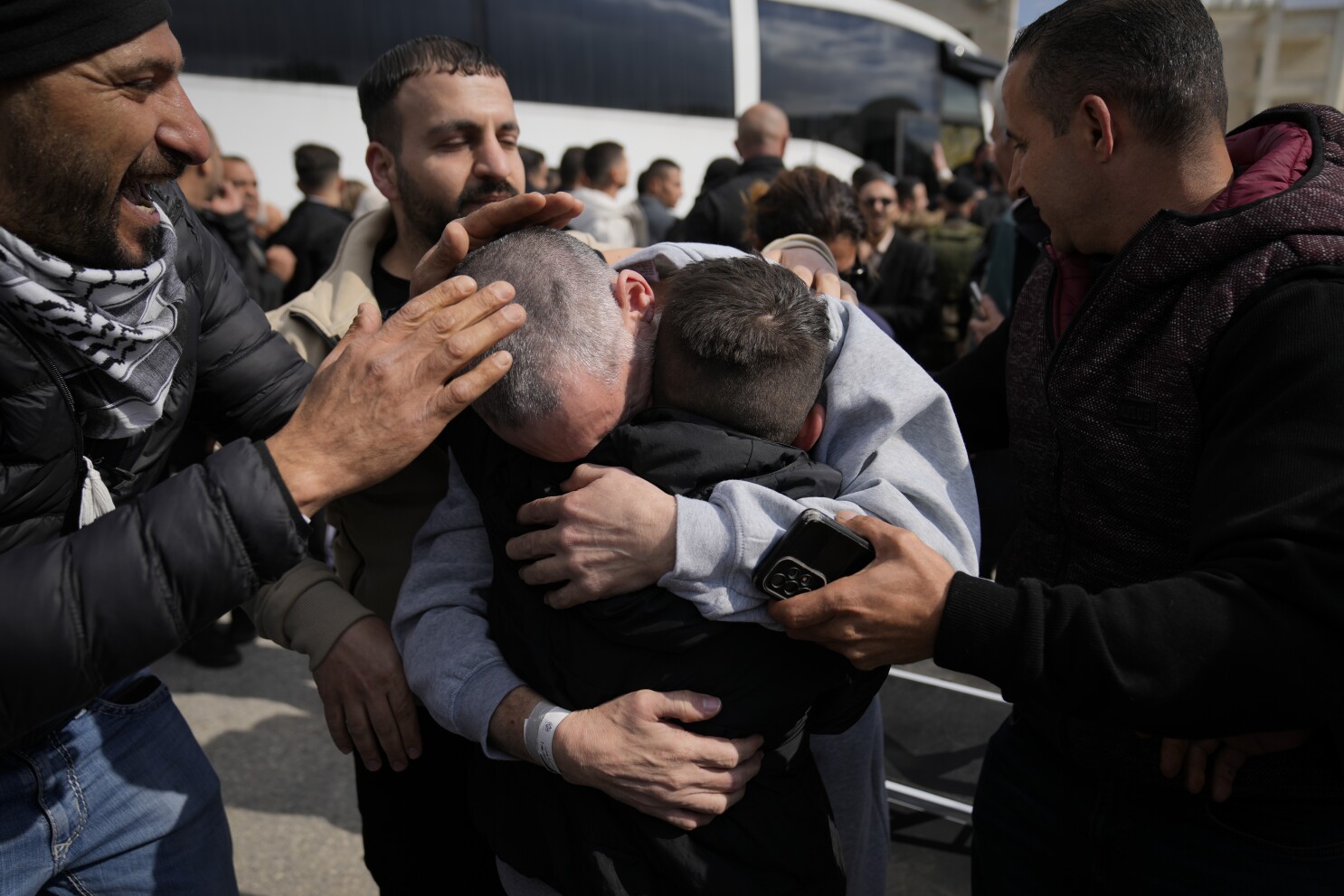
Eleven Palestinians were killed in Israeli strikes on Gaza on Sunday morning, according to local civil defence and health officials, underscoring the fragility of an already strained ceasefire.
The Israel Defense Forces said the strikes targeted militant positions in response to alleged ceasefire violations by Hamas. It stated that fighters were killed after emerging from a tunnel into an area of the strip under Israeli military control.
The Palestinian Red Crescent reported that a strike on a tent encampment in northern Gaza killed at least six people, while another attack in the south left five dead.
Since the ceasefire came into force on 10 October, both Israel and Hamas have accused each other of near-daily breaches. Gaza’s Hamas-run health ministry says at least 600 people have been killed during this period.
Earlier this month, local officials reported that at least 32 people died in a broader wave of Israeli air strikes across the territory.
The latest escalation comes as preparations continue for the second phase of a US-brokered ceasefire agreement.
Last month, US President Donald Trump announced the creation of a new body, the Board of Peace, which has been granted a mandate from the United Nations Security Council to establish an international force. The mission is intended to secure border areas in Gaza and oversee the disarmament of Hamas.
The board, scheduled to hold its first meeting in Washington on 19 February, is also tasked with supervising the formation of a technocratic Palestinian government and coordinating post-war reconstruction efforts.
As part of the next phase of the ceasefire plan, Indonesia — a member of the Board of Peace — has announced plans to deploy 8,000 troops to Gaza.
The conflict was triggered by the Hamas-led attack on southern Israel on 7 October 2023, in which around 1,200 people were killed and 251 taken hostage.
Israel responded with a military campaign in Gaza that has since resulted in more than 71,820 deaths, according to the territory’s health ministry.
Meanwhile, Israeli Prime Minister Benjamin Netanyahu travelled to Washington last week for talks with Trump, with discussions focusing in part on efforts to curb Iran’s nuclear programme — which Tehran maintains is solely for civilian use.
Netanyahu was expected to urge the US administration to pursue an agreement aimed at halting Iran’s uranium enrichment and limiting its ballistic missile capabilities, as broader regional security concerns continue to shape diplomatic efforts alongside the ceasefire process.



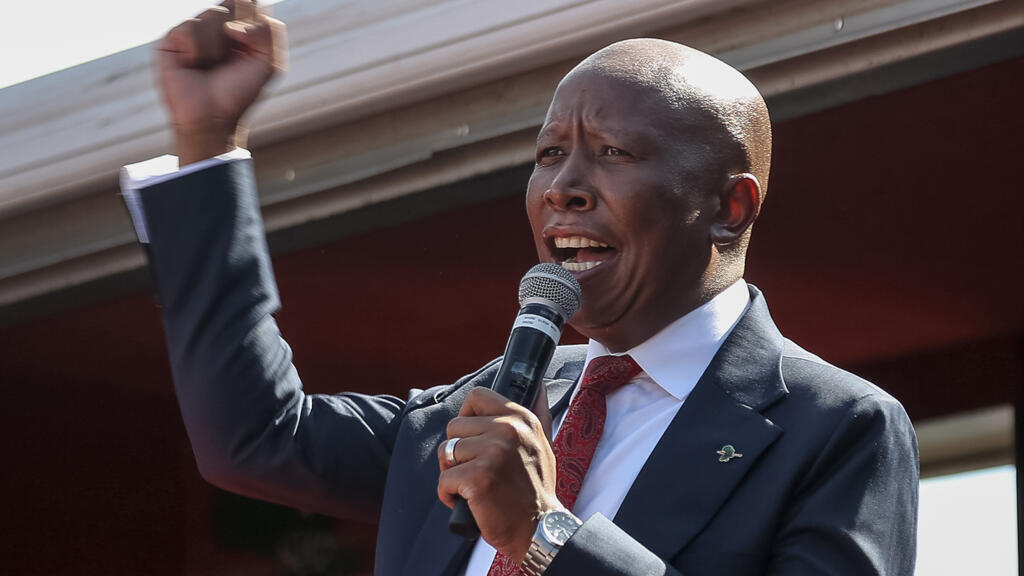
South African opposition leader Julius Malema has been sentenced to five years in prison after being found guilty of firearm-related offences, marking a significant development in the country’s political landscape.
The 45-year-old leader of the Economic Freedom Fighters (EFF) was convicted on multiple charges, including unlawful possession of a firearm, discharging a weapon in a public space, and reckless endangerment.
The sentencing was delivered at a court in East London by Magistrate Twanet Olivier. Malema, dressed in a dark suit and red tie, showed little visible reaction as the ruling was read out.
His legal team immediately filed an appeal in an effort to prevent his immediate imprisonment, setting the stage for a potentially lengthy legal battle that could reach higher courts.
The charges stem from a 2018 incident during the EFF’s fifth anniversary celebrations in the Eastern Cape, where a video surfaced showing Malema firing a semi-automatic rifle into the air. In his defence, he argued that the weapon was not his and that he discharged it to energise the crowd.
However, the court rejected this explanation, with Magistrate Olivier stating the act was deliberate and central to the event, rather than spontaneous.
Malema, a member of parliament and a prominent political figure, has built a reputation as a vocal and polarising leader advocating for radical economic reforms, including land redistribution and wealth transfer policies. His party has gained significant support, emerging as one of the country’s major political forces in recent elections.
Supporters gathered outside the courthouse during the proceedings, chanting and singing in solidarity with the EFF leader, underscoring his strong grassroots backing.
Malema previously served as head of the youth wing of the African National Congress (ANC) before being expelled following a dispute with former President Jacob Zuma. He later founded the EFF, which has since eroded portions of the ANC’s electoral base.
Reacting to his conviction last year, Malema struck a defiant tone, saying that imprisonment or even death would be “a badge of honour” in the struggle he represents. He has also pledged to challenge the ruling all the way to Constitutional Court of South Africa if necessary.
The case was initiated by AfriForum, an Afrikaner lobby organisation that has frequently clashed with Malema and his party.
In a separate matter last year, Malema was also found guilty of hate speech over controversial remarks made at a 2022 rally, further adding to his mounting legal challenges.
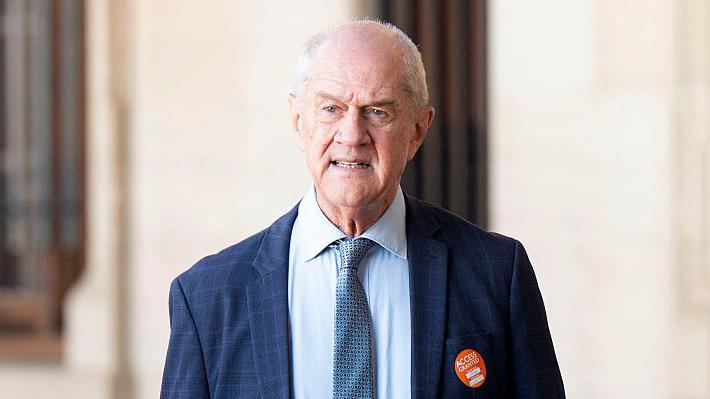
South Africa President Cyril Ramaphosa has appointed Roelf Meyer, a former senior figure in the apartheid-era government, as the country’s new ambassador to the United States.
The appointment, confirmed by presidential spokesperson Vincent Magwenya, takes immediate effect and comes at a time of strained diplomatic relations between the two nations.
South Africa has been without a top envoy in Washington since the expulsion of Ebrahim Rasool last year. His removal followed remarks accusing U.S. President Donald Trump of attempting to “project white victimhood as a dog whistle,” further deepening tensions.
Relations between the two countries have deteriorated since Trump’s return to office, with disagreements over domestic and international issues contributing to the diplomatic rift.
Meyer, 78, is best known for his role in the negotiations that led to the end of Apartheid in the early 1990s. As a senior member of the National Party, which had implemented apartheid, he served as one of the chief negotiators alongside Ramaphosa, who represented the African National Congress under the leadership of Nelson Mandela.
Meyer later served as minister of constitutional affairs in the final apartheid government and went on to join the Government of National Unity formed after South Africa’s first democratic elections in 1994. He left government in 1996 and later co-founded the United Democratic Movement before eventually joining the ANC.
A white Afrikaner, Meyer was regarded as a reformist within the National Party, though his role in dismantling apartheid led to criticism from some conservative factions within the Afrikaner community.
The appointment also comes amid controversy surrounding claims by Trump that Afrikaners are facing persecution in South Africa—allegations widely dismissed by the South African government. Ramaphosa has rejected such assertions, stating it is “completely false” that any racial or cultural group is being systematically targeted.
At least four people have been killed and several others injured in a shooting at a school in southern Turkey, marking the second such incident in the region in as many days.
The attack occurred at Ayser Calik Secondary School in the Kahramanmaras area, according to local media reports.
Authorities have yet to confirm the identities of those killed or provide details about the suspect. The condition and whereabouts of the attacker remain unclear as investigations continue.
Kahramanmaras Governor Mukerrem Unluer said that at least 20 people were injured in the attack, with some reported to be in critical condition.
The shooting comes just a day after another violent incident at a high school in southern Turkey, where an ex-student opened fire, injuring multiple people before taking his own life.
The motive behind Wednesday’s attack has not yet been established. Officials have launched a full investigation into the circumstances surrounding the shooting.
Turkish media reports suggest the attacker entered two classrooms armed with multiple weapons, including five guns and seven magazines, which were allegedly owned by his father.
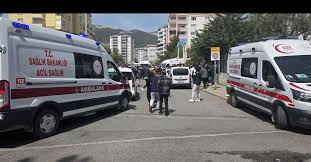
Witnesses described scenes of chaos and panic. A reporter for Turkish broadcaster NTV said the sound of gunfire was “very intense,” with crowds gathering outside the school as emergency services responded. Footage from the scene showed ambulances transporting victims while bystanders looked on, many recording the aftermath on their mobile phones.


‘Cool Hand Luke’ Actress Joy Harmon Dies Aged 87

South African opposition figure Malema sentenced to five years in prison

Israel-Lebanon talks will happen today as Leaders Signal Possible Direct Contact


-
 News1 week ago
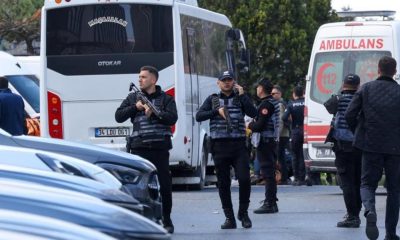
Gunman Killed in Shootout Near Israeli Consulate in Istanbul, Two Officers Injured
-
 Entertainment1 week ago
Rapper Offset Shot Outside Florida Casino
-

 News1 week ago
Greece to Ban Social Media Access for Under-15s in Push to Protect Youth
-
 Sports1 week ago
Leicester City Lose Appeal Against Points Deduction
-
 Entertainment1 week ago
Wireless Festival Cancelled After Kanye West Barred from Entering UK
-
 News1 week ago
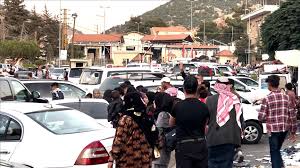
Israel Orders Evacuation in Beirut Suburbs as Safety Warnings Issued Ahead of Planned Strikes
-

 Business7 days ago
Dolce & Gabbana co-founder steps down as chair
-

 Business1 week ago
Universal Music Receives $64bn Takeover Bid From Pershing Square