
News
Zimbabwe Bans Police Officers from Using Mobile Phones While on Duty

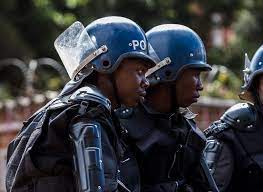
Zimbabwe’s government has announced a strict new ban, effective immediately, prohibiting police officers from using mobile phones while on duty. The directive, detailed in a recent memo, instructs officers to hand over their personal communication devices to their supervisors upon arrival at their stations, allowing use only during designated break times.
While the memo does not explicitly state the reasons for this ban, it is widely speculated that it aims to curb police corruption. This comes shortly after two traffic enforcement officers in Harare were arrested when a viral social media video showed them taking bribes from public transport drivers. Police spokesperson Paul Nyathi condemned the two officers, labeling them as “bad apples who do not deserve to be serving in the police service.”
The new policy also seeks to strengthen previous orders, issued last month, that had been largely ignored. “Despite numerous instructions given forbidding use of cell phones whilst on duty by members of the police service, commanders are not enforcing this,” the memo states.
To ensure compliance, officers in charge of police stations have been directed to enforce the ban, with accountability measures in place for supervisors. “Once a member is found with a cell phone whilst on duty, the officer in-charge of the said member will be put to task,” the circular warns.
Police officers in Zimbabwe have long been perceived as corrupt, a reputation often attributed to low salaries and difficult working conditions. The government hopes this policy will address some of the issues tied to misconduct.






The annual White House Correspondents’ Dinner has been rescheduled for July 24 after the original gathering was suspended following a shooting incident involving a gunman who attempted to gain access to the venue.
In a letter to members, Weijia Jiang said the event will now take place with significantly enhanced security measures and revised access procedures.
The dinner is set to be held at the Waldorf Astoria Washington DC, and Donald Trump has confirmed that he plans to attend.
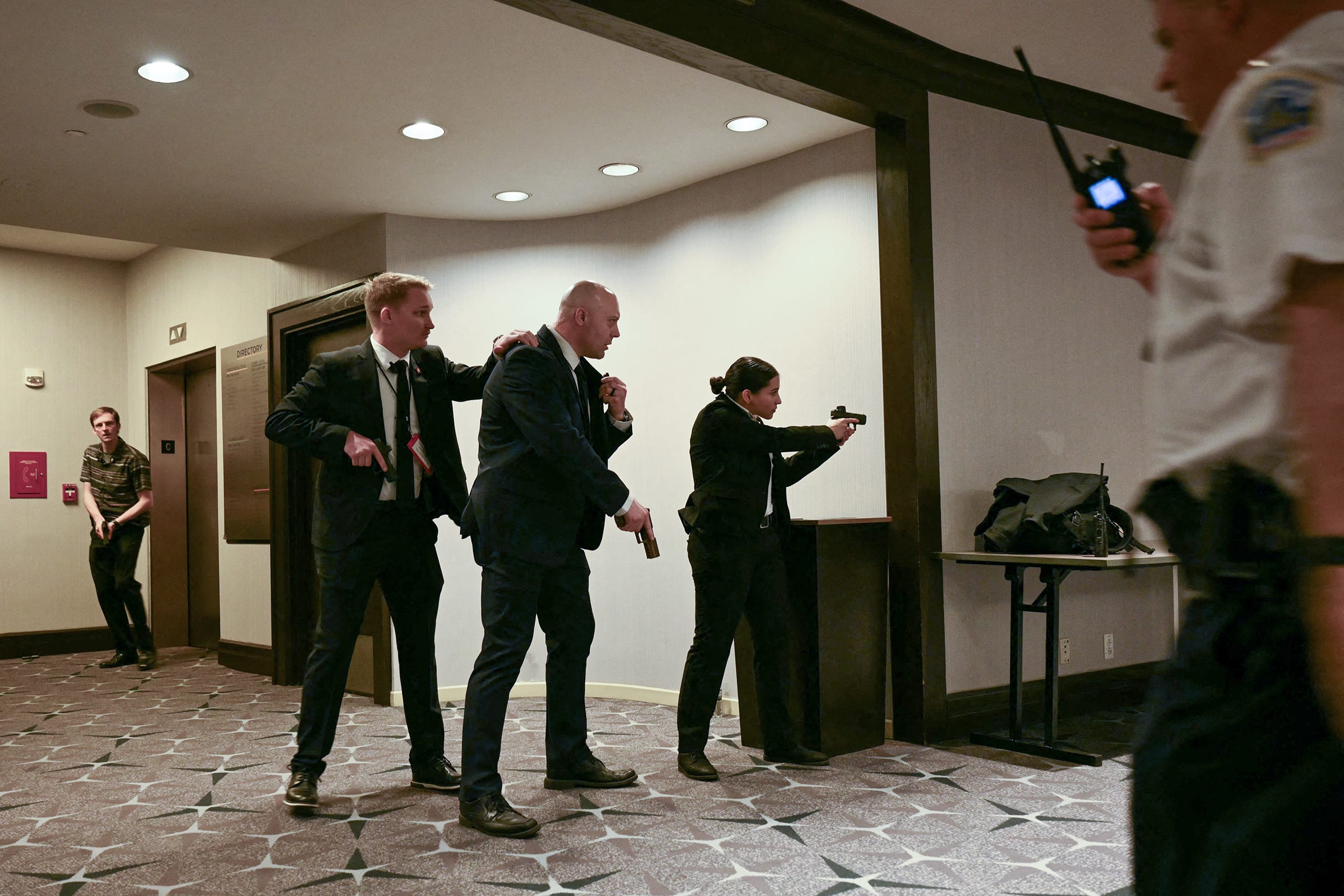
The original event, scheduled for April 25, was interrupted after an armed suspect allegedly attempted to breach security, prompting an exchange of gunfire with members of the United States Secret Service. During the incident, Trump, Vice-President JD Vance and other senior officials were escorted from the stage by security personnel.
According to the United States Department of Justice, the suspect was subdued at the scene. One Secret Service agent was injured by shotgun fire during the confrontation.
Trump welcomed the decision to reschedule the event, describing it as a demonstration of resilience.
“This announcement is a very good thing in that we cannot allow lunatics to change our way of life, or even its scheduling,” he wrote on social media.
The White House Correspondents’ Association said it has spent recent weeks raising funds to ensure members who purchased tickets for the April event will not be required to pay again for the July gathering. Organisers described the rescheduled dinner as a more intimate event than originally planned.
The association is also offering financial assistance to scholarship recipients who wish to return to Washington to attend the event.
Trump said he has accepted an invitation to address attendees at the rescheduled dinner and joked that he may reconsider remarks he had planned to deliver in April.
The annual dinner traditionally brings together the president, senior government officials, members of Congress, journalists and media executives to celebrate journalism and press freedom.
Authorities later identified the suspect in the April incident as 31-year-old Cole Tomas Allen, who police said was carrying a shotgun, a handgun and multiple knives when he approached the security checkpoint.
Following the shooting, Trump said he intended to work with organisers to ensure the event was rescheduled as quickly as possible. The new July date will now allow the long-running Washington tradition to proceed under heightened security arrangements.
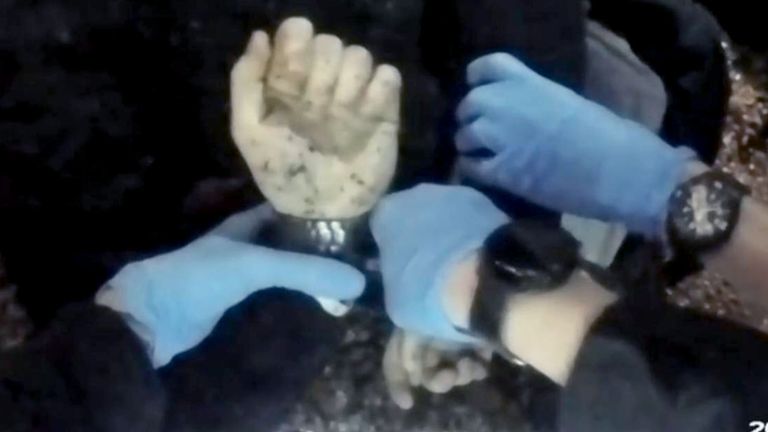
An 18-year-old student from Southampton, Henry Nowak, was handcuffed by police after being fatally stabbed by 23-year-old Vickrum Digwa, who falsely claimed at the scene that he had been the victim of a racist attack.
Digwa was later convicted of Henry’s murder and sentenced to life imprisonment, with a minimum term of 21 years before he can be considered for parole.
Henry’s parents have said they hold Digwa solely responsible for their son’s death. However, they have also expressed deep concern over the way Henry was treated by police officers after the attack, describing his treatment as inhumane and degrading.
The case has prompted further scrutiny following the release of bodycam footage showing Henry being handcuffed despite suffering serious injuries and repeatedly telling officers that he could not breathe.
Hampshire and Isle of Wight Constabulary has since apologised to Henry’s family for the distress caused by the incident.
The force confirmed that the matter has been referred to the Independent Office for Police Conduct, which will examine the actions of officers at the scene and determine whether any misconduct occurred.
The investigation will focus on police decision-making during the incident and whether appropriate procedures were followed while responding to the stabbing.
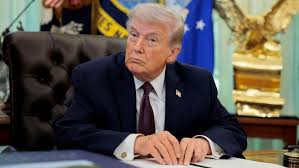
Donald Trump remains in “excellent health” and is fully capable of performing the duties of president, according to the results of his latest annual medical examination released by the White House.
The report, prepared by White House physician Sean Barbabella, stated that Trump, who will turn 80 next month, continues to demonstrate strong cardiovascular, pulmonary, neurological and overall physical health.
Barbabella concluded that the president is “fully fit to carry out all duties of the Commander-in-Chief and Head of State.”
Trump underwent the examination at Walter Reed National Military Medical Center on Tuesday. Afterwards, he wrote on his social media platform that “everything checked out perfectly.”
The assessment was his third publicly known medical check-up since returning to the White House.
Cognitive and Physical Health
According to the report, Trump achieved a perfect score of 30 out of 30 on the Montreal Cognitive Assessment, a widely used screening tool designed to evaluate memory, attention and other cognitive functions.
The examination found no significant concerns regarding his cognitive health.
Trump currently weighs 238 pounds (108kg), an increase of 14 pounds (6.3kg) compared with his April 2025 medical assessment. While noting his overall strong health, Barbabella recommended continued attention to diet, exercise and weight management.
The report also stated that Trump is taking medication to control cholesterol levels.
Heart Health and Activity Levels
The president’s resting heart rate was recorded at 73 beats per minute. According to the physician’s assessment, Trump’s cardiovascular condition compares favourably with his age group, with his estimated cardiac age being approximately 14 years younger than his actual age.
Barbabella noted that Trump’s demanding schedule, which includes frequent meetings, public appearances and regular physical activity, continues to support his overall wellbeing.
Update on Previous Health Concerns
Last year, visible bruising on Trump’s hands and swelling in his lower legs generated public discussion about his health.
In July, it was disclosed that he had been diagnosed with Chronic Venous Insufficiency, a condition in which veins in the legs struggle to return blood efficiently to the heart, potentially causing swelling in the lower limbs.
The latest report stated that some mild swelling remains but has improved since last year.
Barbabella also addressed the bruising on Trump’s hand, explaining that it is consistent with minor soft-tissue irritation caused by frequent handshaking while taking aspirin as part of a cardiovascular prevention regimen.
According to the physician, such bruising is a common and generally harmless side effect of aspirin therapy.
Ongoing Medical Care
The report indicated that Trump remains current on recommended preventive screenings and immunisations. In addition to aspirin, he continues to take two medications designed to manage cholesterol levels.


Real Madrid Close to Agreement with Ibrahima Konate After Liverpool Exit

White House Correspondents’ Dinner Rescheduled Following Security Incident

Bodycam Footage Reveals Final Moments Before Arrested Man Became Unresponsive


-
 Entertainment1 week ago
BTS Triumph at American Music Awards as Black Eyed Peas Reunite
-

 Tech1 week ago
Ferrari Unveils First Fully Electric Car
-

 News1 week ago
Four Killed After School Minibus Hit by Train in Belgium
-
 Entertainment3 days ago
KSI Announces Departure from Sidemen After 13 Years
-

 Sports7 days ago
Sinner Shock Exit Blows French Open Wide Open After Five-Set Defeat
-
 News1 week ago
New Hamas Military Commander Killed in Gaza City Strike
-
 Sports1 week ago
Manchester United Move Closer to Signing Ederson in £38m Midfield Deal
-

 News7 days ago
Israeli Strike Hits Beirut as Tensions Escalate Despite Ceasefire