
Business
US Plans to Ban Chinese and Russian Tech in Cars Over Security Concerns

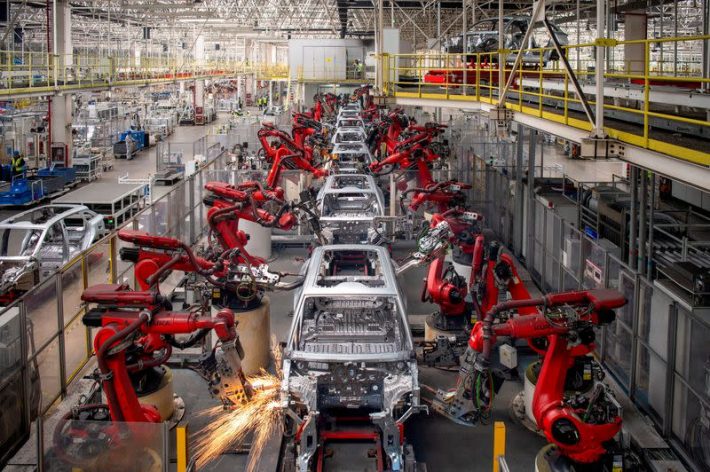
The US government is set to ban certain hardware and software made in China and Russia from American cars, trucks, and buses, citing national security risks. Officials are concerned that technology used for autonomous driving and vehicle network connectivity could be exploited by foreign adversaries to “remotely manipulate cars on American roads.”
Though current use of Chinese or Russian-made software in US vehicles is minimal, Commerce Secretary Gina Raimondo stressed the importance of taking “targeted, proactive” measures. She highlighted how modern cars, equipped with cameras, microphones, GPS tracking, and internet connections, could be vulnerable to cyberattacks, posing a significant risk to national security and the privacy of US citizens.
China’s Foreign Ministry responded by criticizing the move, accusing the US of unfairly broadening the definition of national security to discriminate against Chinese companies. Lin Jian, a spokesman for China’s Foreign Ministry, urged the US to adhere to market principles and create a fair business environment for Chinese firms.
The proposal, which is now open for public comment, is part of broader efforts by the Biden administration to reduce China’s role in the US automotive supply chain. This includes raising tariffs on electric vehicles and batteries, as well as banning Chinese-made cargo cranes over similar cybersecurity concerns.
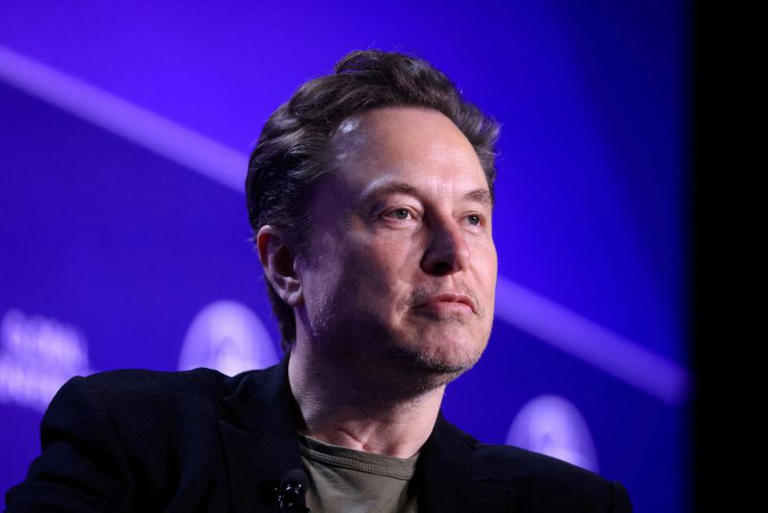
Tech entrepreneur Elon Musk has become the first person in history to achieve a net worth of more than $1 trillion following the public market debut of SpaceX.
The milestone was reached after SpaceX shares began trading on the stock market in New York at approximately $150 per share. Investor demand quickly pushed the stock higher, with shares climbing to as much as $176 within the first two hours of trading.
Although the stock later retreated from its intraday high, it still finished the session strongly at $160.95 per share. The closing price represented an increase of about 19% above SpaceX’s own estimated debut valuation of $135 per share.
The surge in SpaceX’s market value significantly boosted Musk’s personal fortune, allowing him to cross the trillion-dollar threshold and secure his place as the world’s first trillionaire.
Musk is already one of the most recognizable figures in global business, known for leading SpaceX and electric vehicle manufacturer Tesla. Beyond his business ventures, he has attracted both admiration and criticism for his outspoken presence on social media and his comments on political issues in the United States and abroad.
The billionaire’s influence expanded further following his acquisition of the social media platform X, where he frequently shares views on politics, technology and current affairs.
Despite the strong opening performance, some analysts noted that the stock closed below the most optimistic forecasts. Several early estimates had suggested SpaceX shares could reach as high as $190 on their first day of trading.
According to Samuel Kerr, an analyst at Mergermarket, the initial trading performance was solid but not extraordinary. He said the more important measure of success will be how the stock performs over the coming weeks and months.
Kerr noted that while investors often focus on a company’s first day of trading, the longer-term stability of the share price will provide a clearer indication of market confidence in SpaceX’s future growth prospects.
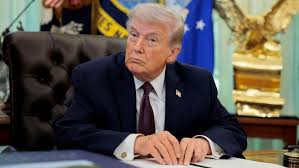
Donald Trump has announced plans to raise tariffs on cars and trucks imported from the European Union to 25%, marking a major escalation in trade tensions between Washington and Brussels.
In a post on Truth Social on Friday, Trump accused the EU of failing to honour what he described as a fully agreed trade deal, although he did not specify which commitments he believed had been violated.
“I am pleased to announce that… next week I will be increasing Tariffs charged to the European Union for Cars and Trucks,” Trump wrote.
The move directly targets one of Europe’s most economically important industries, with automotive manufacturing playing a central role in major economies such as Germany and France.
The tariff increase comes less than a year after the United States and the EU reached a major trade agreement during talks held at Trump’s Turnberry Golf Resort in Scotland. That agreement had set tariffs on most European goods at 15%, helping the EU avoid the broader 30% tariffs Trump had previously threatened under his wider “Liberation Day” tariff programme.
In return, the EU agreed to increase investment in the United States and make policy adjustments expected to support stronger American exports.
The agreement was later approved by the European Parliament in March, although lawmakers added a safeguard clause allowing the deal to be suspended if the Trump administration was found to be undermining its purpose, discriminating against EU businesses, threatening member states’ security interests, or engaging in economic coercion.
Since then, trade talks have slowed again, particularly over disputes involving steel and aluminium tariffs. Several major European governments, including Germany and France, had pushed back against U.S. proposals to revise tariff structures across a broader range of goods.
Responding to Trump’s latest announcement, the European Commission said the EU remained committed to fulfilling its obligations and maintaining a stable transatlantic trade relationship, while also seeking further clarification from Washington.
A spokesperson said the bloc was implementing the deal “in line with standard legislative practice, keeping the U.S. administration fully informed throughout.”
The Commission added: “We remain fully committed to a predictable, mutually beneficial transatlantic relationship. Should the U.S. take measures inconsistent with the Joint Statement, we will keep our options open to protect EU interests.”
The International Monetary Fund has warned that the global economy faces a serious risk of slipping into recession if the ongoing conflict involving Iran, the United States, and Israel continues and keeps energy prices elevated.
In its latest World Economic Outlook report, the IMF outlined a worst-case scenario in which oil, gas, and food prices surge and remain high through 2026. Under such conditions, global economic growth could fall below 2% next year — a level historically associated with near-recession conditions worldwide.
“This would mean a close call for a global recession, which has happened only four times since 1980,” the IMF noted, pointing to the most recent downturn during the COVID-19 pandemic.
Energy markets have been under intense pressure since the conflict escalated more than six weeks ago, particularly after disruptions to the Strait of Hormuz, a vital shipping corridor for global oil and gas supplies. The collapse of peace talks between Washington and Tehran has further heightened uncertainty.
The IMF cautioned that the most severe economic impact would occur if oil prices average $110 per barrel this year and rise to $125 by 2027. In that scenario, global inflation could climb as high as 6% next year, potentially forcing central banks to raise interest rates to contain price pressures.
IMF Chief Economist Pierre-Olivier Gourinchas said that while defining a global recession can be complex, growth around 2% would feel like one for many people worldwide, with rising unemployment and increased food insecurity in several regions.
Although oil prices briefly approached $120 per barrel during the conflict, they have since eased, trading at around $98.85 as of Tuesday. However, the IMF stressed that the risk of recession would increase significantly if current disruptions persist over an extended period.
A quicker resolution to the conflict could help stabilise the outlook. The IMF said that if fighting subsides in the coming weeks and energy production normalises by mid-year, global growth in 2026 could reach 3.1%, slightly below its earlier forecast of 3.3%.
Among advanced economies, the United Kingdom is expected to be the hardest hit by the energy shock, with growth forecast downgraded to 0.8% this year before a modest recovery to 1.3%.
Oil-exporting nations in the Gulf are also projected to face significant economic strain. Iran’s economy is expected to contract by 6.1% this year, though it could rebound by 3.2% in 2027 if the conflict ends soon.
Elsewhere in the region, Qatar — a major supplier of liquefied natural gas — has seen key infrastructure targeted, including the Ras Laffan industrial complex. Its economy is forecast to shrink by 8.6% in 2026 before rebounding strongly the following year.
Neighbouring Iraq is also expected to suffer a 6.8% slowdown this year, followed by a projected recovery to 11.3% growth in 2027. Meanwhile, Saudi Arabia is forecast to maintain positive growth of 3.1% in 2026, accelerating to 4.5% the year after.


Thomas Partey Ruled Out of Ghana’s World Cup Opener After Canada Denies Entry

Tearful Taylor Swift Becomes Youngest Woman Inducted into Songwriters Hall of Fame

One Dead, Ten Others Injured After Gunman Opens Fire in Texas City


-

 Sports5 days ago
My 2026 FIFA World Cup Predictions: Who Will Qualify From Each Group?
-

 Sports5 days ago
Eriksen Recovering Well After On-Field Collapse, Doctor Confirms
-

 News7 days ago
Hegseth Criticises Europe’s Migration Policies in D-Day Speech
-

 News1 week ago
China Bans Four New Zealand MPs Over Taiwan Trip
-

 Sports5 days ago
Somali Referee Omar Artan Denied Entry to United States Ahead of 2026 World Cup
-
 News1 week ago
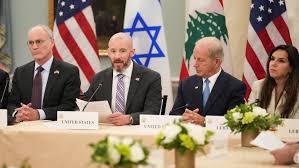
Israel, Lebanon Agree to Renew Ceasefire if Hezbollah stops attacks
-

 News5 days ago
Pashinyan’s Party Wins Key Armenian Election
-

 Sports7 days ago
West Ham Co-Chairman David Sullivan Steps Down Amid Allegations