
News
At Least 19 Killed as Powerful Earthquake Hits Southern Philippines

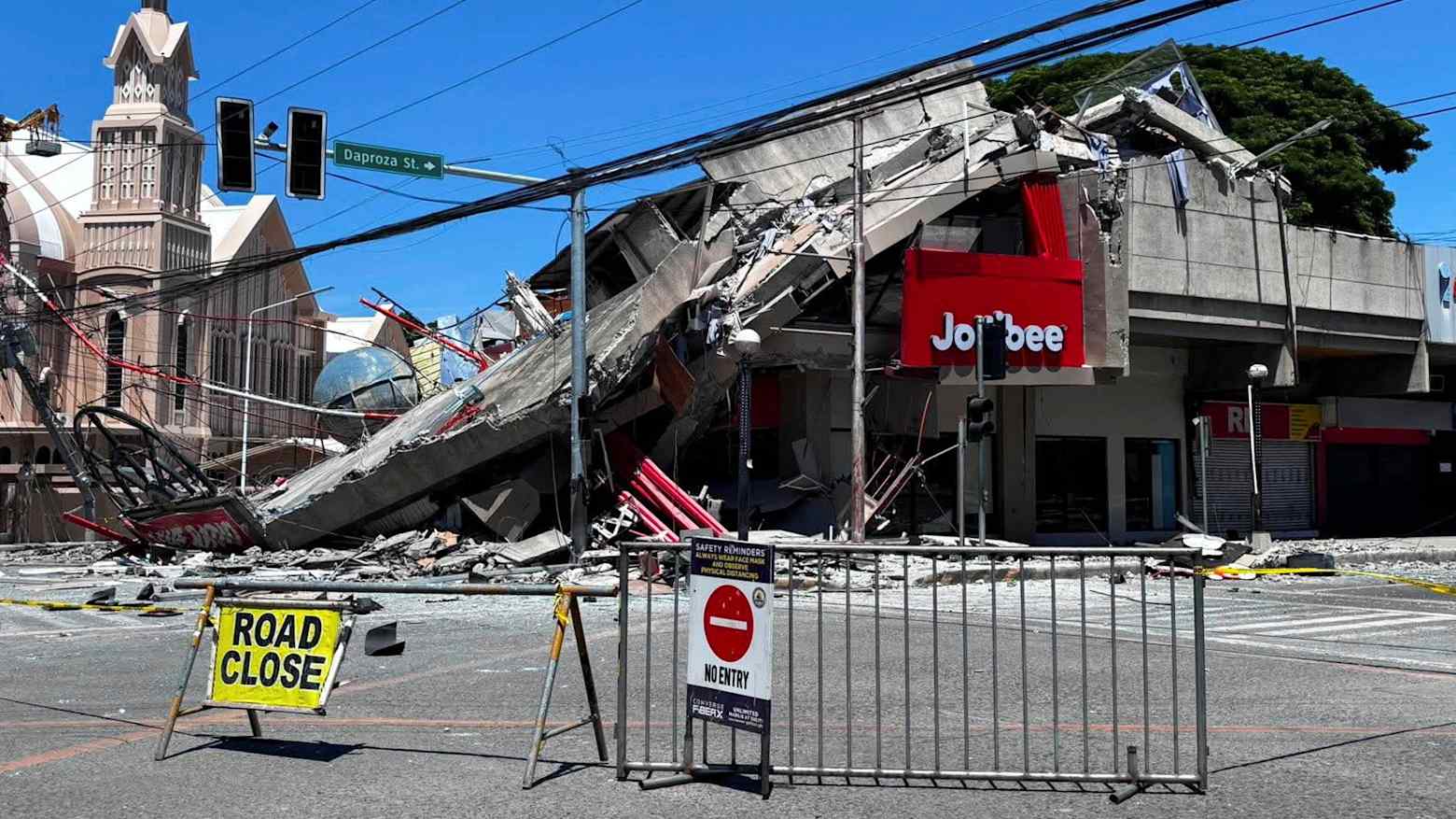
At least 19 people have died and more than 130 others have been injured after a powerful 7.8-magnitude earthquake struck off the coast of Mindanao in the southern Philippines, authorities said.
The earthquake occurred at 7:37 a.m. local time on Monday, triggering tsunami alerts across several countries, including the Philippines, Indonesia, Japan and Australia. Some of the warnings were later lifted after assessments showed a reduced threat.
Images and videos circulating on social media showed extensive damage in affected areas, including footage of a branch of Jollibee collapsing into rubble following the quake.
Local officials reported at least 134 injuries across the provinces of South Cotabato, Sultan Kudarat and Sarangani, as well as in the city of General Santos. The figures are expected to be reviewed and verified by the country’s National Disaster Risk Reduction and Management Council.
The national disaster agency typically releases its official casualty and damage assessment after gathering reports from local governments, police units and emergency response agencies.
Philippine President Ferdinand Marcos Jr. said government agencies were working together to respond to the disaster and assist affected communities.
“The national government is moving and we will not leave Mindanao behind,” the president said in a statement.
Marcos also ordered the suspension of classes in affected areas. The earthquake struck on the first day of the new school year, disrupting activities across parts of southern Philippines.
A video shared by a primary school in Davao Occidental showed frightened students crouching on shaking ground as the tremor struck. The footage also captured a nearby corrugated-roof structure collapsing. School officials later reported that no injuries occurred at the site.
Seismologists recorded more than 130 aftershocks following the main earthquake, with magnitudes ranging from 1.3 to 6.7, raising concerns about additional structural damage and risks to residents.
In the coastal province of Sarangani, power and communication services were temporarily disrupted before being restored.
General Santos, located near the quake’s epicentre, is widely known as the Philippines’ tuna industry hub and as the hometown of boxing legend and politician Manny Pacquiao.
The Philippines experiences frequent seismic activity because it lies along the Pacific “Ring of Fire,” a region characterized by intense tectonic movement and volcanic activity. While many earthquakes in the country cause limited damage, stronger events have proven devastating. In September last year, a 6.9-magnitude earthquake struck the Visayas region, resulting in more than 70 deaths.
Authorities continue to assess the full extent of the damage from Monday’s quake as rescue and relief operations remain underway across affected communities.






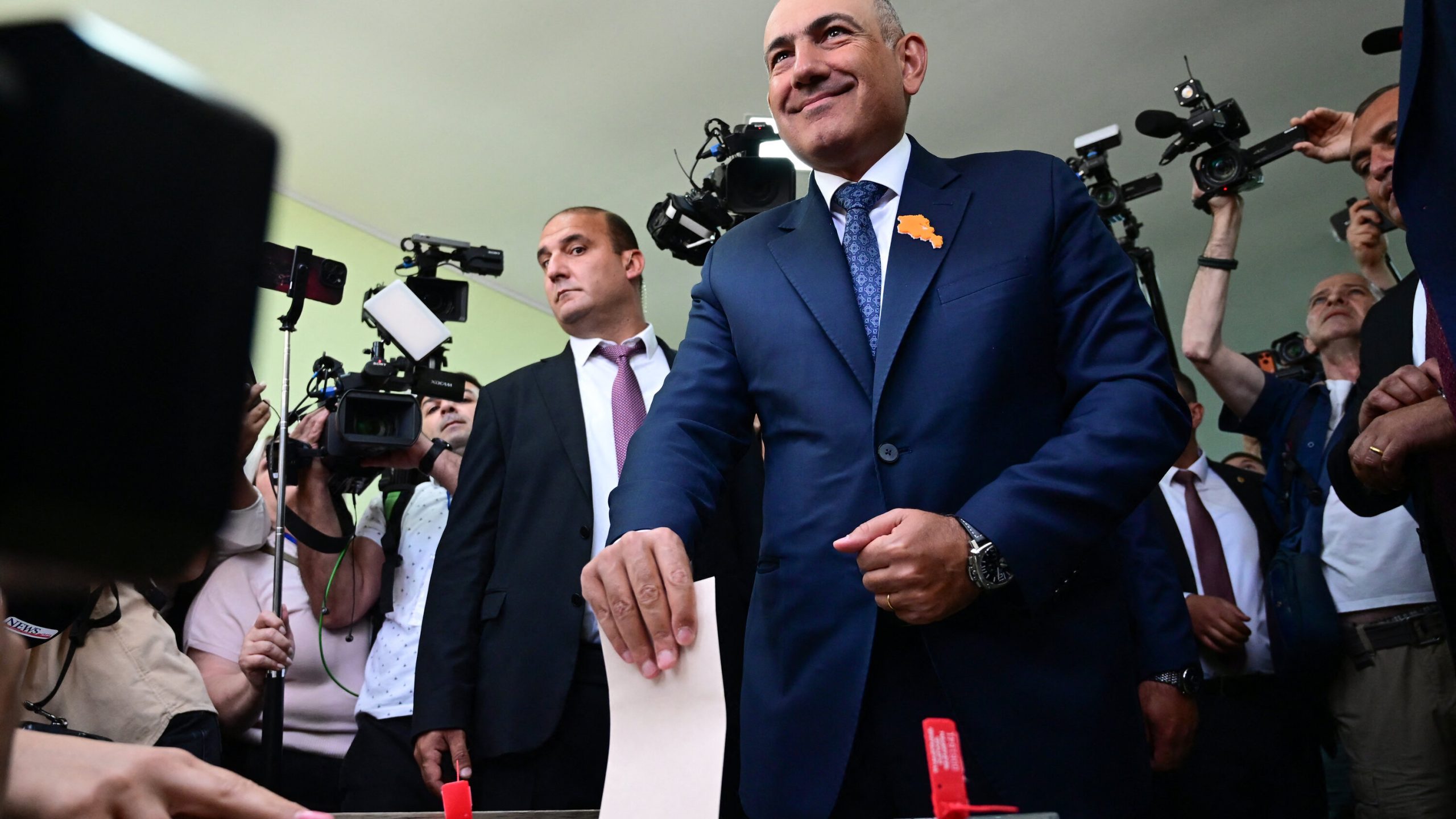
Armenian Prime Minister Nikol Pashinyan has secured a significant political victory after his centrist Civil Contract Party won a crucial general election, reinforcing his government’s efforts to strengthen ties with Western partners while maintaining relations with Russia.
According to preliminary results, Civil Contract received 49.8% of the vote, comfortably ahead of the pro-Russian Strong Armenia Alliance, which secured 23.2%. The Armenia Alliance, another opposition bloc with close ties to Moscow, finished third with 9.9%.
The election was widely viewed as a referendum on Armenia’s foreign policy direction as the South Caucasus nation seeks to deepen engagement with Europe while navigating economic and political pressure from Russia, its traditional ally and largest trading partner.
Declaring victory after the results emerged, Pashinyan said voters had endorsed a vision focused on stability and cooperation.
“The Armenian people voted for peace, regional prosperity and cooperation,” he said.
The vote was the first parliamentary election since Armenia’s defeat in the 2023 conflict with neighboring Azerbaijan over the disputed region of Nagorno-Karabakh, a development that reshaped the country’s political landscape and remains a major issue in domestic politics.
International reaction was swift, with European leaders welcoming the result. The European Union and France congratulated Pashinyan and praised Armenia’s growing cooperation with Western institutions.
Civil Contract’s victory came despite a decline in the prime minister’s popularity since his landslide win in 2021. Opinion polls before the election suggested support for Pashinyan had fallen to around 30%, largely due to public dissatisfaction over the handling of the Nagorno-Karabakh crisis.
Nineteen parties and alliances competed in the election, though only a handful gained enough support to enter parliament. Voter turnout reached 59%, according to electoral authorities.
Among the opposition groups, the Strong Armenia Alliance was led by Russian-Armenian businessman Samvel Karapetyan, while the Armenia Alliance was headed by former Armenian president Robert Kocharyan. Both have advocated closer ties with Moscow.
Despite pursuing stronger links with Europe, Pashinyan emphasized that Armenia would continue participating in the Russian-led Eurasian Economic Union (EAEU).
“We will continue the course of rapprochement with the West, but we will also continue our participation and membership in the Eurasian Economic Union,” he said.
The election took place against a backdrop of increasing pressure from Russia. In recent months, Russian President Vladimir Putin urged Armenia to clarify its long-term strategic direction and highlighted the economic advantages the country receives through its membership in the EAEU.
Moscow has also underscored Armenia’s dependence on discounted Russian energy supplies and recently imposed restrictions on imports of several Armenian products, including flowers, mineral water, cognac, fruits and vegetables.
Since coming to power in 2018, Pashinyan has sought to reduce Armenia’s reliance on Russia by advancing legislation aimed at beginning the process of closer integration with the European Union and by pursuing a US-backed peace process with Azerbaijan.
His government also hosted a major gathering of European leaders and Ukrainian President Volodymyr Zelensky in Yerevan earlier this year, further signaling Armenia’s growing engagement with Western partners.
However, Armenia remains far from EU membership, and the country has not yet obtained official candidate status.
At home, Pashinyan continues to face criticism from opponents who blame him for concessions made during efforts to normalize relations with Azerbaijan following the loss of Nagorno-Karabakh. Many critics remain angered by his approach to negotiations and his handling of issues involving former leaders of the region who remain imprisoned in Azerbaijan.
Nevertheless, the election result provides Pashinyan with a renewed mandate to continue balancing Armenia’s complex relationships with both the West and Russia while pursuing regional stability and economic development.
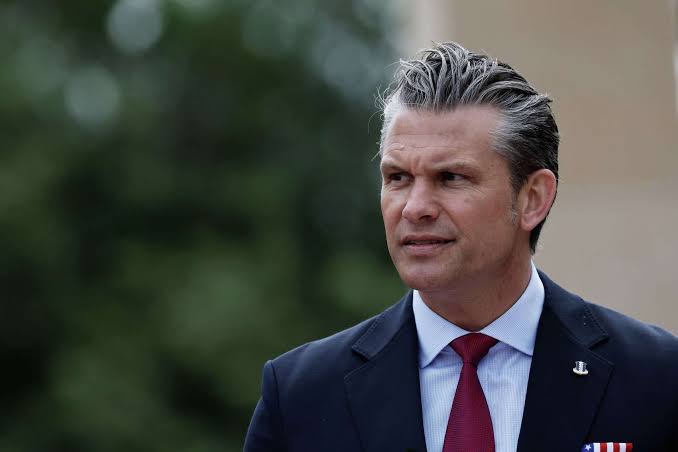
US Defense Secretary Pete Hegseth has used a D-Day anniversary speech in France to criticize European governments over migration, warning that parts of the continent are facing what he described as an “invasion” of migrants arriving by sea.
Speaking in Normandy during commemorations marking 82 years since the Allied landings that helped liberate Nazi-occupied Europe during World War II, Hegseth drew a controversial comparison between the historic military operation and modern migration flows into Europe.
“Sadly, today, different European beaches are stormed by different dangerous ideologies,” Hegseth said. Referring to migrant arrivals on the shores of Spain, Italy, Greece and Bulgaria, he asked: “When will European capitals do something about that invasion?”
Migration remains one of the most significant political issues across Europe, with several parties advocating stricter border controls and tougher immigration policies gaining support in recent years.
According to international migration data, sea arrivals into Europe reached their highest levels during the 2015 migration crisis, when more than one million people crossed the Mediterranean. Between April 2025 and March 2026, a combined 169,341 people arrived by sea in the UK, Greece, Italy, Spain and Cyprus, with crossings to the UK accounting for roughly 23% of the total.
During his address, Hegseth argued that some European countries had become too comfortable with freedoms secured through past sacrifices.
“The men who fought and died here restored freedom to Europe,” he said. “That freedom must be maintained by this generation of leaders and war fighters or what they fought for was merely temporary.”
The ceremony commemorated the historic D-Day landings of 6 June 1944, the largest seaborne military operation in history. The operation saw tens of thousands of Allied troops from the United States, the United Kingdom and Canada land on five beaches in Normandy as part of the campaign to liberate Western Europe from Nazi occupation.
Official figures show that between 1 January and 3 June 2026, 9,142 people crossed the English Channel in small boats from France to the UK, representing a 38% decline compared with the same period a year earlier.
Hegseth’s remarks are the latest criticism of European migration policies from senior members of the administration of US President Donald Trump.
Earlier this week, US Vice President JD Vance linked the fatal stabbing of British student Henry Nowak in Southampton to what he called a “mass invasion of migrants,” arguing that the appropriate response was “righteous anger.”
The comments drew criticism from the British government. A spokesperson for Downing Street said the victim’s family had expressed opposition to the case being used to deepen political divisions and criticized attempts by outside figures to interfere in British democratic debate.
Trump has also repeatedly criticized European immigration policies, previously telling the United Nations that several European countries were suffering the consequences of uncontrolled migration.
In response to similar remarks in the past, British Prime Minister Keir Starmer rejected the characterization of Europe while acknowledging the need to address illegal migration, particularly small-boat crossings across the English Channel.

China has imposed a one-year travel ban on four New Zealand lawmakers following their visit to Taiwan, marking the first known instance of New Zealand Members of Parliament facing such restrictions over a trip to the self-governed island.
New Zealand’s foreign ministry confirmed the move, with local media reporting that the MPs were informed of the ban after returning from their visit in May. According to reports, the Chinese Embassy indicated that the restriction could potentially be reduced or lifted if an apology were issued.
China considers Taiwan part of its territory and has consistently opposed official engagements with the island by foreign politicians and governments.
However, New Zealand officials noted that parliamentary visits to Taiwan have taken place for decades and are not viewed as inconsistent with New Zealand’s longstanding One China policy.
A spokesperson for New Zealand’s foreign minister, Winston Peters, said the decision came as a surprise.
“New Zealand MPs have visited Taiwan for decades and such visits are not inconsistent with New Zealand’s One China policy,” the spokesperson said.
In a statement, the Chinese Embassy in New Zealand said the restrictions were imposed because the lawmakers proceeded with the visit despite China’s objections. Beijing argued that the trip sent what it described as the wrong message to Taiwan’s ruling political leadership and supporters of Taiwanese independence.
China also maintained that the visit amounted to interference in its internal affairs.
The delegation included lawmakers from New Zealand’s governing coalition—Maureen Pugh, David Wilson and Laura McClure—alongside opposition Labour Party MP Duncan Webb.
McClure, a member of the ACT Party, rejected suggestions that she should apologise for the trip. Speaking to local media, she described the ban as a form of foreign interference and stressed that she had no regrets about visiting Taiwan.
She also expressed surprise at the decision, noting that similar parliamentary visits had taken place for many years without triggering such action.
According to McClure, New Zealand lawmakers have the right to travel internationally and engage with partners around the world as part of their role in a democratic society.
In response to the development, Peters has directed officials in both Beijing and Wellington to engage with Chinese authorities to gain a clearer understanding of what New Zealand views as a departure from previous practice.
New Zealand established formal diplomatic relations with China in 1972 and has since adhered to the One China policy, recognising Beijing as the sole official government of China. Under that policy, New Zealand maintains formal diplomatic ties with Beijing rather than Taipei.
At the same time, New Zealand has continued to maintain regular economic, cultural and parliamentary exchanges with Taiwan, reflecting its broader engagement with partners across the Asia-Pacific region.


Somali Referee Omar Artan Denied Entry to United States Ahead of 2026 World Cup

Injury Forces Timber to Miss World Cup for Netherlands

Eriksen Recovering Well After On-Field Collapse, Doctor Confirms


-

 Entertainment1 week ago
KSI Announces Departure from Sidemen After 13 Years
-

 News1 week ago
Police Conduct Under Review After Murder of Southampton Student Henry Nowak
-

 News1 week ago
White House Correspondents’ Dinner Rescheduled Following Security Incident
-

 Sports1 week ago
Rugby League Great John Kear Dies Aged 71
-
General1 week ago
Bodycam Footage Reveals Final Moments Before Arrested Man Became Unresponsive
-

 Sports1 week ago
Premier League Record Holder James Milner Retires After Remarkable 24-Year Career
-

 News6 days ago
China Bans Four New Zealand MPs Over Taiwan Trip
-

 Sports1 week ago
Real Madrid Close to Agreement with Ibrahima Konate After Liverpool Exit