
News
UK MPs Reject Under-16 Social Media Ban but Approve Flexible Government Powers


Members of Parliament in the United Kingdom have rejected a proposal to impose an Australia-style ban on social media for children under 16, instead backing plans that would give ministers broader and more flexible powers to regulate young people’s access online.
The proposed ban targeted platforms such as TikTok, Instagram and Snapchat. Australia introduced a similar nationwide ban for under-16s late last year, becoming the first country to adopt such a restriction. In January, peers in the House of Lords also expressed support for similar action in the UK.
Supporters of a ban included actor Hugh Grant. However, critics such as the National Society for the Prevention of Cruelty to Children (NSPCC) warned that an outright prohibition could push young people toward less regulated and potentially more dangerous parts of the internet.
The Conservative Party (UK) argued that the situation amounted to an “emergency” and called for legislation to protect children online. Meanwhile, the Liberal Democrats (UK) said the government’s refusal to commit to a ban was “simply not good enough”.
Opposition also came from the father of Molly Russell, the teenager who died at the age of 14 after viewing harmful online content. He argued that authorities should prioritise stricter enforcement of existing online safety laws rather than introducing a blanket ban.
The proposal for a social media ban had been introduced as an amendment to the Children’s Wellbeing and Schools Bill.
However, during a debate in the House of Commons on Monday, Education Minister Olivia Bailey urged MPs to reject the measure and support a more adaptable regulatory approach.
“Many parents and campaign groups have called for an outright ban on social media for under-16s,” Bailey said.
“Others, including children’s charities, have warned that a blanket ban could drive children towards less regulated corners of the internet or leave teenagers unprepared when they do come online.”
She noted that the government has launched a consultation to gather public views on how best to ensure children develop a “safer, healthier and more enriching relationship with the online world.”
The consultation will explore options such as introducing a minimum age requirement for social media platforms and disabling potentially addictive features like autoplay.
Under the government’s alternative plan, Liz Kendall, the UK’s Science Secretary, would be granted powers to restrict or ban access to social media and chatbots for children of certain ages. The powers could also be used to limit harmful or addictive features on platforms.
In addition, Kendall could be authorised to restrict children’s use of virtual private networks (VPNs) and review the country’s digital consent age.
Shadow Education Secretary Laura Trott from the Conservative Party pressed the government to impose stricter measures, including a clear age limit for social media use and a ban on mobile phones in schools.
She said research suggests “40% of children are shown explicit content during the school day”, adding: “That’s happening right now. This is an emergency. No more guidance, no more consultations. Legislate, do something about it.”
In the final vote, MPs rejected the House of Lords proposal for a blanket ban by 307 votes to 173, while backing Bailey’s plan, which leaves open the possibility of targeted restrictions in the future.
More than 100 MPs from the governing Labour Party (UK) abstained during the vote, including Sadik Al-Hassan, MP for North Somerset.
Speaking during the debate, Al-Hassan compared the potential harms of social media to dangerous medicines.
“Parents like me are locked in a daily battle that they simply cannot win alone, fighting platforms that have been specifically designed to keep children hooked,” he said.
“As a pharmacist, I know if a drug were causing such measurable harm for 78%, it would be withdrawn, reformulated or placed behind a counter with strict controls on who could access it.”








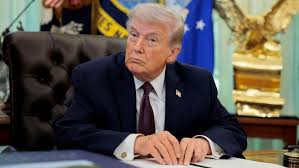
Donald Trump remains in “excellent health” and is fully capable of performing the duties of president, according to the results of his latest annual medical examination released by the White House.
The report, prepared by White House physician Sean Barbabella, stated that Trump, who will turn 80 next month, continues to demonstrate strong cardiovascular, pulmonary, neurological and overall physical health.
Barbabella concluded that the president is “fully fit to carry out all duties of the Commander-in-Chief and Head of State.”
Trump underwent the examination at Walter Reed National Military Medical Center on Tuesday. Afterwards, he wrote on his social media platform that “everything checked out perfectly.”
The assessment was his third publicly known medical check-up since returning to the White House.
Cognitive and Physical Health
According to the report, Trump achieved a perfect score of 30 out of 30 on the Montreal Cognitive Assessment, a widely used screening tool designed to evaluate memory, attention and other cognitive functions.
The examination found no significant concerns regarding his cognitive health.
Trump currently weighs 238 pounds (108kg), an increase of 14 pounds (6.3kg) compared with his April 2025 medical assessment. While noting his overall strong health, Barbabella recommended continued attention to diet, exercise and weight management.
The report also stated that Trump is taking medication to control cholesterol levels.
Heart Health and Activity Levels
The president’s resting heart rate was recorded at 73 beats per minute. According to the physician’s assessment, Trump’s cardiovascular condition compares favourably with his age group, with his estimated cardiac age being approximately 14 years younger than his actual age.
Barbabella noted that Trump’s demanding schedule, which includes frequent meetings, public appearances and regular physical activity, continues to support his overall wellbeing.
Update on Previous Health Concerns
Last year, visible bruising on Trump’s hands and swelling in his lower legs generated public discussion about his health.
In July, it was disclosed that he had been diagnosed with Chronic Venous Insufficiency, a condition in which veins in the legs struggle to return blood efficiently to the heart, potentially causing swelling in the lower limbs.
The latest report stated that some mild swelling remains but has improved since last year.
Barbabella also addressed the bruising on Trump’s hand, explaining that it is consistent with minor soft-tissue irritation caused by frequent handshaking while taking aspirin as part of a cardiovascular prevention regimen.
According to the physician, such bruising is a common and generally harmless side effect of aspirin therapy.
Ongoing Medical Care
The report indicated that Trump remains current on recommended preventive screenings and immunisations. In addition to aspirin, he continues to take two medications designed to manage cholesterol levels.
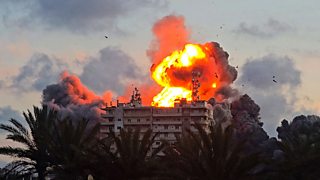
Israel has carried out a strike on the Lebanese capital, Beirut, marking only the second attack on the city since a ceasefire came into effect last month.
The Israel Defense Forces (IDF) said the operation, launched at about 14:00 local time (11:00 GMT), was conducted in a “targeted manner”, though officials did not immediately release further details about the intended target.
Israeli media, citing unnamed security sources, reported that the strike was aimed at Ali al-Husni, described as the head of the missile force in the Imam Hossein Division, an Iranian-backed militia aligned with Hezbollah.
The strike hit Dahieh, the densely populated southern suburb of Beirut regarded as Hezbollah’s main stronghold in the capital. Thick smoke rose above residential buildings following the explosion, while residents were heard calling out for relatives and neighbours as emergency crews rushed into the area.
The latest escalation comes despite efforts to maintain a fragile ceasefire between Israel and Hezbollah. Both sides have repeatedly accused each other of violating the agreement through cross-border attacks and military operations.
According to reports, Israel had previously avoided striking Beirut after a request from Donald Trump. However, the latest attack followed waves of Israeli airstrikes targeting Hezbollah infrastructure in southern Lebanon.
The renewed military activity also comes after Israeli Prime Minister Benjamin Netanyahu announced an expansion of ground operations following Hezbollah drone attacks on Israeli troops stationed in southern Lebanon and civilians in northern Israel.
On Wednesday, the IDF warned Lebanese residents to move north of the Zahrani River, approximately 40km from the Israeli border, saying Israeli forces would operate “with extreme force” in affected areas.
Lebanon’s health ministry said at least 11 people were killed in two separate Israeli strikes that targeted the city of Tyre and nearby eastern areas early on Thursday.
Videos shared on social media from Tyre showed streets illuminated by flames, smoke covering roads, and several vehicles damaged or burning. In daylight footage, a large fireball could be seen erupting near high-rise residential buildings, sending a mushroom-shaped plume of smoke into the sky as debris scattered through nearby streets.
The latest developments underline the continuing instability along the Israel-Lebanon border, with growing concerns that repeated exchanges of fire could trigger a wider regional confrontation involving Iran-backed armed groups and Israeli forces.
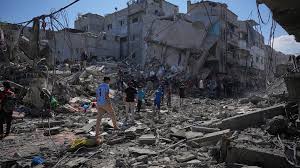
The head of the military wing of Hamas, Mohammed Odeh, has been killed in an Israeli strike in Gaza City, only days after the death of the group’s previous military commander in a separate attack.
Local medics and witnesses said the strike, which took place on Tuesday, also left dozens of people injured after a residential building in one of Gaza City’s busiest market districts was hit.
The Israeli military and the Shin Bet security agency said the operation targeted buildings allegedly being used as a hideout by Odeh. According to a joint statement, Israeli forces had tracked his movements and those of his associates over several months before carrying out the strike.
On Wednesday, Hamas confirmed that Odeh had died in the attack along with his wife and two of his children.
Although a ceasefire between Israel and Hamas was agreed in October, incidents of violence have continued to occur across the Gaza Strip on an almost daily basis, highlighting ongoing tensions despite international hopes for a more stable security situation.
Tuesday’s strike hit the top three floors of the al-Kayali building in central Gaza City, where crowds had gathered for shopping activities ahead of the Muslim holiday of Eid al-Adha.
Emergency and rescue teams quickly moved to the scene to assist victims and search through the damaged structure. However, witnesses said rescue operations were slowed by severe destruction to the building and heavy congestion in the surrounding streets.
In a statement, the Israel Defense Forces and Shin Bet said: “As part of the joint operation by the IDF and Shin Bet to eliminate the terrorist Mohammed Odeh, several buildings in the heart of Gaza City that served as a hideout for him were attacked, after months of intelligence surveillance in order to track his movements and the movements of his assistants in the organisation.”
The statement added that Israeli forces also struck “a nearby apartment belonging to a Hamas terrorist who raided on October 7 and was part of Odeh’s circle of assistants,” referring to the Hamas-led attack on southern Israel that sparked the war in Gaza.
The latest developments come as international mediators and humanitarian organisations continue to push for renewed efforts aimed at reducing violence and improving conditions for civilians affected by the prolonged conflict.


Why I Believe Portugal or Brazil Will Win the 2026 FIFA World Cup

Premier League Record Holder James Milner Retires After Remarkable 24-Year Career

Rugby League Great John Kear Dies Aged 71


-
 News1 week ago
Marco Rubio Says US-Iran Deal Could Come Monday
-

 Entertainment1 week ago
BTS Triumph at American Music Awards as Black Eyed Peas Reunite
-

 Tech1 week ago
Ferrari Unveils First Fully Electric Car
-
 News1 week ago
At Least 90 Killed in China Coal Mine Explosion
-

 News1 week ago
Oil Prices Fall on Hopes of US-Iran Peace Deal
-
 Sports1 week ago
Bruno Fernandes Named Premier League Player of the Season
-

 News1 week ago
Four Killed After School Minibus Hit by Train in Belgium
-

 Sports5 days ago
Sinner Shock Exit Blows French Open Wide Open After Five-Set Defeat