
News
Trump to be Interviewed by FBI in Connection with Pennsylvania Rally Shooting Investigation

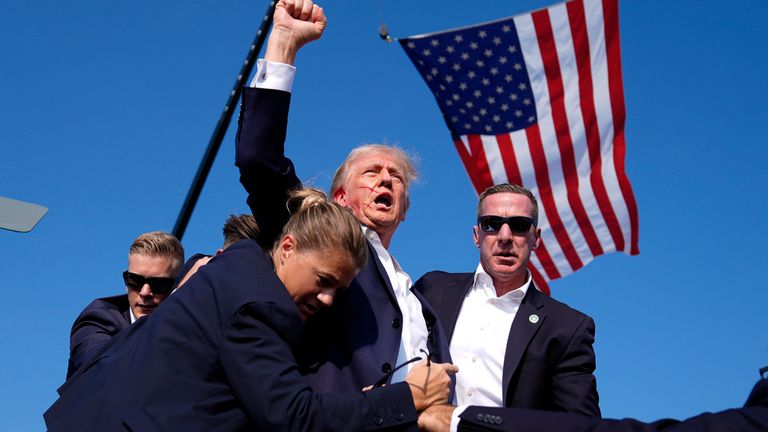
Donald Trump has agreed to be interviewed by the FBI as part of their ongoing investigation into an assassination attempt at his rally in Pennsylvania earlier this month. In a call with reporters on Monday, the FBI did not specify a date for the interview but described it as “a standard victim interview we do for any other victim of crime.”
FBI Special Agent Kevin Rojek stated, “We want to get his perspective on what he observed.” Despite extensive evidence review, investigators have yet to determine a motive behind Thomas Matthew Crooks’ decision to open fire on July 13.
Newly released text messages have revealed that the 20-year-old suspect was identified by a local SWAT team more than 90 minutes before the shooting—much earlier than previously reported. On Monday, the FBI indicated that Crooks conducted “careful planning” before the July 13 rally and made “significant efforts” to conceal his activities.
According to Mr. Rojek, Crooks’ preparations included six purchases of components for explosive devices, carried out in a manner that would have “significantly raised the suspicions of his parents.” While the FBI’s investigation is primarily focused on Crooks and his motivations, rather than security lapses, Mr. Rojek mentioned that investigators believe Crooks arrived at the venue at 13:50 on the day of the shooting and flew a drone around the area for 11 minutes shortly thereafter.
The FBI’s timeline suggests that Crooks left the venue around 16:00, only to return and be identified as a suspicious individual shortly after 17:00. At approximately 17:30, he was observed using a range finder, just under half an hour before he was seen walking near the AGR building with a backpack. At 18:11, a local police officer confronted him, about 30 seconds before he fired eight shots toward Trump and the crowd.
Crooks is now believed to have conducted “early surveillance” of the site on July 11, two days before the rally took place. The investigation continues as authorities seek to understand his motivations and actions leading up to the event.






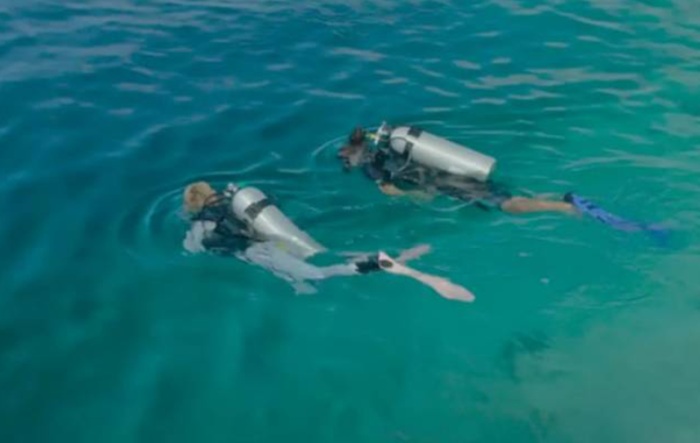
A rescue diver has died while taking part in a recovery operation for five Italian scuba divers who disappeared during a deep-water cave expedition in the Maldives.
Staff Sergeant Mohamed Mahdhee was rushed to hospital in critical condition after the operation but later died from his injuries, authorities confirmed.
The rescue mission was launched after five Italian nationals went missing while exploring underwater caves near Vaavu Atoll, around 100km south of the capital, Male.
Officials believe the divers descended to depths of about 50m during the excursion. So far, only one body is believed to have been recovered from a cave roughly 60m underwater.
Authorities say the incident may be the deadliest single diving accident ever recorded in the Maldives, a country internationally known for its coral reefs and luxury tourism industry.
According to reports, four of the victims were members of a research group from the University of Genoa, including ecology professor Monica Montefalcone, her daughter and two researchers.
The fifth victim was identified as a diving instructor and boat operations manager.
Local media reported that the group entered the water from the yacht Duke of York on Thursday morning before failing to resurface.
Police said weather conditions in the area had been rough at the time of the dive, with authorities issuing a yellow warning for passenger boats and fishermen.
Officials also noted that recreational scuba divers in the Maldives are generally restricted to a maximum depth of 30m, raising questions about why the group attempted to enter caves located around 60m below the surface.
Italy’s foreign ministry confirmed that approximately 20 other Italian nationals aboard the yacht were unharmed and are receiving support from the Italian embassy in Colombo.
Search and recovery efforts remain ongoing.
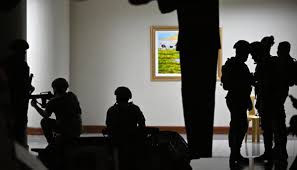
The Senate of the Philippines was placed under lockdown on Wednesday after gunshots were heard outside the building in Manila, where Senator Ronald Dela Rosa had reportedly sought refuge amid fears of arrest linked to an International Criminal Court investigation.
Authorities confirmed that shots were fired near the Senate complex, though officials said there were no casualties and have not disclosed who opened fire.
Television footage showed heavily armed police commandos and anti-riot officers entering and surrounding the Senate building while lawmakers remained inside during the security lockdown.
Dela Rosa, a close ally of former Philippine president Rodrigo Duterte, had earlier claimed he believed his arrest was imminent and urged supporters to resist any attempt to detain him.
The senator is accused by the ICC of involvement in alleged extrajudicial killings during Duterte’s controversial anti-drug campaign, when Dela Rosa served as national police chief.
Thousands of suspected drug dealers and users were killed during the so-called “war on drugs,” which remains under international investigation for possible crimes against humanity.
Duterte himself has been detained in The Hague since March 2025 pending ICC proceedings.
Despite speculation surrounding a possible arrest operation, Philippine Interior Secretary Jonvic Remulla denied that authorities were attempting to detain Dela Rosa.
“We are not here to arrest Senator Dela Rosa,” Remulla told reporters. “In fact, we are here to protect him.”
He added that President Ferdinand Marcos Jr had issued “strict instructions” to ensure the safety of senators during the incident.
Officials said Dela Rosa remained safe and under security protection inside the Senate complex.
No arrests have yet been made in connection with the gunfire, while authorities continue investigating the incident.
Senate speaker Alan Peter Cayetano appealed to the public for assistance, asking anyone with video footage of the shooting to share it with investigators.
Outside the Senate, protesters gathered demanding Dela Rosa’s detention and extradition to stand trial alongside Duterte.
The senator’s legal team has already petitioned the Supreme Court of the Philippines to block any extradition process.
The political crisis comes amid growing tensions between the Duterte family and the administration of Marcos.
Although the two political dynasties were once allies, their relationship collapsed two years ago and has since developed into a bitter feud.
Earlier this week, the House of Representatives of the Philippines voted to begin impeachment proceedings against Vice-President Sara Duterte, Rodrigo Duterte’s daughter.
The Senate, where Duterte allies still hold significant influence, has the authority to decide whether the impeachment effort succeeds.

The House of Representatives of the Philippines has voted to impeach Philippine Vice-President Sara Duterte for a second time, escalating a deepening political conflict that could threaten her chances of running for president in 2028.
Monday’s vote now sends the impeachment case to the Senate of the Philippines, where senators will decide whether Duterte should be convicted and removed from office.
If found guilty, the 47-year-old daughter of former Philippine president Rodrigo Duterte would also be barred from holding public office in the future.
Sara Duterte is currently considered one of the leading early contenders to succeed President Ferdinand Marcos Jr in the next presidential election, despite an increasingly bitter fallout between the former allies.
The impeachment complaint centres on allegations that Duterte misused public funds and made public threats against Marcos, his wife and his cousin, a former House speaker.
The vice-president had previously been impeached in 2025 over the same accusations, but the Supreme Court of the Philippines halted the process on technical grounds before a Senate trial could begin.
The case resurfaced this year after a House committee reviewing the allegations concluded there were sufficient grounds to proceed with impeachment.
Duterte has strongly denied wrongdoing and dismissed the proceedings as politically motivated.
In a formal written response, she described the impeachment case as “nothing more than a scrap of paper” and declined to attend committee hearings examining the accusations.
Following Monday’s vote, Duterte’s legal team said the responsibility now lies with her accusers to prove their allegations in accordance with the law.
“The burden now rests on the accusers to substantiate their claims,” her defence counsel said in a statement.
A total of 257 out of 290 lawmakers present voted in favour of impeachment, comfortably surpassing the one-third threshold required to send the case to the Senate.
Political analysts say the vote highlighted the strength of Marcos’ influence within the House of Representatives, where lawmakers are often aligned with the sitting president in the Philippines’ patronage-driven political system.
However, Duterte’s fate in the Senate remains uncertain.
Unlike House members, Philippine senators are elected nationwide and are generally viewed as more politically independent because many harbour presidential or vice-presidential ambitions of their own.
The Senate has historically served as a launching platform for future national candidates, making the outcome of any impeachment trial difficult to predict.


Celtic F.C. Stun Heart of Midlothian F.C. to Seal Dramatic Title Win

Rescue Diver Dies During Search for Italian Divers Missing in Maldives Cave Tragedy

Madonna, Shakira and BTS to Headline Historic World Cup Final Half-Time Show


-

 News1 week ago
Frontier Airlines Plane Strikes and Kills Runway Trespasser During Take-Off at Denver Airport
-

 Sports1 week ago
Valverde Hospitalised Following Alleged Clash With Tchouameni
-

 News1 week ago
WHO Says Global Risk Remains Low Despite Hantavirus Cruise Ship Outbreak
-

 Sports1 week ago
Shakira Unveils Official Song for 2026 World Cup Featuring Burna Boy
-
 News1 week ago
US Court Unseals Purported Jeffrey Epstein Suicide Note
-
 News6 days ago
Philippine Vice-President Sara Duterte Impeached Again
-

 Entertainment1 week ago
Coroner Says Investigation Into Liam Payne’s Death Still Awaiting Evidence From Argentina
-
News6 days ago
US and French Passengers Test Positive After Deadly Hantavirus Cruise Ship Outbreak