
News
Trump to be Interviewed by FBI in Connection with Pennsylvania Rally Shooting Investigation

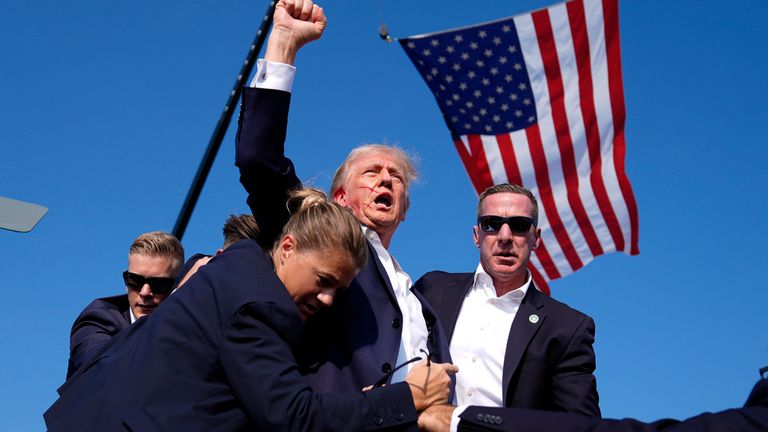
Donald Trump has agreed to be interviewed by the FBI as part of their ongoing investigation into an assassination attempt at his rally in Pennsylvania earlier this month. In a call with reporters on Monday, the FBI did not specify a date for the interview but described it as “a standard victim interview we do for any other victim of crime.”
FBI Special Agent Kevin Rojek stated, “We want to get his perspective on what he observed.” Despite extensive evidence review, investigators have yet to determine a motive behind Thomas Matthew Crooks’ decision to open fire on July 13.
Newly released text messages have revealed that the 20-year-old suspect was identified by a local SWAT team more than 90 minutes before the shooting—much earlier than previously reported. On Monday, the FBI indicated that Crooks conducted “careful planning” before the July 13 rally and made “significant efforts” to conceal his activities.
According to Mr. Rojek, Crooks’ preparations included six purchases of components for explosive devices, carried out in a manner that would have “significantly raised the suspicions of his parents.” While the FBI’s investigation is primarily focused on Crooks and his motivations, rather than security lapses, Mr. Rojek mentioned that investigators believe Crooks arrived at the venue at 13:50 on the day of the shooting and flew a drone around the area for 11 minutes shortly thereafter.
The FBI’s timeline suggests that Crooks left the venue around 16:00, only to return and be identified as a suspicious individual shortly after 17:00. At approximately 17:30, he was observed using a range finder, just under half an hour before he was seen walking near the AGR building with a backpack. At 18:11, a local police officer confronted him, about 30 seconds before he fired eight shots toward Trump and the crowd.
Crooks is now believed to have conducted “early surveillance” of the site on July 11, two days before the rally took place. The investigation continues as authorities seek to understand his motivations and actions leading up to the event.








China has imposed a one-year travel ban on four New Zealand lawmakers following their visit to Taiwan, marking the first known instance of New Zealand Members of Parliament facing such restrictions over a trip to the self-governed island.
New Zealand’s foreign ministry confirmed the move, with local media reporting that the MPs were informed of the ban after returning from their visit in May. According to reports, the Chinese Embassy indicated that the restriction could potentially be reduced or lifted if an apology were issued.
China considers Taiwan part of its territory and has consistently opposed official engagements with the island by foreign politicians and governments.
However, New Zealand officials noted that parliamentary visits to Taiwan have taken place for decades and are not viewed as inconsistent with New Zealand’s longstanding One China policy.
A spokesperson for New Zealand’s foreign minister, Winston Peters, said the decision came as a surprise.
“New Zealand MPs have visited Taiwan for decades and such visits are not inconsistent with New Zealand’s One China policy,” the spokesperson said.
In a statement, the Chinese Embassy in New Zealand said the restrictions were imposed because the lawmakers proceeded with the visit despite China’s objections. Beijing argued that the trip sent what it described as the wrong message to Taiwan’s ruling political leadership and supporters of Taiwanese independence.
China also maintained that the visit amounted to interference in its internal affairs.
The delegation included lawmakers from New Zealand’s governing coalition—Maureen Pugh, David Wilson and Laura McClure—alongside opposition Labour Party MP Duncan Webb.
McClure, a member of the ACT Party, rejected suggestions that she should apologise for the trip. Speaking to local media, she described the ban as a form of foreign interference and stressed that she had no regrets about visiting Taiwan.
She also expressed surprise at the decision, noting that similar parliamentary visits had taken place for many years without triggering such action.
According to McClure, New Zealand lawmakers have the right to travel internationally and engage with partners around the world as part of their role in a democratic society.
In response to the development, Peters has directed officials in both Beijing and Wellington to engage with Chinese authorities to gain a clearer understanding of what New Zealand views as a departure from previous practice.
New Zealand established formal diplomatic relations with China in 1972 and has since adhered to the One China policy, recognising Beijing as the sole official government of China. Under that policy, New Zealand maintains formal diplomatic ties with Beijing rather than Taipei.
At the same time, New Zealand has continued to maintain regular economic, cultural and parliamentary exchanges with Taiwan, reflecting its broader engagement with partners across the Asia-Pacific region.
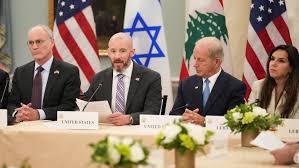
Israel and Lebanon have reached a new agreement aimed at strengthening their fragile ceasefire, with plans to establish a number of pilot security zones inside Lebanon where Hezbollah operatives would not be permitted to operate, according to an announcement from the US State Department.
In a joint statement, the parties said the arrangement is dependent on a “complete cessation” of attacks by the Iran-backed Hezbollah movement, along with several other conditions intended to reduce tensions and improve security along the border.
The statement also emphasized a shared commitment by the three countries to reject “any attempt, by any state or non-state actor, to hold Lebanon’s future hostage,” highlighting ongoing diplomatic efforts to support stability in the region.
The announcement was made in Washington on Wednesday following a day of violence in which Israeli strikes killed at least nine people in southern Lebanon, while Hezbollah launched rockets into northern Israel.
Despite the new diplomatic breakthrough, Lebanese state media reported that Israeli strikes continued in southern Lebanon on Thursday, with at least one attack resulting in casualties.
Hezbollah, a Shia Muslim militia, political party and social movement, remains the most influential armed group in Lebanon. Backed by Iran, it has developed military capabilities that surpass those of the Lebanese army and has engaged in multiple conflicts with Israel over the years. The group is designated as a terrorist organization by Israel and several other countries, including the United Kingdom and the United States.
The latest agreement, reached after a fourth round of talks mediated by the United States, requires the withdrawal of all Hezbollah operatives from the area between the Israeli border and the Litani River, located about 30 kilometers (19 miles) north of the frontier. The area is currently occupied by Israeli ground forces.
Under the arrangement, the United States will assist in guiding the creation of pilot zones where the Lebanese Armed Forces will exercise exclusive authority and control, preventing the presence of non-state armed groups.
While the agreement outlines the framework for these zones, it does not include maps identifying their exact locations, nor does it provide detailed explanations of how they will function operationally.
The deal follows a partial ceasefire announced on Monday. Lebanese officials said that arrangement would see Israel refrain from carrying out strikes on the capital, Beirut, while Hezbollah would halt attacks on Israeli territory.
Representatives from Israel and Lebanon are scheduled to meet again on 22 June for further negotiations, with the goal of advancing toward a broader and more comprehensive agreement that could contribute to a more durable peace.
Lebanon became directly involved in the wider conflict between the United States, Israel and Iran on 2 March after Hezbollah launched rockets into Israel following an Israeli strike that killed Iran’s supreme leader. Israel subsequently responded with an extensive air campaign across Lebanon and launched a ground operation in the country’s south.
Earlier efforts to halt the fighting, including a US-brokered ceasefire reached on 16 April, were unable to bring a lasting end to hostilities. More recently, Prime Minister Benjamin Netanyahu instructed the Israeli military to intensify operations against Hezbollah and expand its advance into southern Lebanon following drone and rocket attacks on communities in northern Israel.
According to Lebanon’s health ministry, at least 3,516 people have been killed in the country since the conflict began. The ministry’s figures do not differentiate between civilians and combatants.
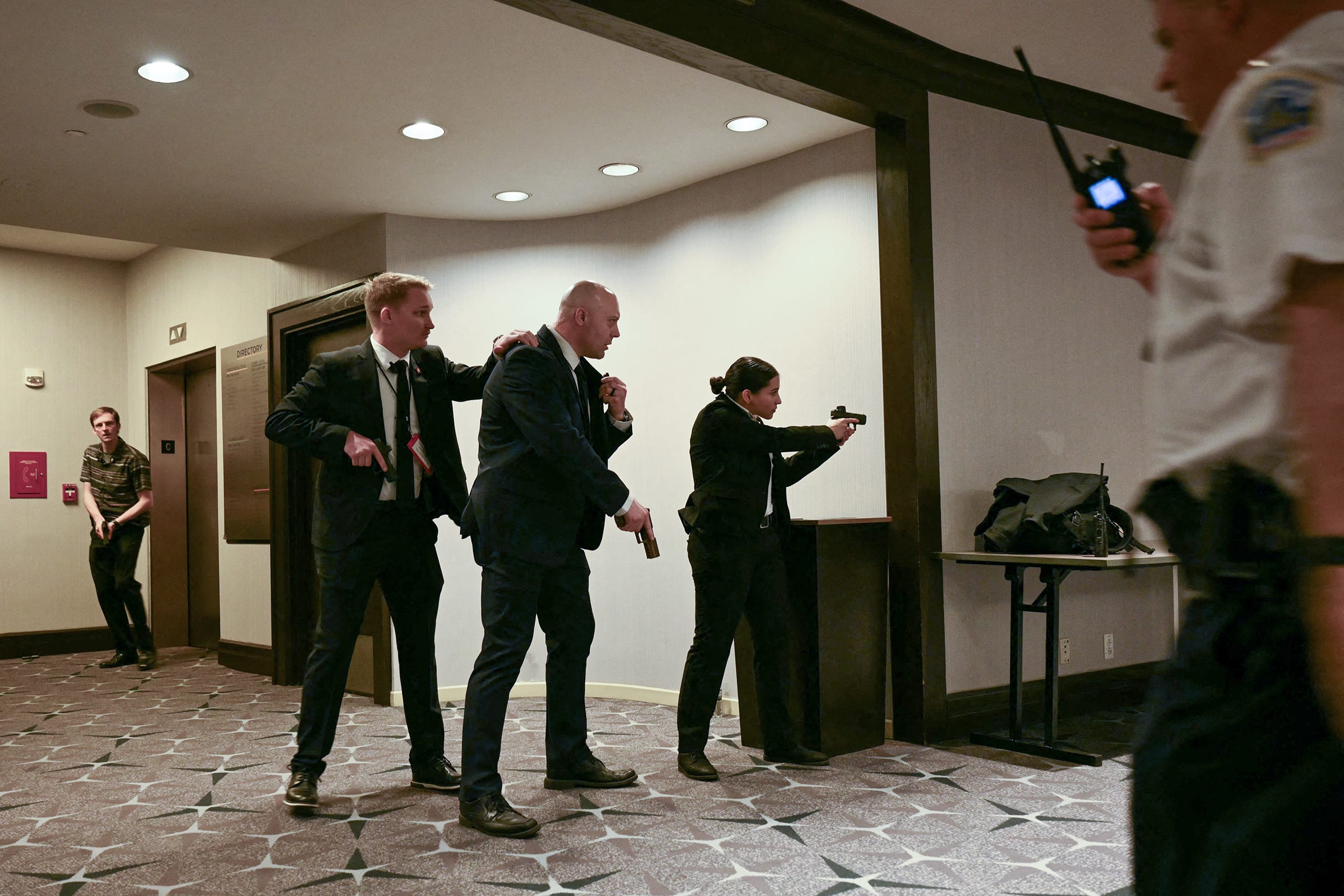
The annual White House Correspondents’ Dinner has been rescheduled for July 24 after the original gathering was suspended following a shooting incident involving a gunman who attempted to gain access to the venue.
In a letter to members, Weijia Jiang said the event will now take place with significantly enhanced security measures and revised access procedures.
The dinner is set to be held at the Waldorf Astoria Washington DC, and Donald Trump has confirmed that he plans to attend.
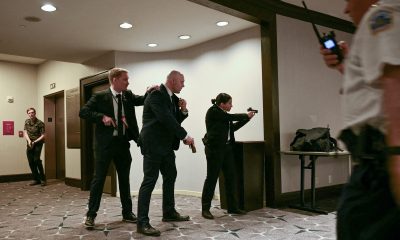
The original event, scheduled for April 25, was interrupted after an armed suspect allegedly attempted to breach security, prompting an exchange of gunfire with members of the United States Secret Service. During the incident, Trump, Vice-President JD Vance and other senior officials were escorted from the stage by security personnel.
According to the United States Department of Justice, the suspect was subdued at the scene. One Secret Service agent was injured by shotgun fire during the confrontation.
Trump welcomed the decision to reschedule the event, describing it as a demonstration of resilience.
“This announcement is a very good thing in that we cannot allow lunatics to change our way of life, or even its scheduling,” he wrote on social media.
The White House Correspondents’ Association said it has spent recent weeks raising funds to ensure members who purchased tickets for the April event will not be required to pay again for the July gathering. Organisers described the rescheduled dinner as a more intimate event than originally planned.
The association is also offering financial assistance to scholarship recipients who wish to return to Washington to attend the event.
Trump said he has accepted an invitation to address attendees at the rescheduled dinner and joked that he may reconsider remarks he had planned to deliver in April.
The annual dinner traditionally brings together the president, senior government officials, members of Congress, journalists and media executives to celebrate journalism and press freedom.
Authorities later identified the suspect in the April incident as 31-year-old Cole Tomas Allen, who police said was carrying a shotgun, a handgun and multiple knives when he approached the security checkpoint.
Following the shooting, Trump said he intended to work with organisers to ensure the event was rescheduled as quickly as possible. The new July date will now allow the long-running Washington tradition to proceed under heightened security arrangements.


China Bans Four New Zealand MPs Over Taiwan Trip

Israel, Lebanon Agree to Renew Ceasefire if Hezbollah stops attacks

Real Madrid Close to Agreement with Ibrahima Konate After Liverpool Exit


-
 Entertainment1 week ago
BTS Triumph at American Music Awards as Black Eyed Peas Reunite
-

 Tech1 week ago
Ferrari Unveils First Fully Electric Car
-

 News1 week ago
Four Killed After School Minibus Hit by Train in Belgium
-
 Entertainment3 days ago
KSI Announces Departure from Sidemen After 13 Years
-

 Sports1 week ago
Sinner Shock Exit Blows French Open Wide Open After Five-Set Defeat
-
 News1 week ago
New Hamas Military Commander Killed in Gaza City Strike
-

 Sports1 week ago
Manchester United Move Closer to Signing Ederson in £38m Midfield Deal
-
 News1 week ago
Israeli Strike Hits Beirut as Tensions Escalate Despite Ceasefire