
News
Syria strikes new ceasefire deal with SDF

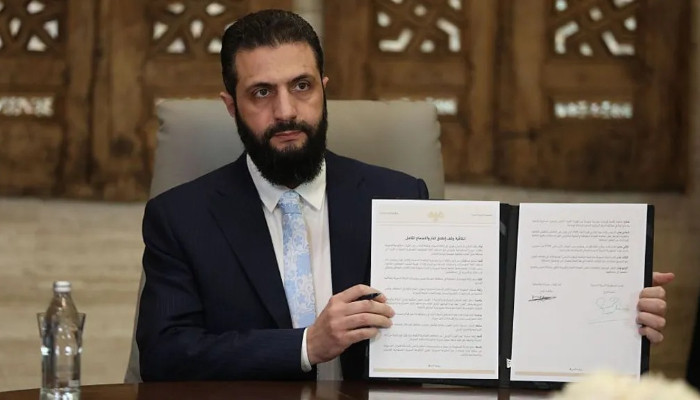
The Syrian government has announced an immediate nationwide ceasefire with the Kurdish-led Syrian Democratic Forces (SDF), a move that Syrian state media says effectively consolidates state authority across almost the entire country and brings an end to nearly two weeks of clashes.
The ceasefire is anchored in a comprehensive 14-point agreement that provides for the gradual integration of the SDF into Syria’s military and state institutions. Officials in Damascus described the accord as a major step toward restoring national unity after years of fragmentation brought on by the civil war.
Speaking in the capital, President Ahmed al-Sharaa said the agreement would enable Syrian state institutions to reassert formal control over three key eastern and northern governorates: al-Hasakah, Deir Ezzor and Raqqa. He emphasised that the deal creates a framework for stability, governance and security to return under a single national authority.
The announcement followed high-level talks in Damascus between President al-Sharaa and the US special envoy to Syria, Tom Barrack. Barrack welcomed the ceasefire and broader agreement, describing it as an important step toward a “unified Syria” and a reduction in long-running internal tensions.
SDF commander Mazloum Abdi was expected to attend the meeting in Damascus but was unable to travel due to adverse weather conditions. His visit has been rescheduled for Monday, according to President al-Sharaa, underscoring continued engagement between both sides as the agreement moves toward implementation.
Kurdish-led forces established their autonomous administration in northern and eastern Syria nearly a decade ago, during the height of the country’s civil war. The SDF received strong backing from the United States, which armed and trained the group as its primary local partner in the campaign against the Islamic State group (IS).
With sustained US military support, the SDF succeeded in driving IS from large parts of northeastern Syria and subsequently governed a mix of Kurdish- and Arab-majority areas, developing parallel civilian and security institutions during years of conflict.
Under the new agreement, Syrian authorities will assume control of civilian institutions, border crossings, and strategic oil and gas fields that have long underpinned Kurdish self-rule. These measures are intended to bring economic assets and administrative systems back under central state management.
The deal also outlines the integration of SDF military and security personnel into Syria’s defence and interior ministries, subject to a vetting process. In addition, Damascus will take over responsibility for prisons and detention camps holding tens of thousands of foreign IS fighters and their families, a move officials say will strengthen national oversight and long-term security arrangements.

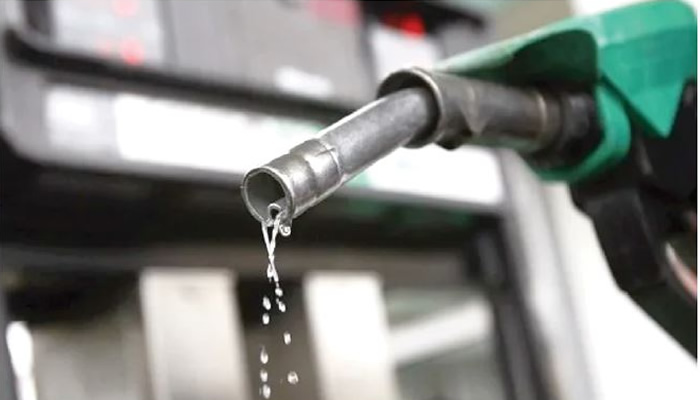
Global oil prices dropped sharply while Asian stock markets rose after growing optimism that the United States, Iran and Israel could move closer to ending their conflict.
Marco Rubio said during a visit to India that negotiators had “a pretty solid thing on the table” and suggested an agreement could potentially be reached on Monday.
Following the comments, global benchmark Brent crude fell 5.5% to $97.90 a barrel, while US crude dropped 5.9% to $90.93.
Earlier, Donald Trump indicated that a possible agreement would involve reopening the Strait of Hormuz, the crucial shipping route through which about one-fifth of global oil and liquefied natural gas supplies normally pass.
The strategic waterway has effectively remained closed since fighting began on 28 February, creating major disruption in global energy markets.
Rubio said negotiations were still ongoing and cautioned against assuming a breakthrough was guaranteed, though he acknowledged progress had been made.
Trump also said over the weekend that he held a “very good call” with leaders from Saudi Arabia, the United Arab Emirates and Qatar regarding a “Memorandum of Understanding pertaining to PEACE”.
The US president stated that an agreement had been “largely negotiated” between Washington, Tehran and other involved countries, although final details were still being discussed.
Trump added that he also spoke with Israeli Prime Minister Benjamin Netanyahu and described the conversation as positive.
While Trump insisted any eventual deal would prevent Iran from obtaining nuclear weapons, he later warned that negotiators should “take their time and get it right”.
Iranian foreign ministry spokesman Esmaeil Baqaei said the positions of Tehran and Washington had moved closer in recent days, though he cautioned that major disagreements still remained.
Energy markets have experienced heavy volatility since early March after Iran threatened shipping in the Strait of Hormuz in response to attacks by the US and Israel.
Despite Monday’s sharp decline, oil prices remain significantly above pre-war levels, with Brent crude trading around $70 per barrel before the conflict began.
Analysts say any agreement could help stabilise energy markets, although full recovery may take years.
Saul Kavonic, head of energy research at MST Financial, said there was now “some light at the end of the tunnel” for oil markets, but warned that supply conditions could remain tight through 2027 due to the time needed to restore shipping routes, repair infrastructure and rebuild depleted global oil reserves.
Lars Jensen, chief executive of Vespucci Maritime and former Maersk director, said the shipping industry would still remain cautious even if a deal were announced quickly.
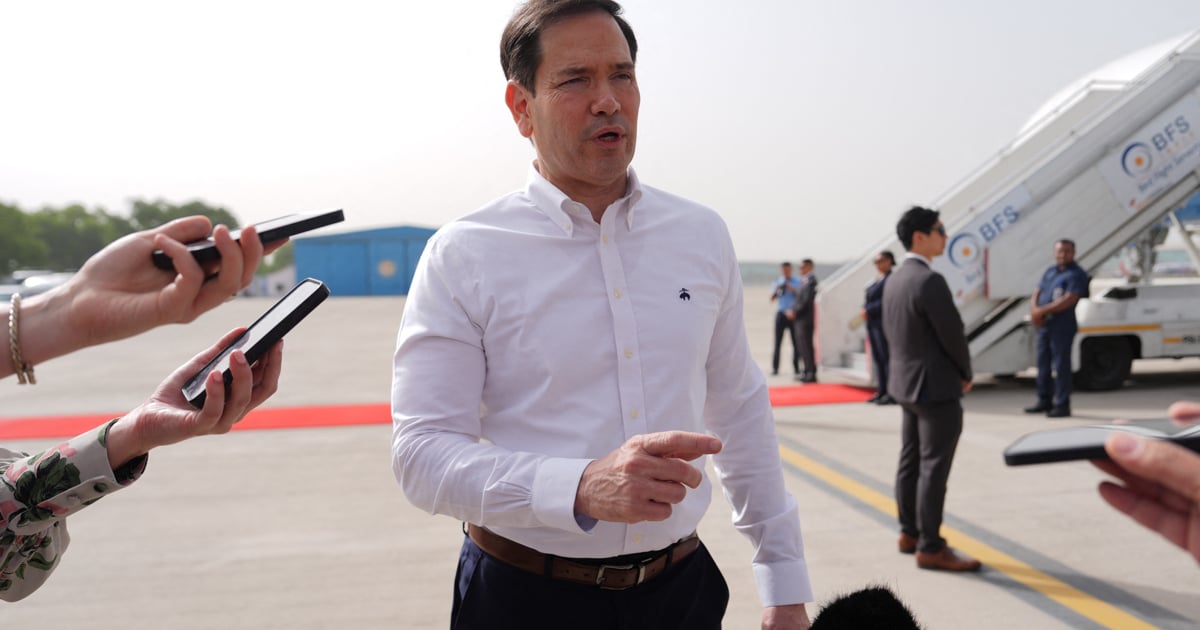
Marco Rubio says negotiators from the United States and Iran may reach an agreement as early as Monday, describing ongoing talks as having “a pretty solid thing on the table”.
Speaking during a visit to India, Rubio said discussions were still continuing but progress had been made.
The remarks came after Donald Trump said he had instructed negotiators “not to rush into a deal”, despite earlier suggesting an agreement was close.
According to reports, the proposed arrangement would include a 60-day ceasefire extension, the reopening of the strategically vital Strait of Hormuz, and further negotiations over Iran’s nuclear programme.
Rubio said the discussions involved Iran reopening the Strait of Hormuz — a critical global shipping route through which roughly 20% of the world’s oil and liquefied natural gas supplies pass.
Markets reacted positively to the reports, with oil prices falling sharply while Asian stock markets rose amid hopes of easing tensions in the region.
However, Rubio cautioned against assuming an agreement was guaranteed, noting that Washington was still awaiting a formal response from Tehran.
Iranian foreign ministry spokesperson Esmail Baghaei said over the weekend that both sides were simultaneously “very close and very far” from reaching a deal.
US media reports suggest the proposed agreement would not represent a final settlement but rather a temporary framework, leaving major issues for later negotiations. These include sanctions relief, the release of frozen Iranian assets and US demands aimed at limiting Iran’s nuclear activities.
The reported deal has also exposed divisions among Republicans in Washington.
Ted Cruz criticised the proposal as “a disastrous mistake”, while Roger Wicker argued that a ceasefire would undermine the impact of Operation Epic Fury.
Lindsey Graham, a longtime Trump ally, also voiced concerns about any agreement that could leave Iran appearing dominant in the region.
“It makes one wonder why the war started to begin with,” Graham said.
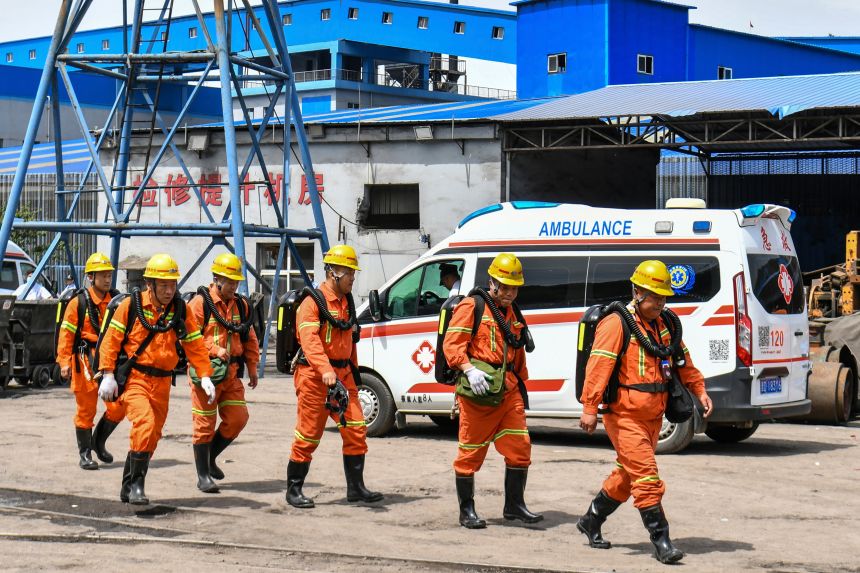
At least 90 people have died following a massive gas explosion at a coal mine in northern China, according to state media reports.
The blast occurred on Friday evening at the Liushenyu Coal Mine in Shanxi province and is being described as China’s deadliest mining disaster since 2009.
Officials said 247 workers were on duty when the explosion happened at about 19:29 local time. More than 100 miners were reportedly rescued, while hundreds of emergency personnel were deployed to the site.
Xi Jinping called for every possible effort to be made to treat the injured and continue the search for survivors.
China’s State Council later announced that a “rigorous” investigation would be launched and warned that anyone found responsible for the disaster would face severe punishment.
Authorities said 27 people remain in hospital, including one in critical condition. Most survivors are believed to have suffered from inhaling toxic gas, although officials have not confirmed the exact substance involved.
One injured miner, Wang Yong, told state media he saw smoke suddenly spread through the tunnel moments after the explosion.
“I smelled sulphur, the same smell you get from blasting,” he said. “I shouted at people to run. As we were running I could see people collapsing from the fumes. Then I blacked out too.”
He added that he regained consciousness about an hour later and escaped with another worker.
State media reported that several members of the mine’s management team have been detained as investigations continue into the cause of the explosion.
Officials said dangerous levels of carbon monoxide — a highly toxic and odourless gas — had been detected inside the mine after the incident.
China’s Ministry of Emergency Management has dispatched 345 rescuers from six specialist teams to assist with recovery operations.
Rescue efforts have reportedly been complicated by flooding near the blast area, making some sections inaccessible. Authorities also said mine blueprints provided to rescue teams did not accurately reflect the underground conditions, creating further challenges during the operation.


Oil Prices Fall on Hopes of US-Iran Peace Deal

Marco Rubio Says US-Iran Deal Could Come Monday

Bruno Fernandes Named Premier League Player of the Season


-
 News1 week ago
Train Driver in Deadly Bangkok Crash Tested Positive for Drugs
-

 News1 week ago
Bodies of Missing Italian Divers Found in Maldives
-
News1 week ago
Rescue Diver Dies During Search for Italian Divers Missing in Maldives Cave Tragedy
-

 Sports1 week ago
Celtic F.C. Stun Heart of Midlothian F.C. to Seal Dramatic Title Win
-
 News1 week ago
Six Americans Exposed in DR Congo Ebola Outbreak
-
News5 days ago
WHO Warns Ebola Cases in DR Congo Likely to Rise Further
-
News4 days ago
Democratic Republic of the Congo Cancels World Cup Camp Over Ebola Outbreak
-

 Sports4 days ago
Mohamed Salah Set to Captain Egypt at World Cup