
Business
States Sue TikTok, Alleging Impact on Teen Mental Health Crisis

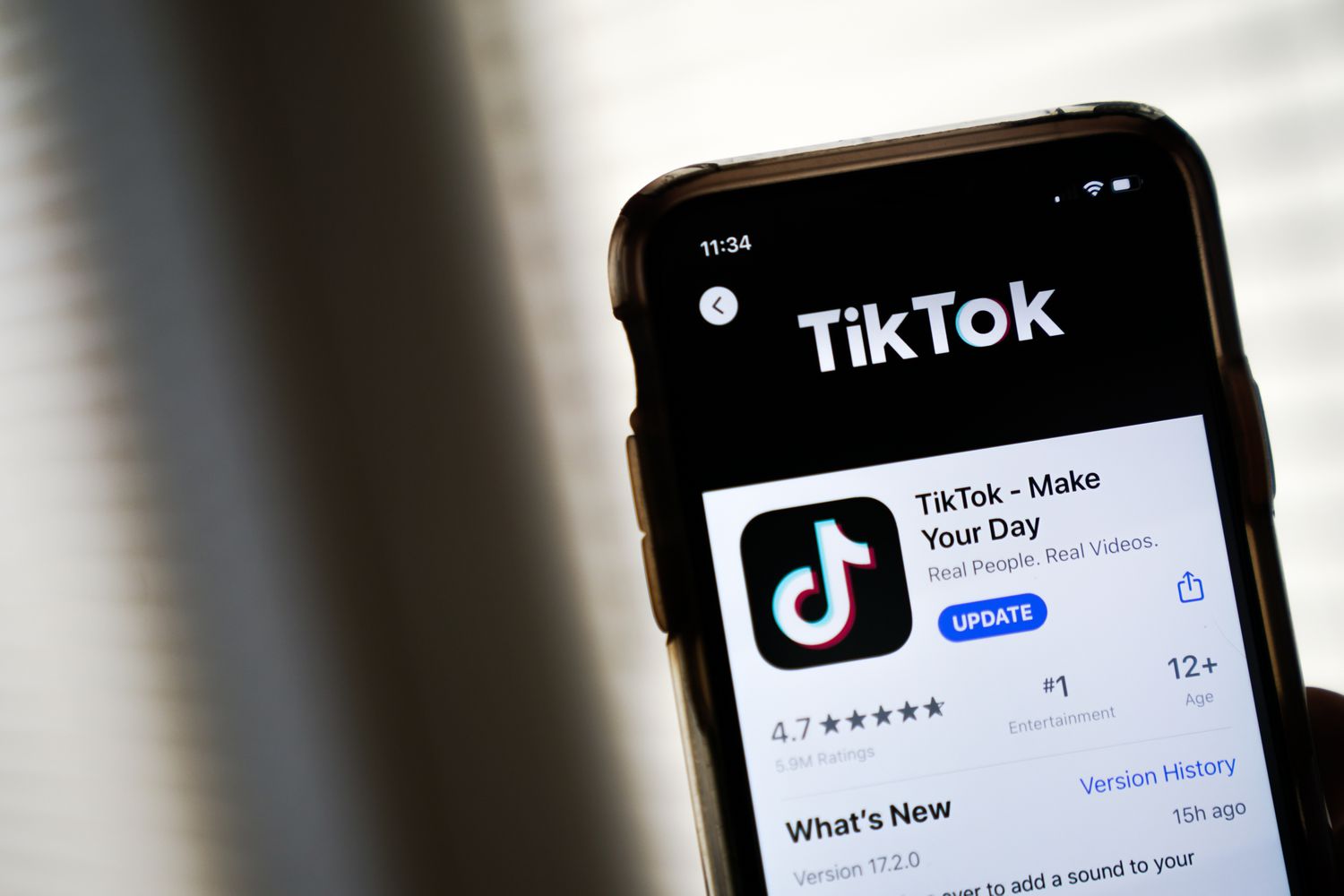
A coalition of 14 U.S. states has filed lawsuits against TikTok, accusing the social media giant of exacerbating a mental health crisis among teenagers. The bipartisan group of attorneys general claims the platform’s addictive features target young users, misleading the public about the safety of prolonged use, and contributing to negative mental health outcomes.
In the lawsuit, filed in New York, the attorneys general argue that TikTok intentionally designed features that drive compulsive use, negatively affecting millions of teens. New York Attorney General Letitia James stated that TikTok’s influence has led to tragic incidents, including the death of a 15-year-old boy in Manhattan, who died while “subway surfing” after watching similar videos on TikTok.
James emphasized that many teenagers are struggling with increased anxiety, sadness, and depression, attributing some of these effects to the app’s alerts, disappearing videos, and beauty filters. These features, she said, encourage constant checking of the platform and contribute to issues surrounding body image.
TikTok, which is already grappling with legislation that could ban it from the U.S. unless its parent company, Bytedance, sells the app, called the lawsuit “disappointing.” The platform contends that it has introduced tools to limit screen time and content exposure, but the lawsuit claims these tools are ineffective.
In addition to the mental health accusations, the lawsuit also points to TikTok’s virtual currency as running an unlicensed money transmission business in Washington D.C. The plaintiffs seek financial penalties and a court order to halt TikTok’s practices that allegedly harm teenagers.
TikTok has responded by defending its efforts to protect young users, stating, “We strongly disagree with these claims,” and reaffirming their commitment to improve the platform.









Stefano Gabbana, co-founder of Dolce & Gabbana, has stepped down as chair of the company he established in 1985 alongside Domenico Dolce.
The move comes as the luxury fashion house navigates mounting financial challenges, including a debt burden of approximately €450m (£391m/$528m), alongside a broader slowdown in the global luxury retail market. Reduced consumer spending—particularly in China—has added pressure on high-end brands.
Despite stepping down from the chairmanship, Gabbana will remain deeply involved in the creative direction of the brand, continuing his longstanding collaboration with Dolce in designing collections and maintaining the identity that has defined the label for decades.
Leadership responsibilities have transitioned to Alfonso Dolce, brother of Domenico Dolce and the company’s chief executive, who officially assumed the role of chair on 1 January. Corporate filings indicate that Gabbana communicated his decision internally in December.
In response to shifting market dynamics, Dolce & Gabbana has been expanding into new sectors, including hospitality and home furnishings. Its recent offerings feature high-end lifestyle pieces such as a leopard-print porcelain vase priced at £1,084, reflecting an effort to diversify revenue streams.
Industry observers highlight the scale of the company’s financial obligations. Fashion expert Priya Raj noted that the brand remains privately owned, with both Gabbana and Domenico Dolce each holding significant 40% stakes—leaving open questions about future ownership structures.
Reports in March indicated that the company had engaged financial advisers and entered discussions with creditors as it seeks to manage its debt. In a statement on Friday, the firm confirmed that negotiations with banks are ongoing, declining further comment at this stage.
Despite financial headwinds and past controversies—including criticism earlier this year during Milan Fashion Week over a predominantly white model cast, which drew backlash from figures like Bella Hadid—the brand has demonstrated resilience. Analysts note that its distinctive aesthetic continues to attract a loyal global following, even as industry trends evolve.
Universal Music Group has received a takeover offer valued at approximately $64.3bn (£48bn), in a potential deal that could reshape the global music industry.
The bid has been made by Pershing Square Capital Management, whose billionaire chief executive Bill Ackman said the proposal would involve a merger and lead to the combined company being listed in the United States. Pershing Square already holds a stake in Universal.
Universal Music, the world’s largest music company, represents a wide roster of global stars including Taylor Swift, Sabrina Carpenter and Kendrick Lamar. It also owns iconic assets such as Abbey Road Studios and major record labels including EMI and Island Records.
The company has yet to respond publicly to the offer.
Ackman praised Universal’s leadership, saying it had built a “world-class artist roster” and delivered strong business performance. He added that the company had successfully adapted to industry changes, particularly by embracing opportunities presented by artificial intelligence while safeguarding intellectual property.
However, he argued that Universal’s stock had underperformed due to factors unrelated to its core business, suggesting these issues could be resolved through the proposed transaction.
Pershing Square’s broader investment portfolio includes stakes in major technology firms such as Google, Meta Platforms and Amazon, as well as Restaurant Brands International, the parent company of Burger King.
Market analysts note that while Universal dominates the global music industry—home to nine of the top 10 recording artists of 2025—its revenue growth is closely tied to streaming platforms like Spotify and Apple Music, where slower-than-expected growth has raised concerns.
Although global music revenues have rebounded in recent years thanks to streaming subscriptions, debates continue over royalty payments to artists. At the same time, the rise of AI-generated deepfake music—where fraudsters imitate established artists—has emerged as a growing challenge for the industry.
In a letter to Universal’s board, Ackman said the company had “dramatically underperformed” key stock indexes, citing uncertainty around a significant stake held by Bolloré Group, controlled by billionaire Vincent Bolloré, as well as delays to a planned New York listing.

Global oil prices climbed sharply and stock markets slipped after additional attacks on cargo vessels in the Gulf heightened fears about energy supply disruptions.
Benchmark Brent crude briefly rose more than 9% on Thursday, pushing prices back above $100 per barrel before easing slightly to about $97.90 later in the session.
The surge came despite an announcement by the International Energy Agency (IEA) that it would release a record 400 million barrels of oil from strategic reserves in an effort to stabilise markets and limit the economic fallout from the conflict involving the United States, Israel and Iran.
Market anxiety intensified after reports that three more cargo vessels had been struck in the region, adding to concerns that shipping routes critical to global energy supplies could remain under threat.
Investors fear the global economic recovery could be delayed if attacks on shipping and energy infrastructure continue around the Strait of Hormuz, one of the world’s most important maritime routes for oil and gas.
The narrow waterway serves as a major transit corridor for crude oil shipments and liquefied natural gas exports. Refineries in surrounding countries also produce large quantities of jet fuel and diesel that are distributed worldwide.
Because of security concerns, the strait is now effectively closed to many vessels as shipping companies weigh the risks of operating in the area.
A spokesperson for the Islamic Revolutionary Guard Corps warned that ships linked to the United States, Israel or their allies could be targeted.
“You will not be able to artificially lower the price of oil. Expect oil at $200 per barrel,” the spokesperson said.
“The price of oil depends on regional security, and you are the main source of insecurity in the region.”
Global stock markets reacted negatively to the escalating situation. In Europe, the FTSE 100 in London fell by 0.6% in early trading, while Germany’s DAX, France’s CAC 40 and Spain’s IBEX 35 also declined.
In Asia, Japan’s Nikkei 225 ended the day about 1% lower.
The IEA said the conflict in the Middle East is “creating the largest supply disruption in the history of the global oil market”.
According to the agency, several major producers — including Iraq, Qatar, Kuwait, the United Arab Emirates and Saudi Arabia — have collectively reduced oil output by at least 10 million barrels per day.
The IEA warned that restoring production could take weeks or even months depending on how quickly workers, equipment and other resources can safely return to affected energy facilities.
All 32 member countries of the agency have agreed to the unprecedented release of oil reserves in a coordinated effort to ease supply shortages and bring down rising prices.


Prograis announces retirement after Benn Defeat in Emotional Farewell

Trump Orders U.S. Navy to Blockade Strait of Hormuz After Iran Talks Collapse

Salah and Ngumoha Fire Liverpool Past Fulham in Premier League Clash


-

 News1 week ago
Netanyahu claims most of Iran’s steel production destroyed as Tehran targets Gulf energy sites
-

 News1 week ago
French Court Clears Muslim Gathering in Paris, Upholding Civil Liberties
-
 News1 week ago
Trump Escalates Pressure on Iran With Final Deadline Over Strait of Hormuz
-

 News6 days ago
Gunman Killed in Shootout Near Israeli Consulate in Istanbul, Two Officers Injured
-
 News7 days ago
Israel Strikes Iranian Petrochemical Sites as Tensions Surge Over Hormuz Threats
-

 News1 week ago
US Army Leadership Shake-Up as Hegseth Requests Chief’s Immediate Exit
-
 Entertainment6 days ago
Rapper Offset Shot Outside Florida Casino
-

 News1 week ago
Trump says US can ‘easily’ open the Strait of Hormuz