
Business
Pfizer Advances Once-Daily Weight Loss Pill After Early Study Success

Pfizer is advancing a once-daily version of its weight loss medication, danuglipron, following encouraging findings from an ongoing early-stage study. The pharmaceutical company announced on Thursday that it has identified a formulation that shows a favorable safety profile and effective bodily response.
The company plans to carry out more early-stage trials in the latter half of this year to determine the optimal dosage, with results expected by the first quarter of next year. These results will be pivotal for the registration enabling studies required for regulatory approval.
Dr. Mikael Dolsten, Pfizer’s outgoing Chief Scientific Officer, expressed optimism about the drug’s potential, stating, “Danuglipron has demonstrated good efficacy in a twice-daily formulation, and we believe a once-daily formulation has the potential to have a competitive profile in the oral GLP-1 space.” Notably, the study found no liver safety issues with the once-daily formulations.
Pfizer is among several pharmaceutical companies racing to capture a share of the market for GLP-1 agonists, a class of drugs highly sought after for weight loss and diabetes management. Analysts predict this market could be worth approximately $100 billion by the end of the decade.
Despite this potential, Pfizer has faced challenges breaking into the GLP-1 space. In December, the company discontinued a twice-daily version of danuglipron due to patient tolerance issues in a mid-stage study. Investor confidence was further dampened when Pfizer scrapped another once-daily pill in June 2023 after patients showed elevated liver enzymes. These setbacks, alongside the decline of its Covid business, have impacted Pfizer’s stock performance.
Nonetheless, Pfizer continues to develop other experimental obesity drugs and maintains a robust pipeline of three clinical and several pre-clinical candidates. “Obesity is a key therapeutic area for Pfizer,” Dolsten emphasized.
Competitors Novo Nordisk and Eli Lilly have seen rising demand for their injectable GLP-1 drugs, despite high costs and limited insurance coverage. These companies, along with Pfizer, are striving to develop oral versions that are more convenient for patients and easier to produce, which could help alleviate supply shortages in the U.S.
Pfizer has also indicated it may pursue acquisitions or partnerships with smaller obesity drugmakers. CEO Albert Bourla mentioned in January that while acquiring a late-stage obesity treatment is unlikely, the company is exploring potential licensing deals or earlier-stage weight loss drugs as part of its strategic focus on cost management.

Global oil prices climbed sharply and stock markets slipped after additional attacks on cargo vessels in the Gulf heightened fears about energy supply disruptions.
Benchmark Brent crude briefly rose more than 9% on Thursday, pushing prices back above $100 per barrel before easing slightly to about $97.90 later in the session.
The surge came despite an announcement by the International Energy Agency (IEA) that it would release a record 400 million barrels of oil from strategic reserves in an effort to stabilise markets and limit the economic fallout from the conflict involving the United States, Israel and Iran.
Market anxiety intensified after reports that three more cargo vessels had been struck in the region, adding to concerns that shipping routes critical to global energy supplies could remain under threat.
Investors fear the global economic recovery could be delayed if attacks on shipping and energy infrastructure continue around the Strait of Hormuz, one of the world’s most important maritime routes for oil and gas.
The narrow waterway serves as a major transit corridor for crude oil shipments and liquefied natural gas exports. Refineries in surrounding countries also produce large quantities of jet fuel and diesel that are distributed worldwide.
Because of security concerns, the strait is now effectively closed to many vessels as shipping companies weigh the risks of operating in the area.
A spokesperson for the Islamic Revolutionary Guard Corps warned that ships linked to the United States, Israel or their allies could be targeted.
“You will not be able to artificially lower the price of oil. Expect oil at $200 per barrel,” the spokesperson said.
“The price of oil depends on regional security, and you are the main source of insecurity in the region.”
Global stock markets reacted negatively to the escalating situation. In Europe, the FTSE 100 in London fell by 0.6% in early trading, while Germany’s DAX, France’s CAC 40 and Spain’s IBEX 35 also declined.
In Asia, Japan’s Nikkei 225 ended the day about 1% lower.
The IEA said the conflict in the Middle East is “creating the largest supply disruption in the history of the global oil market”.
According to the agency, several major producers — including Iraq, Qatar, Kuwait, the United Arab Emirates and Saudi Arabia — have collectively reduced oil output by at least 10 million barrels per day.
The IEA warned that restoring production could take weeks or even months depending on how quickly workers, equipment and other resources can safely return to affected energy facilities.
All 32 member countries of the agency have agreed to the unprecedented release of oil reserves in a coordinated effort to ease supply shortages and bring down rising prices.
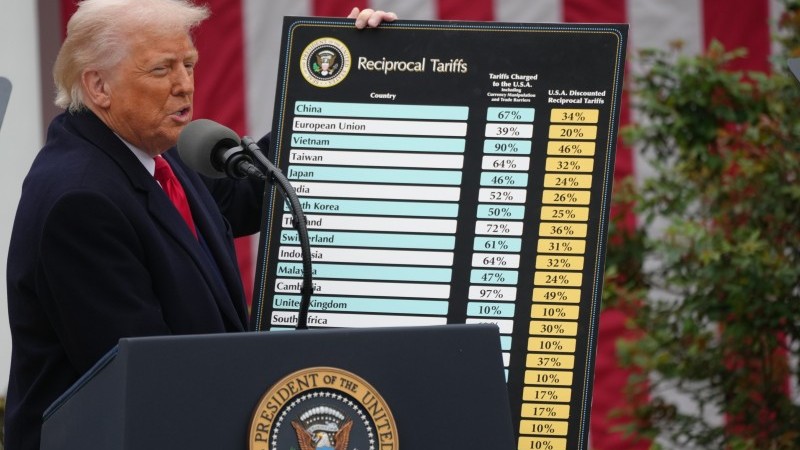
The Supreme Court of the United States has struck down some of the most expansive global tariffs introduced by Donald Trump, reshaping the legal landscape around executive authority in trade policy and creating fresh uncertainty in international markets.
In a 6–3 decision, the court ruled that the legal basis used by the administration to impose sweeping tariffs did not grant the president authority to do so. The judgment paves the way for potentially billions of dollars in refunds to businesses and states that challenged the measures.
At the centre of the case was the administration’s reliance on the International Emergency Economic Powers Act (IEEPA), a statute that allows the president to regulate economic activity during national emergencies. The White House argued the tariffs were justified under this authority as part of efforts to address drug trafficking and trade imbalances.
However, challengers contended that while the law permits regulation, it makes no explicit provision for imposing tariffs — a power traditionally reserved for Congress.
Writing for the majority, Chief Justice John Roberts emphasised that when Congress delegates tariff powers, it does so clearly and with defined limits.
The ruling affects duties introduced last year on imports from numerous countries, initially targeting partners such as Mexico, Canada, and China before expanding significantly during the administration’s “Liberation Day” policy push in April.
Supporters of the tariffs had argued they would stimulate domestic investment and revitalise US manufacturing. Critics, however, warned of higher import costs and broader economic ripple effects.
The case was widely viewed as a defining test of executive reach in trade matters — and of the judiciary’s readiness to scrutinise policy initiatives central to the administration’s agenda.
With the decision now issued, the balance between presidential emergency powers and congressional authority over taxation and trade has been more sharply defined, setting an important precedent for future administrations.

Inflation in the United States eased in January, helped by falling costs for energy and used vehicles, offering encouraging signs for economic stability.
New data from the Labor Department showed the Consumer Price Index rose by 2.4% over the 12 months to January — down from 2.7% the previous month and marking the slowest pace of price growth since May.
The moderation in inflation is likely to strengthen arguments from President Donald Trump and others that the Federal Reserve may be able to reduce interest rates without reigniting price pressures.
While the latest figures point to steady progress toward the Fed’s 2% inflation target, analysts caution that the path ahead may not be entirely smooth. Some warn that inflation could stabilise or even edge higher if businesses begin passing on tariff-related costs to consumers, or if labour shortages push up service prices.
For now, however, there are few indications that tariffs are having a broad impact. Core commodity prices — excluding food and energy — remained largely unchanged during the month, suggesting underlying price pressures are contained.
Neil Birrell, chief investment officer at Premier Miton Investors, noted that while the longer-term effects of tariffs remain uncertain, January’s data may contain statistical quirks that influenced the outcome.
Even so, he said the report is likely to “ease the path towards a cut in rates sooner rather than later”.
“The US economy looks to be in fine fettle with growth strong, inflation stable, the job market looking firmer and a Fed that has room to manoeuvre,” he added.


US Army Leadership Shake-Up as Hegseth Requests Chief’s Immediate Exit

French Court Clears Muslim Gathering in Paris, Upholding Civil Liberties

Trump says US can ‘easily’ open the Strait of Hormuz


-

 Sports1 week ago
Woods charged with driving under the influence after crash
-

 News1 week ago
Israeli Strike in Lebanon Kills Journalists as Regional Tensions Escalate
-
Sports1 week ago
Tiger Woods Involved in Car Crash in Florida
-

 News1 week ago
No Kings protests across the US rally against Donald Trump
-

 Sports6 days ago
Scott Brown Leaves Ayr United Role by Mutual Consent
-

 Sports5 days ago
Ghana sack manager Addo Just 72 days before World Cup
-

 News2 days ago
Netanyahu claims most of Iran’s steel production destroyed as Tehran targets Gulf energy sites
-
 News4 days ago
Donald Trump to Address Nation on Iran War Amid Uncertainty Over Next Move