
Tech
Nvidia Unveils RTX 50-Series Chips at CES with AI-Powered Gaming Revolution


Nvidia CEO Jensen Huang has introduced the next generation of gaming chips, the RTX 50-series, during his keynote address at CES 2025 in Las Vegas. These cutting-edge chips leverage Nvidia’s Blackwell artificial intelligence (AI) technology, promising unprecedented gaming experiences with movie-quality graphics.
Huang showcased the capabilities of the RTX 50-series chips, claiming they are twice as fast as their predecessors. Priced between $549 (£438) and $1,999, the chips are designed to cater to a wide range of gamers, from casual players to hardcore enthusiasts.
In a live demonstration, the new chips produced stunning, highly detailed visuals with dynamic textures and complex maneuvers—all in real time. “It was awesome that they can do this in real time,” said Gary Yang, a robotics graduate student from Caltech. “Previously, we’d think of these graphics as pre-rendered.”
The RTX 50-series chips will hit the market starting late January 2025. Early reactions from attendees at the CES event have been overwhelmingly positive. “I thought it was incredible,” said Scott Epstein of Agenovate AI, emphasizing Nvidia’s ongoing innovation.
The announcement comes as CES 2025 attracts over 150,000 attendees and 4,500 exhibitors, solidifying its reputation as the premier stage for tech innovation. Nvidia’s shares reached a record high in anticipation of Huang’s keynote, underlining the market’s confidence in the company’s direction.
Reflecting on Nvidia’s 31-year history, Huang highlighted the company’s evolution from a graphics chip manufacturer to a leader in AI chip development, now valued at over $3 trillion. Despite its achievements, Nvidia faces challenges from regulators worldwide scrutinizing its dominance in the AI chip market.
The RTX 50-series chips mark a significant step forward in gaming technology, blending AI advancements with unparalleled performance.











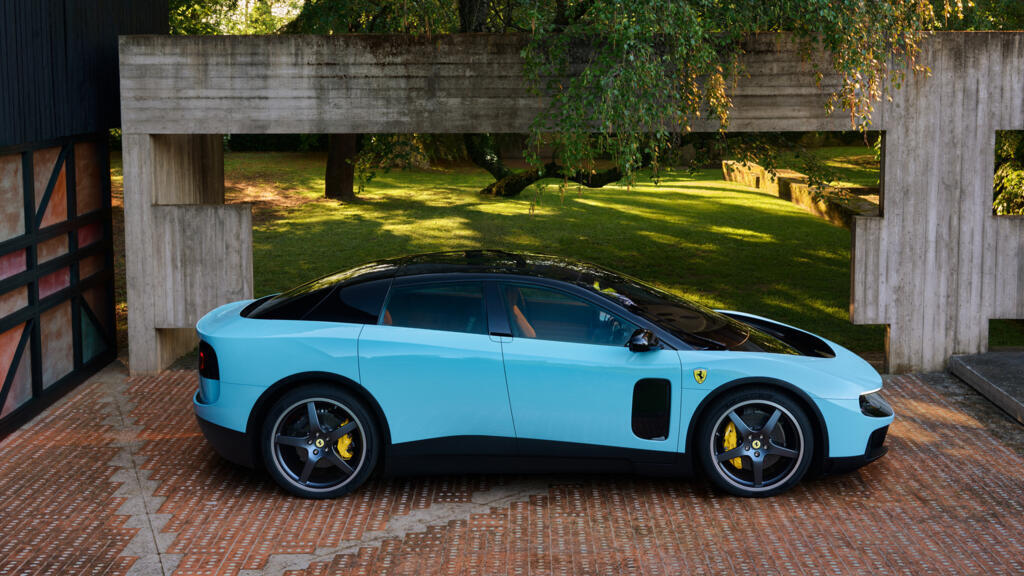
Ferrari has revealed its first fully electric vehicle, the Luce, marking a major shift for the iconic sports car brand.
The new EV, priced at about $640,000 (£474,320), was unveiled in Rome by Ferrari chief executive Benedetto Vigna, who said the project had taken five years to develop.
Named “Luce” — the Italian word for “light” — the model breaks with traditional Ferrari styling as the company’s first-ever five-seater vehicle.
The car was developed in collaboration with LoveFrom, the creative agency founded by former Apple design chief Jony Ive.
Reaction online has been sharply divided, with some social media users criticising the design while others praised it as a bold and innovative direction for the famous Italian manufacturer.
Ferrari said the Luce uses a Ferrari-built electric motor on each wheel, allowing it to accelerate from 0 to 60mph (96km/h) in around 2.5 seconds.
The company also stressed that all major components are produced in-house, which it says will allow Ferrari to maintain and repair the vehicle long into the future while helping preserve resale values.
The launch comes as several luxury carmakers reconsider their electric vehicle strategies because of weaker-than-expected demand and rising competition from Chinese manufacturers.
Brands including Lamborghini and Porsche have recently scaled back parts of their EV ambitions.
At the same time, automakers such as Ford Motor Company and Volkswagen have increased focus on petrol-powered vehicles, particularly in the United States, following slower EV demand and regulatory changes introduced under Donald Trump.
Ferrari chief design officer Flavio Manzoni acknowledged that the concept of an electric Ferrari with a radically different appearance would be “polarising”.
Speaking in an interview with YouTuber Cleo Abram, Manzoni said criticism was part of innovation and predicted public opinion would shift over time.
Ferrari has also confirmed it will continue producing petrol and hybrid models alongside its new all-electric vehicle lineup.

OpenAI says it is amending its recent agreement with the United States Department of Defense following criticism over the potential use of its technology in classified military operations.
Chief executive Sam Altman announced that the company will insert clearer restrictions into the contract, explicitly prohibiting the intentional use of its systems for domestic surveillance of US citizens and nationals.
The controversy emerged after tensions between OpenAI’s rival Anthropic and the Pentagon, related to concerns that Anthropic’s AI model, Claude, could be used for mass surveillance or in fully autonomous weapons systems.
In a statement over the weekend, OpenAI said its Pentagon agreement contained “more guardrails than any previous agreement for classified AI deployments”. However, Altman later acknowledged that the rollout of the deal had been rushed.
“The issues are super complex, and demand clear communication,” he wrote on social media, adding that the company had sought to de-escalate tensions but recognised that the announcement appeared “opportunistic and sloppy”.
Under the revised terms, intelligence agencies such as the National Security Agency would require additional contractual modifications before being permitted to use OpenAI systems.
The backlash has had measurable effects. Reports indicate that day-over-day uninstalls of the ChatGPT mobile app surged sharply following the announcement, while Anthropic’s Claude climbed to the top of Apple’s App Store rankings.
Anthropic’s model had previously been blacklisted by the administration of Donald Trump after the company refused to abandon a corporate principle barring the use of its technology in fully autonomous weapons. Despite that position, reports have since indicated that Claude was used in the US-Israel conflict with Iran shortly after the ban.
The Pentagon has declined to comment on its arrangements with Anthropic.

X has announced that its artificial intelligence tool, Grok, will no longer be able to edit images of real people to depict them in revealing clothing in jurisdictions where such activity is illegal, following widespread backlash over the misuse of sexualised AI deepfakes.
In a statement published on the platform, X said it had introduced new safeguards to prevent the Grok account from being used to manipulate photos of real individuals in a sexualised manner. “We have implemented technological measures to prevent the Grok account from allowing the editing of images of real people in revealing clothing,” the company said.
The move has been welcomed by UK authorities, who had previously raised concerns about the tool’s use. The UK government described the decision as a “vindication” of its calls for X to take stronger action to control Grok. Media regulator Ofcom also said the change was a “welcome development”, while stressing that its investigation into whether the platform breached UK laws is still under way.
“We are working round the clock to progress this and get answers into what went wrong and what’s being done to fix it,” Ofcom said, signalling continued scrutiny despite the latest measures.
Technology Secretary Liz Kendall welcomed X’s announcement but emphasised the need for accountability. She said she would “expect the facts to be fully and robustly established by Ofcom’s ongoing investigation”, underlining the government’s commitment to ensuring online safety rules are upheld.
However, campaigners and victims of AI-generated sexualised images say the decision has come after significant harm had already been caused. Journalist and campaigner Jess Davies, who was among women whose images were edited using Grok, described the changes as a “positive step” but said the feature should never have been permitted in the first place.


Why I Believe Portugal or Brazil Will Win the 2026 FIFA World Cup

Premier League Record Holder James Milner Retires After Remarkable 24-Year Career

Rugby League Great John Kear Dies Aged 71


-

 News1 week ago
Marco Rubio Says US-Iran Deal Could Come Monday
-

 Entertainment1 week ago
BTS Triumph at American Music Awards as Black Eyed Peas Reunite
-

 Tech1 week ago
Ferrari Unveils First Fully Electric Car
-

 News1 week ago
Oil Prices Fall on Hopes of US-Iran Peace Deal
-

 News1 week ago
Four Killed After School Minibus Hit by Train in Belgium
-

 Sports5 days ago
Sinner Shock Exit Blows French Open Wide Open After Five-Set Defeat
-

 News6 days ago
New Hamas Military Commander Killed in Gaza City Strike
-

 Sports6 days ago
Manchester United Move Closer to Signing Ederson in £38m Midfield Deal