
News
Namibia’s Opposition Rejects Election Results Amid Allegations of Malpractice


Namibia’s main opposition party, the Independent Patriots for Change (IPC), has declared that it will not recognize the results of the ongoing general election, citing allegations of significant irregularities.
In a press conference on Saturday, IPC leader and presidential candidate Panduleni Itula accused the Electoral Commission of Namibia (ECN) of “glaring and undeniable” malpractices. He criticized the logistical challenges that plagued the voting process, including shortages of ballot papers and technical malfunctions, which caused voting to extend beyond the initial Wednesday schedule in some areas.
“We shall not, under any circumstances, recognize the outcome of the 2024 election… that is still, in our opinion, illegitimately continuing,” said Itula. Despite rejecting the results, he urged supporters to remain calm and pledged to seek justice through the courts.
The IPC has also encouraged citizens who were unable to vote due to electoral mismanagement to report their grievances to the police.
Preliminary results from 10 of Namibia’s 121 constituencies show Netumbo Nandi-Ndaitwah, the candidate for the ruling South West Africa People’s Organisation (Swapo), leading with 48% of the vote, compared to Itula’s 30%.
Nandi-Ndaitwah, who is poised to become Namibia’s first female president, needs more than 50% of the votes to secure an outright victory. If no candidate surpasses this threshold, a second-round run-off will be required.
Namibia, a sprawling country with a population of about three million, faced logistical hurdles during the election. Approximately half of the population is registered to vote, and challenges in remote areas contributed to delays in the voting process.
As the vote count continues, the IPC’s allegations and refusal to accept the results raise questions about the election’s legitimacy and could lead to a prolonged political standoff











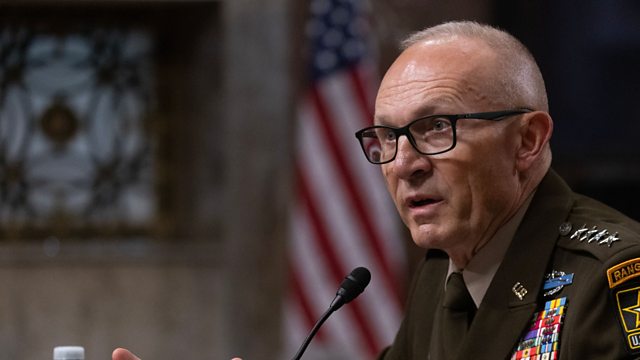
U.S. Defence Secretary Pete Hegseth has asked Army Chief of Staff Randy George to step down, triggering a significant leadership change at the top of the United States Army.
According to Pentagon spokesman Sean Parnell, General George will retire immediately from his role as the 41st Chief of Staff, cutting short what is typically a four-year term. George, a seasoned military officer and graduate of United States Military Academy at West Point, was nominated to the position in 2023 by former President Joe Biden.
No official reason has been provided for the abrupt decision, though a senior defence official indicated that “it was time for a leadership change.” The move comes amid broader military and geopolitical developments, including recent comments by Donald Trump suggesting that the ongoing U.S.-Israel conflict with Iran could conclude “very shortly.”
General George’s career spans decades, including service as an infantry officer during the Gulf War and deployments in Iraq and Afghanistan. His tenure has been marked by operational leadership across multiple theatres.
He will be succeeded on an acting basis by Vice Chief of Staff Christopher LaNeve, described by Pentagon leadership as a highly experienced and trusted commander aligned with the administration’s strategic vision.
The shake-up extends beyond the Army chief. Reports indicate that David Hodne, who led the Army’s Transformation and Training Command, and William Green, head of the Chaplain Corps, have also been removed from their posts.
Since assuming office, Hegseth has overseen the dismissal of more than a dozen senior military officials, including top Navy and Air Force leaders, signaling a sweeping effort to reshape the U.S. military’s leadership structure.
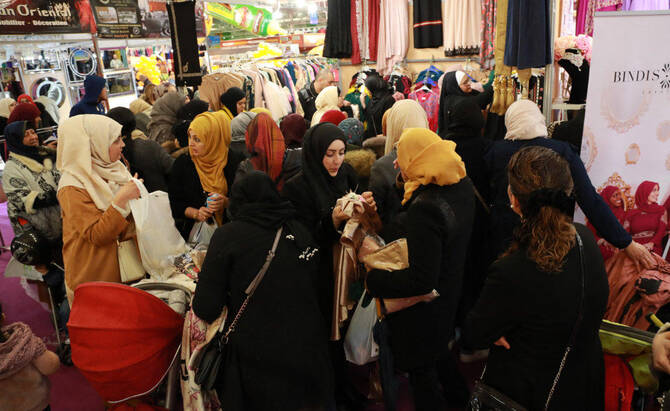
A major Muslim gathering in northern Paris will proceed as scheduled after a French administrative court overturned a government attempt to ban the event, marking a significant legal reaffirmation of civil liberties.
The Paris police authority had sought to block the four-day Annual Encounter of Muslims of France, arguing that the event posed a potential security risk, including the possibility of terrorist targeting and disruptions by far-right groups. However, the organisers—Muslims of France (MF)—challenged the decision in court, asserting that such a ban would violate fundamental freedoms.
In a ruling delivered just two hours before the planned opening, the administrative court sided with the organisers. Judges stated that the evidence presented by police “did not establish” a credible risk of counter-demonstrations or attacks by extremist groups. The court also rejected claims that the gathering would overstretch police resources, noting that organisers had committed to implementing additional security measures.
The event, which blends religious, cultural, and commercial elements, has historically attracted tens of thousands of attendees from across Europe. Although it was once held annually, it has not taken place since 2019, making this year’s edition particularly significant for participants.
Authorities had justified the proposed ban by citing a “particularly tense” national and international climate, warning that the Muslim community could face heightened risks. Concerns were also raised about possible interference from foreign actors seeking to destabilise the situation.
France has previously accused countries such as Russia and Iran of attempting to fuel unrest through indirect actions, including small-scale provocations.
The decision comes as the French government advances plans for a new “anti-separatism” law aimed at strengthening oversight of organisations accused of promoting ideas seen as incompatible with republican values. Interior Minister Laurent Nunez said the proposed measures would expand the government’s ability to regulate associations, including oversight of childcare structures and banning publications that incite hatred, violence, or discrimination.
Despite ongoing political debate, the court’s ruling underscores the judiciary’s role in balancing security concerns with the protection of individual freedoms, allowing the high-profile gathering to move forward under monitored conditions.

U.S. President Donald Trump has indicated that the United States could take decisive action to reopen the strategically vital Strait of Hormuz, describing the move as something that could be achieved “easily” with more time.
In a post shared on his platform Truth Social, Trump suggested that the U.S. could ensure the flow of oil through the critical maritime corridor, even proposing the possibility of directly securing oil resources. He characterized the potential outcome as highly lucrative, calling it a “gusher” for global markets.
The Strait of Hormuz remains one of the world’s most important transit chokepoints, with a significant portion of global oil supply passing through the narrow waterway. Any disruption to shipping in the area has immediate implications for global energy prices and economic stability.
Trump has previously expressed varying positions on how the strait should be handled, at times advocating for Western nations to take unilateral military action to guarantee safe passage for oil shipments. His latest remarks reinforce a more assertive approach, emphasizing the use of U.S. capability to secure international energy flows.
The comments come amid heightened tensions in the Middle East, where concerns over maritime security and energy infrastructure have intensified. Analysts note that any move to militarily intervene in the Strait of Hormuz would carry significant geopolitical risks, potentially escalating conflict in an already volatile region.


US Army Leadership Shake-Up as Hegseth Requests Chief’s Immediate Exit

French Court Clears Muslim Gathering in Paris, Upholding Civil Liberties

Trump says US can ‘easily’ open the Strait of Hormuz


-
 Sports1 week ago
Woods charged with driving under the influence after crash
-
 News1 week ago
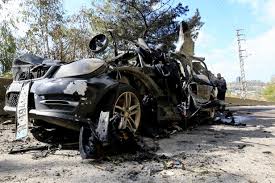
Israeli Strike in Lebanon Kills Journalists as Regional Tensions Escalate
-
Sports1 week ago
Tiger Woods Involved in Car Crash in Florida
-
 News1 week ago
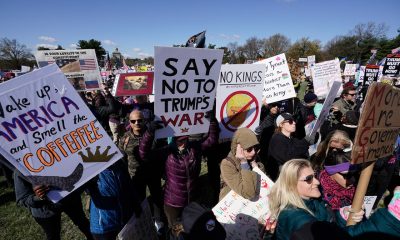
No Kings protests across the US rally against Donald Trump
-

 Sports6 days ago
Scott Brown Leaves Ayr United Role by Mutual Consent
-

 Sports5 days ago
Ghana sack manager Addo Just 72 days before World Cup
-
 News2 days ago
Netanyahu claims most of Iran’s steel production destroyed as Tehran targets Gulf energy sites
-
 News4 days ago
Donald Trump to Address Nation on Iran War Amid Uncertainty Over Next Move