
News
Louvre Director Steps Down Following Jewel Heist and Security Review


The director of the Louvre Museum, Laurence des Cars, has resigned months after a dramatic theft involving France’s historic crown jewels.
Her resignation was submitted to President Emmanuel Macron, who reportedly described the move as an act of responsibility amid ongoing scrutiny of the museum’s security systems.
The theft occurred on the morning of 19 October last year, when intruders used a stolen vehicle-mounted mechanical lift to access the Galerie d’Apollon via a balcony overlooking the River Seine.
Authorities have arrested four main suspects in connection with the incident. However, the eight stolen pieces — valued at approximately €88m — remain missing.
Among the items taken was a diamond and emerald necklace once gifted by Napoleon Bonaparte to his wife. During their escape, the thieves dropped a 19th-century diamond-studded crown belonging to Empress Eugénie, causing damage. The museum has since released images showing the crown to be nearly intact and potentially restorable.
The Louvre, which attracts more than 8.7 million visitors annually and houses masterpieces such as Leonardo da Vinci’s Mona Lisa, has faced increasing attention over its infrastructure.
Shortly after the theft, des Cars acknowledged that the museum’s external CCTV system was outdated. Notably, the only camera monitoring the exterior wall breached during the break-in was not directed toward the balcony used by the suspects.
Security upgrades had been planned, including a proposal to double surveillance coverage, but funding constraints posed challenges for implementation.
A parliamentary inquiry is now examining the circumstances that allowed the theft to occur. A preliminary report has pointed to systemic weaknesses in security arrangements.
In recent weeks, the museum has also confronted additional operational pressures, including a suspected ticket fraud scheme and a water leak — issues that have intensified calls for institutional reform.
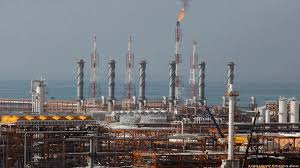
Israel has launched fresh strikes on Iranian energy infrastructure, targeting key petrochemical facilities amid escalating regional tensions tied to the strategic Strait of Hormuz.
Iranian media reported that the Marvdasht Petrochemical Complex was hit in what officials described as an “enemy attack.” The Fars news agency said the strike caused a fire that was quickly brought under control, while the semi-official Tasnim news agency, citing local authorities, reported that the damage to the facility was not significant.
Earlier, Israel confirmed it had struck the South Pars petrochemical plant in Asaluyeh, one of Iran’s most critical energy hubs. Israeli Defence Minister Israel Katz acknowledged the operation, while Iranian outlets said several production units were damaged but no casualties were recorded.
The strikes come against the backdrop of heightened warnings from U.S. President Donald Trump, who has threatened broader attacks on Iranian infrastructure if Tehran does not reopen the Strait of Hormuz. In a recent social media post, Trump warned that Tuesday could mark “Power Plant Day and Bridge Day” if Iran fails to comply.
The Strait of Hormuz is a vital global shipping route through which roughly 20% of the world’s oil supply passes, making any disruption a major concern for international markets.
In addition to infrastructure targets, the Israel Defense Forces said it had killed the intelligence chief of Iran’s Islamic Revolutionary Guard Corps, a move that signals a deepening escalation in direct confrontations.
Across the wider region, military activity has intensified. Reports from Lebanon describe near-constant fighter jet activity, while in northern Israel, a separate strike has killed four people.
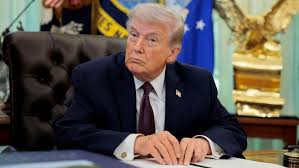
U.S. President Donald Trump has intensified his rhetoric toward Iran, issuing a renewed and forceful ultimatum demanding the reopening of the Strait of Hormuz.
In a series of shifting deadlines over recent weeks, Trump has repeatedly warned of military consequences if Iran does not restore access to the critical transit route. His latest message, posted on Truth Social, included explicit language and pointed to a specific escalation point: “Tuesday, 8:00 P.M. Eastern Time!”—which corresponds to early Wednesday morning in Tehran.
Timeline of Escalating Deadlines:
- 21 March: Trump warned he would “hit and obliterate” Iranian power plants within 48 hours if the strait was not reopened.
- 23 March: He paused the threat, citing “very good and productive conversations,” delaying action by five days.
- 27 March: The deadline was extended again by 10 days, reportedly following a request from the Iranian government, setting 6 April as the new cutoff.
- Recent warning: With the deadline approaching, Trump issued a “48-hour” ultimatum, warning of severe consequences.
- Latest update: The new timestamp suggests a narrowing window for action, reinforcing urgency and signaling potential imminent escalation.
The Strait of Hormuz remains one of the world’s most critical chokepoints, handling a substantial share of global oil shipments. Any prolonged disruption has far-reaching implications for global energy markets and geopolitical stability.
Trump’s evolving deadlines and increasingly aggressive tone highlight the fluid and high-stakes nature of the standoff. While diplomatic signals briefly surfaced in earlier statements, the latest developments suggest a pivot back toward coercive pressure.
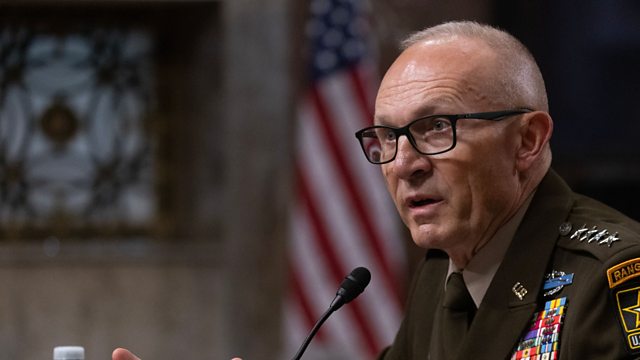
U.S. Defence Secretary Pete Hegseth has asked Army Chief of Staff Randy George to step down, triggering a significant leadership change at the top of the United States Army.
According to Pentagon spokesman Sean Parnell, General George will retire immediately from his role as the 41st Chief of Staff, cutting short what is typically a four-year term. George, a seasoned military officer and graduate of United States Military Academy at West Point, was nominated to the position in 2023 by former President Joe Biden.
No official reason has been provided for the abrupt decision, though a senior defence official indicated that “it was time for a leadership change.” The move comes amid broader military and geopolitical developments, including recent comments by Donald Trump suggesting that the ongoing U.S.-Israel conflict with Iran could conclude “very shortly.”
General George’s career spans decades, including service as an infantry officer during the Gulf War and deployments in Iraq and Afghanistan. His tenure has been marked by operational leadership across multiple theatres.
He will be succeeded on an acting basis by Vice Chief of Staff Christopher LaNeve, described by Pentagon leadership as a highly experienced and trusted commander aligned with the administration’s strategic vision.
The shake-up extends beyond the Army chief. Reports indicate that David Hodne, who led the Army’s Transformation and Training Command, and William Green, head of the Chaplain Corps, have also been removed from their posts.
Since assuming office, Hegseth has overseen the dismissal of more than a dozen senior military officials, including top Navy and Air Force leaders, signaling a sweeping effort to reshape the U.S. military’s leadership structure.


Calls Grow to Block Kanye West’s UK Festival Appearance Over Antisemitism Row

Israel Strikes Iranian Petrochemical Sites as Tensions Surge Over Hormuz Threats

Trump Escalates Pressure on Iran With Final Deadline Over Strait of Hormuz


-

 Sports1 week ago
Woods charged with driving under the influence after crash
-
 News1 week ago
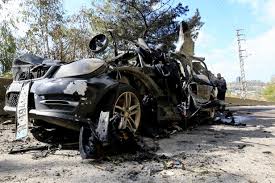
Israeli Strike in Lebanon Kills Journalists as Regional Tensions Escalate
-
Sports1 week ago
Tiger Woods Involved in Car Crash in Florida
-
 News1 week ago
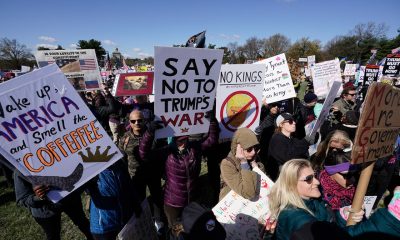
No Kings protests across the US rally against Donald Trump
-

 Sports1 week ago
Scott Brown Leaves Ayr United Role by Mutual Consent
-
 News3 days ago
Netanyahu claims most of Iran’s steel production destroyed as Tehran targets Gulf energy sites
-

 Sports6 days ago
Ghana sack manager Addo Just 72 days before World Cup
-
 News5 days ago
Donald Trump to Address Nation on Iran War Amid Uncertainty Over Next Move