
News
Local Government Autonomy and Elections


Following the recent Supreme Court ruling on local government autonomy, 13 states in Nigeria have swiftly moved to schedule local government elections. This decision marks a significant step towards strengthening democracy at the grassroots level. States such as Kaduna, Kogi, Bauchi, and others have set clear dates for polls, ensuring that local communities will soon elect their leaders democratically.
The Supreme Court’s verdict, which mandates that local government funds should be managed by democratically elected councils, reaffirms the importance of grassroots governance. This landmark decision underscores the commitment to constitutional principles and the rule of law, fostering greater transparency and accountability in local governance.
As preparations unfold across these states, citizens can look forward to participating in transparent, fair, and inclusive electoral processes. These elections not only uphold democratic values but also empower local communities to actively shape their development agendas and priorities.
The commitment shown by state electoral commissions to conduct credible elections is commendable, reflecting a collective effort to uphold democratic norms and ensure that every vote counts. With these developments, Nigeria moves closer to achieving robust and responsive local governance systems that cater to the needs and aspirations of its diverse communities.



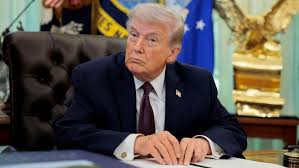
U.S. President Donald Trump has intensified his rhetoric toward Iran, issuing a renewed and forceful ultimatum demanding the reopening of the Strait of Hormuz.
In a series of shifting deadlines over recent weeks, Trump has repeatedly warned of military consequences if Iran does not restore access to the critical transit route. His latest message, posted on Truth Social, included explicit language and pointed to a specific escalation point: “Tuesday, 8:00 P.M. Eastern Time!”—which corresponds to early Wednesday morning in Tehran.
Timeline of Escalating Deadlines:
- 21 March: Trump warned he would “hit and obliterate” Iranian power plants within 48 hours if the strait was not reopened.
- 23 March: He paused the threat, citing “very good and productive conversations,” delaying action by five days.
- 27 March: The deadline was extended again by 10 days, reportedly following a request from the Iranian government, setting 6 April as the new cutoff.
- Recent warning: With the deadline approaching, Trump issued a “48-hour” ultimatum, warning of severe consequences.
- Latest update: The new timestamp suggests a narrowing window for action, reinforcing urgency and signaling potential imminent escalation.
The Strait of Hormuz remains one of the world’s most critical chokepoints, handling a substantial share of global oil shipments. Any prolonged disruption has far-reaching implications for global energy markets and geopolitical stability.
Trump’s evolving deadlines and increasingly aggressive tone highlight the fluid and high-stakes nature of the standoff. While diplomatic signals briefly surfaced in earlier statements, the latest developments suggest a pivot back toward coercive pressure.
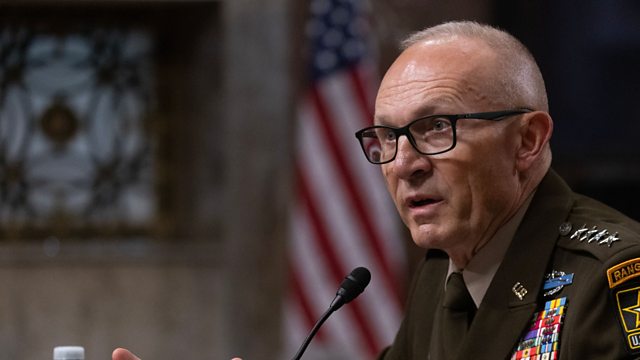
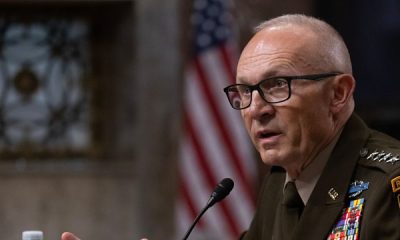
U.S. Defence Secretary Pete Hegseth has asked Army Chief of Staff Randy George to step down, triggering a significant leadership change at the top of the United States Army.
According to Pentagon spokesman Sean Parnell, General George will retire immediately from his role as the 41st Chief of Staff, cutting short what is typically a four-year term. George, a seasoned military officer and graduate of United States Military Academy at West Point, was nominated to the position in 2023 by former President Joe Biden.
No official reason has been provided for the abrupt decision, though a senior defence official indicated that “it was time for a leadership change.” The move comes amid broader military and geopolitical developments, including recent comments by Donald Trump suggesting that the ongoing U.S.-Israel conflict with Iran could conclude “very shortly.”
General George’s career spans decades, including service as an infantry officer during the Gulf War and deployments in Iraq and Afghanistan. His tenure has been marked by operational leadership across multiple theatres.
He will be succeeded on an acting basis by Vice Chief of Staff Christopher LaNeve, described by Pentagon leadership as a highly experienced and trusted commander aligned with the administration’s strategic vision.
The shake-up extends beyond the Army chief. Reports indicate that David Hodne, who led the Army’s Transformation and Training Command, and William Green, head of the Chaplain Corps, have also been removed from their posts.
Since assuming office, Hegseth has overseen the dismissal of more than a dozen senior military officials, including top Navy and Air Force leaders, signaling a sweeping effort to reshape the U.S. military’s leadership structure.
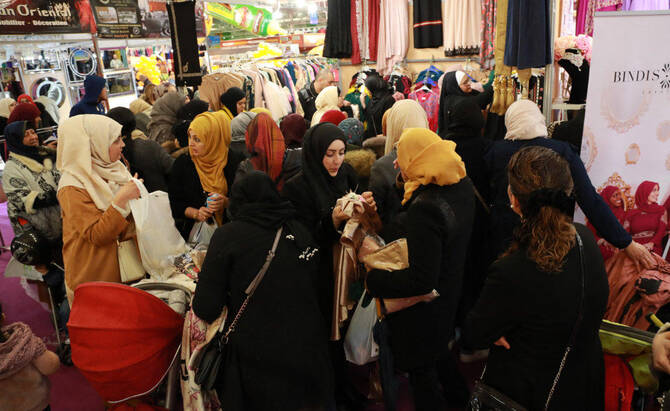
A major Muslim gathering in northern Paris will proceed as scheduled after a French administrative court overturned a government attempt to ban the event, marking a significant legal reaffirmation of civil liberties.
The Paris police authority had sought to block the four-day Annual Encounter of Muslims of France, arguing that the event posed a potential security risk, including the possibility of terrorist targeting and disruptions by far-right groups. However, the organisers—Muslims of France (MF)—challenged the decision in court, asserting that such a ban would violate fundamental freedoms.
In a ruling delivered just two hours before the planned opening, the administrative court sided with the organisers. Judges stated that the evidence presented by police “did not establish” a credible risk of counter-demonstrations or attacks by extremist groups. The court also rejected claims that the gathering would overstretch police resources, noting that organisers had committed to implementing additional security measures.
The event, which blends religious, cultural, and commercial elements, has historically attracted tens of thousands of attendees from across Europe. Although it was once held annually, it has not taken place since 2019, making this year’s edition particularly significant for participants.
Authorities had justified the proposed ban by citing a “particularly tense” national and international climate, warning that the Muslim community could face heightened risks. Concerns were also raised about possible interference from foreign actors seeking to destabilise the situation.
France has previously accused countries such as Russia and Iran of attempting to fuel unrest through indirect actions, including small-scale provocations.
The decision comes as the French government advances plans for a new “anti-separatism” law aimed at strengthening oversight of organisations accused of promoting ideas seen as incompatible with republican values. Interior Minister Laurent Nunez said the proposed measures would expand the government’s ability to regulate associations, including oversight of childcare structures and banning publications that incite hatred, violence, or discrimination.
Despite ongoing political debate, the court’s ruling underscores the judiciary’s role in balancing security concerns with the protection of individual freedoms, allowing the high-profile gathering to move forward under monitored conditions.


Trump Escalates Pressure on Iran With Final Deadline Over Strait of Hormuz

US Army Leadership Shake-Up as Hegseth Requests Chief’s Immediate Exit

French Court Clears Muslim Gathering in Paris, Upholding Civil Liberties


-

 Sports1 week ago
Woods charged with driving under the influence after crash
-
 News1 week ago
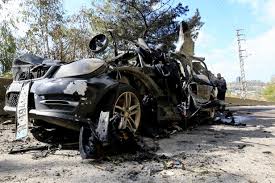
Israeli Strike in Lebanon Kills Journalists as Regional Tensions Escalate
-
Sports1 week ago
Tiger Woods Involved in Car Crash in Florida
-
 News1 week ago
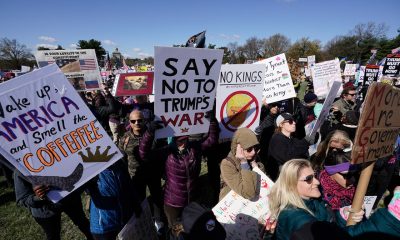
No Kings protests across the US rally against Donald Trump
-

 Sports7 days ago
Scott Brown Leaves Ayr United Role by Mutual Consent
-
 News3 days ago
Netanyahu claims most of Iran’s steel production destroyed as Tehran targets Gulf energy sites
-

 Sports6 days ago
Ghana sack manager Addo Just 72 days before World Cup
-
 News4 days ago
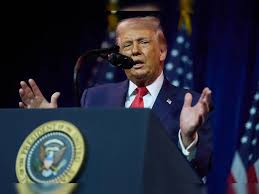
Donald Trump to Address Nation on Iran War Amid Uncertainty Over Next Move