
News
Israel says Iran’s security chief Ali Larijani has been killed in strike


Israel says it has killed Iran’s senior security figure Ali Larijani in a targeted strike, vowing to “continue hunting down” key leaders within the Iranian establishment.
The announcement comes amid a widening escalation between Israel, Iran, and allied forces. According to Israeli officials, the operation is part of a broader effort to dismantle Iran’s top command structure, which has already seen several high-ranking figures killed.
Among those previously reported dead is Iran’s Supreme Leader Ali Khamenei, whose death was announced on 28 February following the first day of coordinated US-Israeli strikes. Also killed in the initial wave were prominent figures including security adviser Ali Shamkhani, defence minister Amir Nasirzadeh, Revolutionary Guards commander Mohammad Pakpour, and armed forces chief of staff Abdolrahim Mousavi.
Israel’s foreign minister Gideon Saar said the deaths of Larijani and Basij commander Gholamreza Soleimani would make “Iranians safer,” arguing that the strikes are weakening what he described as Iran’s “repression mechanism.”
Speaking in Jerusalem, Saar added that while Israel’s actions are aimed at destabilising Iran’s leadership, any ultimate change in government would have to come from within the country. However, he suggested such a shift would likely require external support.
Saar also warned that Iran’s effective obstruction of the Strait of Hormuz has become a “global problem,” echoing comments from US President Donald Trump, who has called on other nations to help stabilise the critical shipping route.


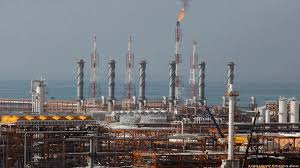
Israel has launched fresh strikes on Iranian energy infrastructure, targeting key petrochemical facilities amid escalating regional tensions tied to the strategic Strait of Hormuz.
Iranian media reported that the Marvdasht Petrochemical Complex was hit in what officials described as an “enemy attack.” The Fars news agency said the strike caused a fire that was quickly brought under control, while the semi-official Tasnim news agency, citing local authorities, reported that the damage to the facility was not significant.
Earlier, Israel confirmed it had struck the South Pars petrochemical plant in Asaluyeh, one of Iran’s most critical energy hubs. Israeli Defence Minister Israel Katz acknowledged the operation, while Iranian outlets said several production units were damaged but no casualties were recorded.
The strikes come against the backdrop of heightened warnings from U.S. President Donald Trump, who has threatened broader attacks on Iranian infrastructure if Tehran does not reopen the Strait of Hormuz. In a recent social media post, Trump warned that Tuesday could mark “Power Plant Day and Bridge Day” if Iran fails to comply.
The Strait of Hormuz is a vital global shipping route through which roughly 20% of the world’s oil supply passes, making any disruption a major concern for international markets.
In addition to infrastructure targets, the Israel Defense Forces said it had killed the intelligence chief of Iran’s Islamic Revolutionary Guard Corps, a move that signals a deepening escalation in direct confrontations.
Across the wider region, military activity has intensified. Reports from Lebanon describe near-constant fighter jet activity, while in northern Israel, a separate strike has killed four people.
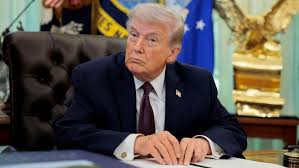
U.S. President Donald Trump has intensified his rhetoric toward Iran, issuing a renewed and forceful ultimatum demanding the reopening of the Strait of Hormuz.
In a series of shifting deadlines over recent weeks, Trump has repeatedly warned of military consequences if Iran does not restore access to the critical transit route. His latest message, posted on Truth Social, included explicit language and pointed to a specific escalation point: “Tuesday, 8:00 P.M. Eastern Time!”—which corresponds to early Wednesday morning in Tehran.
Timeline of Escalating Deadlines:
- 21 March: Trump warned he would “hit and obliterate” Iranian power plants within 48 hours if the strait was not reopened.
- 23 March: He paused the threat, citing “very good and productive conversations,” delaying action by five days.
- 27 March: The deadline was extended again by 10 days, reportedly following a request from the Iranian government, setting 6 April as the new cutoff.
- Recent warning: With the deadline approaching, Trump issued a “48-hour” ultimatum, warning of severe consequences.
- Latest update: The new timestamp suggests a narrowing window for action, reinforcing urgency and signaling potential imminent escalation.
The Strait of Hormuz remains one of the world’s most critical chokepoints, handling a substantial share of global oil shipments. Any prolonged disruption has far-reaching implications for global energy markets and geopolitical stability.
Trump’s evolving deadlines and increasingly aggressive tone highlight the fluid and high-stakes nature of the standoff. While diplomatic signals briefly surfaced in earlier statements, the latest developments suggest a pivot back toward coercive pressure.
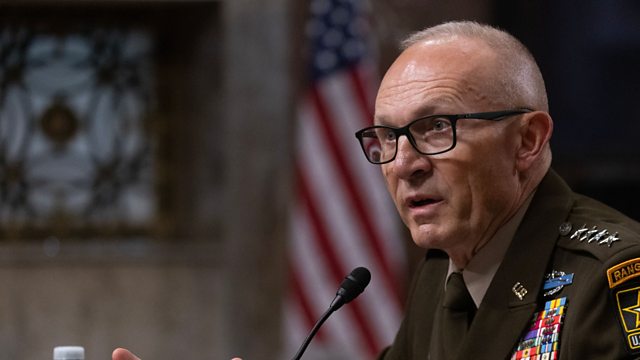
U.S. Defence Secretary Pete Hegseth has asked Army Chief of Staff Randy George to step down, triggering a significant leadership change at the top of the United States Army.
According to Pentagon spokesman Sean Parnell, General George will retire immediately from his role as the 41st Chief of Staff, cutting short what is typically a four-year term. George, a seasoned military officer and graduate of United States Military Academy at West Point, was nominated to the position in 2023 by former President Joe Biden.
No official reason has been provided for the abrupt decision, though a senior defence official indicated that “it was time for a leadership change.” The move comes amid broader military and geopolitical developments, including recent comments by Donald Trump suggesting that the ongoing U.S.-Israel conflict with Iran could conclude “very shortly.”
General George’s career spans decades, including service as an infantry officer during the Gulf War and deployments in Iraq and Afghanistan. His tenure has been marked by operational leadership across multiple theatres.
He will be succeeded on an acting basis by Vice Chief of Staff Christopher LaNeve, described by Pentagon leadership as a highly experienced and trusted commander aligned with the administration’s strategic vision.
The shake-up extends beyond the Army chief. Reports indicate that David Hodne, who led the Army’s Transformation and Training Command, and William Green, head of the Chaplain Corps, have also been removed from their posts.
Since assuming office, Hegseth has overseen the dismissal of more than a dozen senior military officials, including top Navy and Air Force leaders, signaling a sweeping effort to reshape the U.S. military’s leadership structure.


Calls Grow to Block Kanye West’s UK Festival Appearance Over Antisemitism Row

Israel Strikes Iranian Petrochemical Sites as Tensions Surge Over Hormuz Threats

Trump Escalates Pressure on Iran With Final Deadline Over Strait of Hormuz


-
 News1 week ago
Israeli Strike in Lebanon Kills Journalists as Regional Tensions Escalate
-
 News1 week ago
No Kings protests across the US rally against Donald Trump
-

 Sports1 week ago
Scott Brown Leaves Ayr United Role by Mutual Consent
-

 Sports7 days ago
Ghana sack manager Addo Just 72 days before World Cup
-
 News3 days ago
Netanyahu claims most of Iran’s steel production destroyed as Tehran targets Gulf energy sites
-

 Entertainment7 days ago
Céline Dion Announces Comeback Shows After Health Battle: “I’m So Ready for This”
-
 News5 days ago
Donald Trump to Address Nation on Iran War Amid Uncertainty Over Next Move
-

 Sports7 days ago
Cyclist killed at Worlds not found for 82 minutes