
News
Israel Believes Hezbollah Senior Commander Killed in Beirut Strike, Israeli Media Report Say

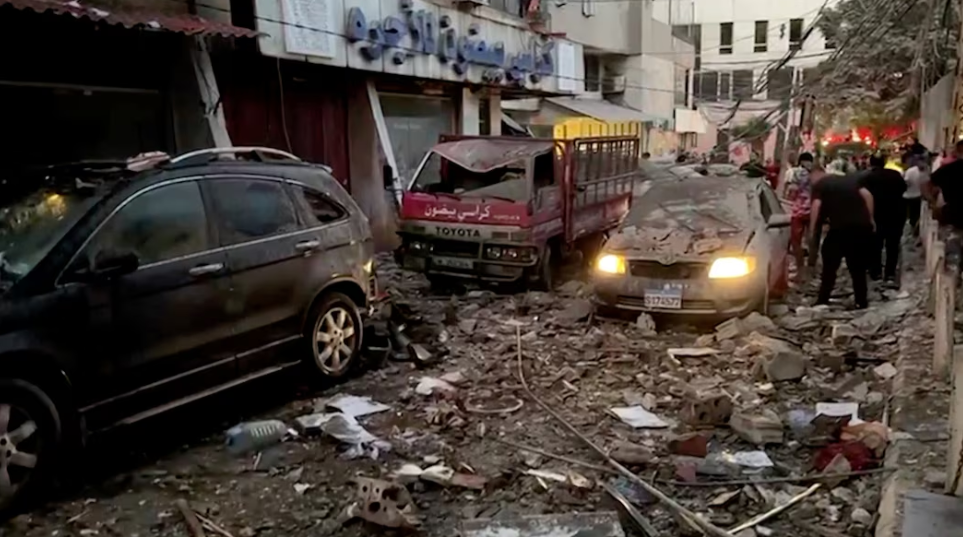
Israel believes its air strike on Beirut killed a senior commander of the Lebanese armed group Hezbollah on Tuesday, according to reports from Israel’s public broadcaster. The strike is said to be in retaliation for a cross-border rocket attack three days ago that killed 12 youngsters.
A loud blast was heard, and a plume of smoke was seen rising above Beirut’s southern suburbs, a stronghold of the Iran-backed Hezbollah, around 7:40 p.m. (1640 GMT). Two unidentified sources informed Israeli public broadcaster Kan that Israel assessed that “the target of the strike” was killed.
The Israeli military stated that the target was the Hezbollah militant responsible for a rocket strike on the Israeli-occupied Golan Heights on Saturday, which killed 12 youth playing football in the Druze village of Majdal Shams. Two security sources in Lebanon identified the target as Muhsin Shukr, also known as Fuad Shukr, head of Hezbollah’s operations centre. They reported that he was critically injured in the attack near Hezbollah’s Shura Council in the Haret Hreik neighbourhood.
Lebanese Health Minister Firas Abiad told Reuters that the strike also killed another person and injured 35, three of them critically.
Hezbollah has denied involvement in the Golan attack but confirmed that the group fired rockets at a military target in the Golan Heights. The killing of the youths has prompted high-level Western diplomatic efforts to avert a major escalation that could inflame the wider Middle East.
The Israeli military has issued no new civil defence instructions in Israel, possibly indicating that it does not plan further strikes immediately. Channel 12 TV quoted an unnamed official saying that Israel did not want an all-out war.
Israeli media reported that, depending on Hezbollah’s reaction, the military considered the Beirut strike as concluding its response to the Golan Heights attack. Analyst Mohanad Hage Ali from the Carnegie Middle East Center suggested that Hezbollah would have to respond, potentially by targeting a major city like Haifa on Israel’s northern coast.
Throughout the day, approximately 25 rockets were launched from southern Lebanon into northern Israel, according to the Israeli military. Medics reported that a 30-year-old man in the cooperative community of Kibbutz Hagoshrim was killed.



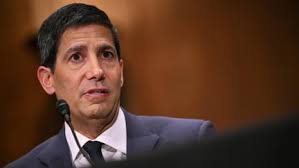
Former Federal Reserve official Kevin Warsh has pushed back against concerns over his independence, telling lawmakers he would not act as a “sock puppet” for Donald Trump if confirmed as chair of the Federal Reserve.
Appearing before a Senate committee, Warsh faced questions about his conversations with Trump, who has repeatedly called for interest rate cuts. Democratic senators expressed concern that the nominee might align monetary policy too closely with the president’s preferences.
Warsh said he had never advised Trump on where interest rates should be set, arguing that policymakers should avoid publicly pre-judging such decisions.
“That’s unhelpful,” he told the hearing, adding that central bankers should remain flexible and responsive to incoming economic data rather than committing to positions in advance.
He also denied striking any agreement with Trump to lower rates if confirmed, stressing the importance of maintaining the Fed’s independence.
Despite inflation remaining above the Fed’s long-term target in recent years, Warsh signalled a willingness to reassess how inflation is measured, saying he had limited confidence in traditional indicators. His comments suggested that elevated inflation alone might not necessarily prevent rate cuts under his leadership.
In his opening remarks, Warsh highlighted the cost of living as a central concern for Americans, noting it may be the most pressing economic issue facing the country.
While he described the broader economy as being close to full employment, Warsh acknowledged that many Americans continue to feel the strain of rising prices.
Responding to questions from Andy Kim, he said policymakers should not dismiss public perceptions of economic hardship.
“Central bankers should not be second-guessing what people feel and see in their own lives,” Warsh said.
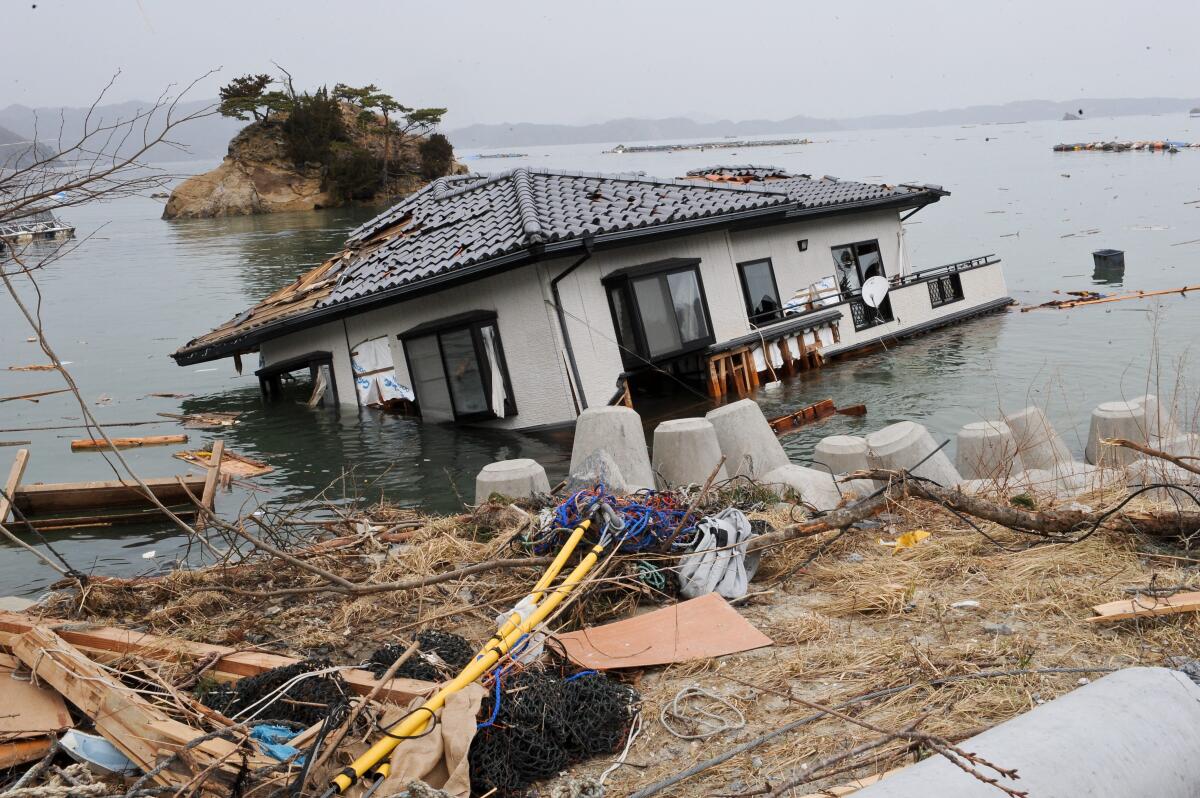
Authorities in Japan have warned that a second, potentially larger tsunami could strike following a powerful 7.5-magnitude earthquake off the country’s north-east coast.
The Japan Meteorological Agency said further seismic activity of a similar scale could occur over the coming week, noting that such warnings are standard after major earthquakes. Officials are also urging vigilance for landslides and additional aftershocks.
Residents in affected areas have been told to remain alert and stay inland until all tsunami advisories are lifted. Minoru Kihara reinforced the message, advising people not to return to coastal zones prematurely.
Initial reports indicate that around 100 households have been left without power, while some services on the Shinkansen have been temporarily suspended as a precaution.
Japan is one of the most seismically active countries in the world, accounting for more than 10% of earthquakes of magnitude six or higher globally. On average, the country experiences a magnitude-seven quake roughly once every 16 months.
The warning comes with the memory of the devastating 2011 Tohoku earthquake and tsunami still fresh. That magnitude 9.0 quake triggered a massive tsunami that killed more than 18,000 people and led to a nuclear disaster in Fukushima Prefecture.
Officials say lessons from that disaster have shaped current emergency responses, with stronger emphasis on rapid evacuation and public compliance with warnings. Residents are being urged to move to higher ground immediately if further alerts are issued, as tsunami waves can arrive in multiple surges and increase in size after the initial impact.

Global oil prices dropped sharply after Iran announced that the Strait of Hormuz would be “completely open” to commercial vessels for the remainder of the ceasefire.
The price of Brent crude fell to around $88 per barrel, down from above $98 earlier in the day, reflecting a rapid easing of supply concerns that had gripped global markets for weeks.
Iranian Foreign Minister Abbas Araghchi confirmed the development, stating that all commercial shipping would be allowed to pass freely through the strategic waterway during the ceasefire period.
The Strait of Hormuz, a narrow channel connecting the Gulf to the Arabian Sea, is one of the world’s most critical energy corridors, typically handling about one-fifth of global oil and liquefied natural gas shipments.
Markets reacted swiftly to the announcement. Major U.S. stock indices rallied in early trading, with the S&P 500 rising by 0.8%, while the Nasdaq Composite and the Dow Jones Industrial Average each gained more than 1%.
European markets also posted strong gains, with France’s CAC 40 and Germany’s DAX both climbing over 2%, while the UK’s FTSE 100 rose by around 0.5%.
The reopening follows weeks of disruption after the Strait was effectively closed amid escalating conflict involving Iran, the United States, and Israel. The shutdown had significantly reduced global oil and gas supplies, pushing prices above $100 per barrel and peaking at over $119 in March.
Before the conflict began, Brent crude had been trading below $70 per barrel, underscoring the scale of the price surge triggered by the الأزمة.
The spike in energy prices had ripple effects across the global economy, driving up petrol and diesel costs, increasing pressure on airlines due to rising jet fuel prices, and raising concerns over food inflation. The Strait is also a key route for fertiliser exports, with roughly a third of critical fertiliser chemicals passing through it.
However, there are early signs of relief. In the UK, fuel prices have begun to ease slightly, marking the first decline since the conflict began, though costs remain significantly higher than pre-war levels.


Warsh Says He Won’t Be Trump’s ‘Sock Puppet’ in Fed Role Amid Rate Debate

Israeli Soldiers Punished Over Vandalism of Jesus Statue in Lebanon

Singer D4vd Pleads Not Guilty to Murder Charges in Teen’s Death


-

 Entertainment6 days ago
‘Cool Hand Luke’ Actress Joy Harmon Dies Aged 87
-
 General6 days ago
Israel-Lebanon talks will happen today as Leaders Signal Possible Direct Contact
-

 Sports1 week ago
Prograis announces retirement after Benn Defeat in Emotional Farewell
-

 News5 days ago
Oil Prices Tumble as Iran Reopens Strait of Hormuz During Ceasefire
-
 News6 days ago
South African opposition figure Malema sentenced to five years in prison
-
 News1 week ago
Trump Orders U.S. Navy to Blockade Strait of Hormuz After Iran Talks Collapse
-
 News5 days ago
Strait of Hormuz ‘completely open’ to commercial ships
-
 Entertainment5 days ago
US Singer D4vd Arrested on suspicion Over Teen Girl’s Death