
News
Iran-US peace talks take place After Decades of Conflict

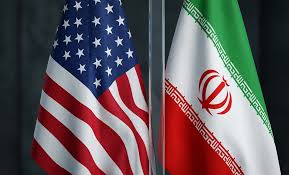
After nearly half a century of hostility—including two wars in the past two years—Iran and the United States are now engaged in extended face-to-face talks, signaling a notable shift in relations between the two adversaries.
Negotiations in Islamabad have stretched for hours, with parallel discussions among technical experts also continuing. The sustained engagement reflects a level of seriousness and coordination not often seen between Washington and Tehran in recent years.
The breakthrough appears driven by the seniority and authority of both delegations, alongside a mutual willingness to re-engage diplomatically despite deep-rooted mistrust. Iran, in particular, arrived at the talks emphasizing skepticism toward negotiations, especially after previous diplomatic efforts over the past year were derailed by renewed conflict.
Tehran reportedly insisted on engaging with top-level US leadership, including JD Vance, who is viewed within Donald Trump’s administration as a leading voice against prolonged military interventions.
The current effort draws inevitable comparisons to the Iran nuclear deal, which required 18 months of complex negotiations, marked by repeated setbacks before reaching agreement. By contrast, Trump has often favored faster, more decisive diplomatic outcomes.
While the present talks remain in their early stages, their continuation alone represents a meaningful development. With tensions still high and the risk of further escalation lingering, even incremental diplomatic progress could play a critical role in reducing the likelihood of renewed conflict.




Eric Swalwell is facing mounting calls to withdraw from the race to succeed Gavin Newsom as governor of California, following multiple allegations of sexual misconduct from former staff members—claims he has firmly denied.
In a statement, Swalwell described the accusations as false and politically timed, saying they surfaced “on the eve of an election against the frontrunner for governor.” The allegations range from sexual harassment to rape, significantly intensifying scrutiny on his campaign.
The controversy quickly led to a wave of political fallout. Within hours, prominent Democrats—including Adam Schiff and Hakeem Jeffries—withdrew their support, increasing pressure on Swalwell to step aside.
The first public allegation was reported by the San Francisco Chronicle. A former staff member claimed that shortly after joining Swalwell’s district office in Castro Valley, he made inappropriate comments, including requests for sex and explicit messages.
The accuser, who has not been identified, also alleged that in September 2019 she woke up naked in Swalwell’s hotel room with limited memory of the previous night. She further claimed that during a later encounter at a gala several years afterward, she again felt uncomfortable, recalling that she pushed him away and said “no.”
Swalwell has stated he intends to defend himself with “facts” as the situation develops. The allegations and their political repercussions have introduced significant uncertainty into an already closely watched gubernatorial race.

Israel has instructed residents in several southern suburbs of Beirut to evacuate, citing plans to carry out further strikes targeting what it describes as Hezbollah “military infrastructure.”
According to the Israel Defense Forces, the directive was communicated by spokesperson Avichay Adraee, who stated that the evacuation is intended to minimize civilian harm. He emphasized that Israel “does not intend to harm you,” urging residents to leave the affected areas immediately as a precaution.
The evacuation order applies to multiple neighborhoods in the southern part of the Lebanese capital, including Haret Hreik, Ghobeiry, Al-Lilaki, Hadath, Borj el-Barajneh, Tahwitat al-Ghadir, Shiyyah, and Al-Janah—areas known to be densely populated.
The announcement signals a potential escalation in military activity, with heightened concerns for civilian safety as tensions continue in the region.

Greece has announced plans to ban social media access for children under the age of 15, in a move aimed at addressing growing concerns over the impact of online platforms on young people’s mental health.
Prime Minister Kyriakos Mitsotakis said the restriction, set to take effect from January next year, is intended to tackle rising levels of anxiety, sleep disruption and what he described as the “addictive design” of social media applications.
In a video message shared on TikTok, Mitsotakis said many young people feel overwhelmed by constant comparisons and pressure to remain online, while parents have raised concerns about poor sleep and increased anxiety among their children.
He described the planned measure as “difficult but necessary,” stressing that the goal is not to distance young people from technology entirely, but to protect them from harmful digital environments. “The addictive design of certain applications… takes away your innocence and your freedom,” he said.
The move places Greece among a growing number of countries seeking stricter controls on children’s use of social media. Australia recently introduced a law requiring platforms such as TikTok, YouTube and Snapchat to remove accounts held by users under 16 or face heavy fines. Other European nations, including France, Austria and Spain, are also pursuing similar restrictions.
In the United Kingdom, the government has launched a consultation on a potential ban for under-16s, while Ireland and Denmark are considering comparable measures.
However, social media companies have pushed back against blanket bans, arguing they may be difficult to enforce and could inadvertently isolate vulnerable teenagers. Reddit is currently challenging Australia’s law in court.
Mitsotakis also signalled Greece’s intention to pursue action at a broader European level. In a letter to Ursula von der Leyen, he called for a unified EU framework to strengthen protections for minors online.
Proposals include mandatory age verification systems for users under 15, a potential Europe-wide ban for that age group, and requirements for platforms to re-verify users’ ages every six months.


Salah and Ngumoha Fire Liverpool Past Fulham in Premier League Clash

Iran-US peace talks take place After Decades of Conflict

Calls grow for Swalwell to quit California governor race after sexual assault allegations


-

 News1 week ago
Netanyahu claims most of Iran’s steel production destroyed as Tehran targets Gulf energy sites
-

 News1 week ago
French Court Clears Muslim Gathering in Paris, Upholding Civil Liberties
-

 News4 days ago
Gunman Killed in Shootout Near Israeli Consulate in Istanbul, Two Officers Injured
-

 News6 days ago
Trump Escalates Pressure on Iran With Final Deadline Over Strait of Hormuz
-

 News5 days ago
Israel Strikes Iranian Petrochemical Sites as Tensions Surge Over Hormuz Threats
-

 News1 week ago
US Army Leadership Shake-Up as Hegseth Requests Chief’s Immediate Exit
-

 Entertainment4 days ago
Rapper Offset Shot Outside Florida Casino
-

 News1 week ago
Trump says US can ‘easily’ open the Strait of Hormuz