
News
Icy Floods Engulf Sherpa Village in Nepal’s Everest Region

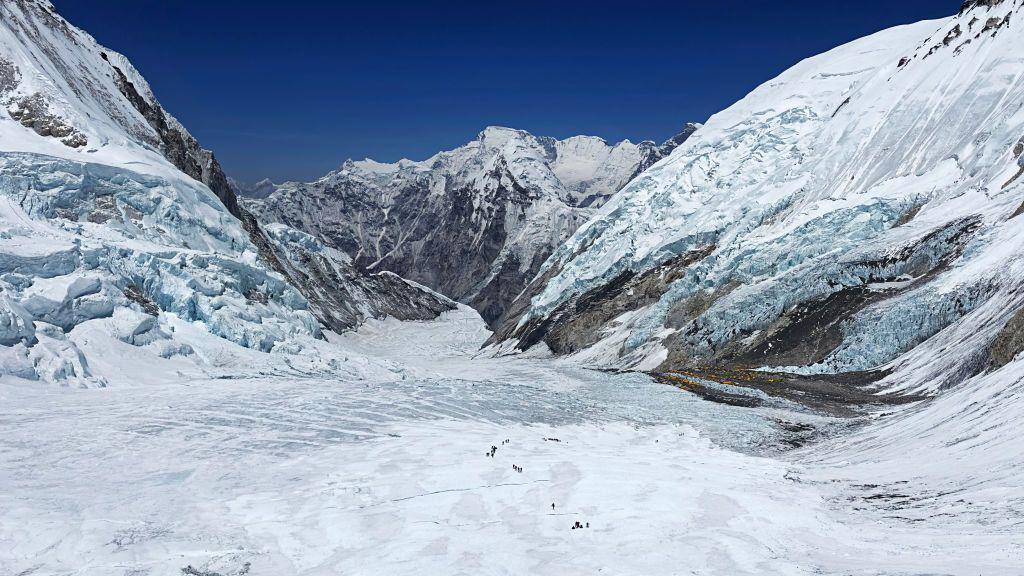
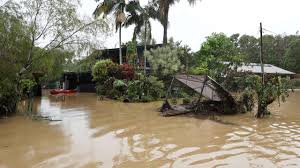
The Sherpa village of Thame in Nepal’s Everest region has been severely affected by icy floodwaters, believed to have been caused by the bursting of a glacial lake. The village, situated at an altitude of approximately 3,800 meters, has seen over a dozen buildings, including homes, a school, and a health clinic, completely destroyed by the flood that struck on Friday.
No casualties have been reported, but the destruction has left the community, known for its record-holding Sherpa mountaineers, in a state of shock. Thame is also the birthplace of Sherpa Tenzing Norgay, who, along with Sir Edmund Hillary, was the first to conquer Mount Everest.
Local authorities have faced challenges in assessing the situation due to bad weather, which has grounded helicopters. They plan to conduct a thorough investigation by air on Saturday, weather permitting.
Arun Bhakta Shrestha, a climate change expert from the International Centre for Integrated Mountain Development (ICIMOD), suggested that the flood may have been caused by a glacial lake outburst, a phenomenon increasingly common due to climate change. As Himalayan glaciers melt at an alarming rate, they form unstable glacial lakes, often dammed by loose rock and debris, which can suddenly burst, causing devastating floods.
The incident underscores the growing impact of climate change on the Himalayan region, where the rapid melting of glaciers poses a significant threat to local communities.







Gas prices across the UK and Europe surged sharply following escalating military strikes on key energy infrastructure in the Middle East, raising fresh concerns about global supply stability and economic ripple effects.
In early trading on Thursday, gas prices jumped by more than 25% before easing slightly later in the day. Despite the pullback, prices remain more than double their levels prior to the outbreak of hostilities involving Iran, the United States, and Israel, according to market analysts.
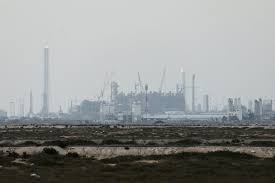
The spike follows a series of direct attacks on major gas facilities. Iran launched strikes on the Ras Laffan gas plant in Qatar, reportedly causing extensive damage. The move was described as retaliation after Israel targeted Iran’s South Pars gas field, a critical offshore energy site shared between Iran and Qatar.
The escalation has widened across the region. In the United Arab Emirates, both the Habshan gas facility and the Bab oil field have been shut down after sustaining damage from Iranian strikes. Meanwhile, Saudi Arabia said it successfully intercepted attempted attacks in its eastern region and in the capital, Riyadh, preventing further disruption.
Amid the growing crisis, Donald Trump stated that the United States had no prior knowledge of Israel’s strike on the South Pars field. He also issued a warning to Iran against carrying out additional attacks on Qatar, signaling the risk of further geopolitical escalation.
Military exchanges between Iran and Israel have continued, with the Israeli military reporting incoming fire from Iran. While emergency services have not confirmed new casualties, tensions remain high following Israel’s announcement that it had begun air strikes on targets in northern Iran—marking a significant expansion of its operations.
A critical flashpoint now centers on the Strait of Hormuz, one of the world’s most vital energy transit routes. Iranian lawmakers are reportedly considering imposing tolls on countries transporting goods through the strait. The waterway handles roughly 20% of global energy supplies, but shipping activity has effectively halted after Iran threatened to target vessels passing through.
Despite the volatility, analysts note that energy markets are beginning to adjust to the rapidly evolving situation. However, the ongoing disruptions—and the strategic importance of the affected infrastructure—suggest that prices could remain elevated in the near term, even as diplomatic efforts intensify to stabilize the region.

A Chinese national and his Kenyan associate have been charged with wildlife trafficking offences after authorities intercepted an attempt to smuggle more than 2,000 live queen ants out of Kenya.
Zhang Kequn was arrested last week at an international airport in Nairobi after officials discovered the insects hidden in his luggage. The ants were reportedly stored in test tubes and wrapped in tissue.
During a court hearing in Nairobi on Tuesday, prosecutors said Zhang had purchased the ants from Charles Mwangi at a rate of 10,000 Kenyan shillings (about $77) for every 100 ants.
Authorities say the case highlights a growing illegal trade in insects, driven by demand in parts of Europe and Asia where collectors keep species such as queen ants as pets.
Although officials have not confirmed the intended use of the ants in this case, Zhang’s luggage was reportedly bound for China.
Both men have been charged with illegal dealing in wildlife species and conspiracy to commit a felony. They remain in custody and have pleaded not guilty, according to local media reports.
Mwangi faces an additional charge after authorities allegedly found more live ants in his possession on a separate occasion.
Defence lawyer David Lusweti told the Associated Press that the two men were unaware they were breaking the law, arguing they believed the trade presented a legitimate business opportunity.
“They have seen potential that they are able to sell outside the country,” he said.
The case is scheduled to return to court on 27 March as investigations continue into the suspected wildlife trafficking network.

The head of US counterterrorism has stepped down in protest over the ongoing war with Iran, publicly urging President Donald Trump to change direction.
Joe Kent, director of the National Counterterrorism Center, announced his resignation in a letter posted on social media, sharply criticising the administration’s handling of the conflict.
In the letter, Kent argued that Iran posed “no imminent threat” to the United States and claimed the war had been initiated under pressure from Israel and its allies within the US.
Kent, a 45-year-old veteran of US special forces and the Central Intelligence Agency, also called on the administration to “reverse course,” warning of the broader consequences of continued military escalation.
The White House swiftly rejected his claims, maintaining that the president had acted on credible intelligence indicating an imminent Iranian threat.
Speaking from the Oval Office, Trump downplayed Kent’s departure, describing him as a “nice guy” but “weak on security.”
The president added that the resignation letter reinforced his belief that Kent’s exit was justified and reiterated his disagreement with the former counterterrorism chief’s assessment of Iran.
Kent’s resignation marks one of the most senior-level public breaks within the administration over the conflict, highlighting growing divisions in Washington over US policy toward Iran.


Lang Confirms Successful Surgery After Injury in Champions League Clash

Gas prices in UK and Europe soar after strikes on energy facilities in Qatar and Iran

Chinese National and Kenyan Associate Charged Over Attempt to Smuggle 2,000 Ants


-

 News1 week ago
Cargo Ship Set Ablaze in Strait of Hormuz After Vessels Struck by ‘Unknown Projectiles’
-

 Sports1 week ago
Trump Says Iran ‘Welcome’ at World Cup Despite Ongoing Conflict
-
 General1 week ago
Explosions Reported in Tehran as US Warns of ‘Most Intense’ Day of Strikes on Iran
-

 News1 week ago
Georgia Special Election to Replace Marjorie Taylor Greene Heads to Runoff
-

 News1 week ago
UN Says Russia’s Deportation of Ukrainian Children May Constitute Crimes Against Humanity
-
 News7 days ago
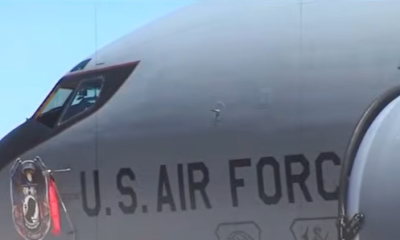
Six US Aircrew Killed After Military Refuelling Plane Crashes in Iraq
-

 Entertainment1 week ago
Kanye West Ordered to Pay $140,000 After Jury Rules in Malibu Mansion Renovation Dispute
-

 Business1 week ago
Oil price jumps despite deal to release record amount of reserves