
Business
Germany’s $2 Billion Bitcoin Holdings Spark Investor Concerns Amid Selloff


For weeks, Germany’s government has been offloading hundreds of millions of dollars worth of bitcoin, causing significant concern among cryptocurrency investors and contributing to a sharp selloff in the market. Last month, the Federal Criminal Police Office (BKA) began selling bitcoin from a massive haul seized from a now-defunct movie piracy website.
In June, the BKA sold 900 bitcoins, worth approximately $52 million. Last week, an additional 3,000 bitcoins, valued at around $172 million, were sold. On Monday, German police sold a further 2,739 bitcoins, equating to $155 million worth of the cryptocurrency. These substantial sales have coincided with a dramatic drop in bitcoin’s price, which fell below $55,000 on Friday, its lowest level since February 2024. The entire crypto market saw a significant loss, shedding over $170 billion in combined market capitalization in a 24-hour period.
Germany’s bitcoin sales aren’t the only issue weighing on the cryptocurrency. The payout of billions of dollars worth of bitcoin from the collapsed bitcoin exchange Mt. Gox to creditors has also put pressure on the market. The trustee for the Mt. Gox bankruptcy estate, Nobuaki Kobayashi, confirmed that repayments in bitcoin and bitcoin cash have begun through several designated crypto exchanges.
Despite the large sums involved, these sales are relatively small compared to bitcoin’s overall token issuance. In January 2024, police in the eastern German state of Saxony seized close to 50,000 bitcoins, worth around $2.2 billion at the time. This was the most extensive seizure of bitcoins by law enforcement in Germany to date. The funds were confiscated from the operators of Movie2k.to and transferred to a crypto wallet owned by Germany’s Federal Criminal Police Office.
Today, the BKA holds approximately 32,488 bitcoins, valued at roughly $1.9 billion. However, not everyone agrees with the government’s decision to sell its bitcoin holdings. Joana Cotar, a member of the German Bundestag, argued that the government should hold bitcoin as a “strategic reserve currency” instead of selling it. Cotar has reached out to German Chancellor Olaf Scholz, Finance Minister Christian Lindner, and Saxony Minister President Michael Kretschmer, calling the decision to sell bitcoin “not sensible” and “counterproductive.” She has invited these officials to a lecture by prominent bitcoin influencer Samson Mow on October 17 in Berlin to discuss the matter further.

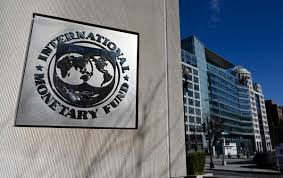
The International Monetary Fund has warned that the global economy faces a serious risk of slipping into recession if the ongoing conflict involving Iran, the United States, and Israel continues and keeps energy prices elevated.
In its latest World Economic Outlook report, the IMF outlined a worst-case scenario in which oil, gas, and food prices surge and remain high through 2026. Under such conditions, global economic growth could fall below 2% next year — a level historically associated with near-recession conditions worldwide.
“This would mean a close call for a global recession, which has happened only four times since 1980,” the IMF noted, pointing to the most recent downturn during the COVID-19 pandemic.
Energy markets have been under intense pressure since the conflict escalated more than six weeks ago, particularly after disruptions to the Strait of Hormuz, a vital shipping corridor for global oil and gas supplies. The collapse of peace talks between Washington and Tehran has further heightened uncertainty.
The IMF cautioned that the most severe economic impact would occur if oil prices average $110 per barrel this year and rise to $125 by 2027. In that scenario, global inflation could climb as high as 6% next year, potentially forcing central banks to raise interest rates to contain price pressures.
IMF Chief Economist Pierre-Olivier Gourinchas said that while defining a global recession can be complex, growth around 2% would feel like one for many people worldwide, with rising unemployment and increased food insecurity in several regions.
Although oil prices briefly approached $120 per barrel during the conflict, they have since eased, trading at around $98.85 as of Tuesday. However, the IMF stressed that the risk of recession would increase significantly if current disruptions persist over an extended period.
A quicker resolution to the conflict could help stabilise the outlook. The IMF said that if fighting subsides in the coming weeks and energy production normalises by mid-year, global growth in 2026 could reach 3.1%, slightly below its earlier forecast of 3.3%.
Among advanced economies, the United Kingdom is expected to be the hardest hit by the energy shock, with growth forecast downgraded to 0.8% this year before a modest recovery to 1.3%.
Oil-exporting nations in the Gulf are also projected to face significant economic strain. Iran’s economy is expected to contract by 6.1% this year, though it could rebound by 3.2% in 2027 if the conflict ends soon.
Elsewhere in the region, Qatar — a major supplier of liquefied natural gas — has seen key infrastructure targeted, including the Ras Laffan industrial complex. Its economy is forecast to shrink by 8.6% in 2026 before rebounding strongly the following year.
Neighbouring Iraq is also expected to suffer a 6.8% slowdown this year, followed by a projected recovery to 11.3% growth in 2027. Meanwhile, Saudi Arabia is forecast to maintain positive growth of 3.1% in 2026, accelerating to 4.5% the year after.
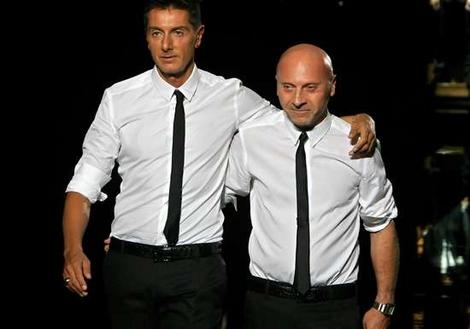
Stefano Gabbana, co-founder of Dolce & Gabbana, has stepped down as chair of the company he established in 1985 alongside Domenico Dolce.
The move comes as the luxury fashion house navigates mounting financial challenges, including a debt burden of approximately €450m (£391m/$528m), alongside a broader slowdown in the global luxury retail market. Reduced consumer spending—particularly in China—has added pressure on high-end brands.
Despite stepping down from the chairmanship, Gabbana will remain deeply involved in the creative direction of the brand, continuing his longstanding collaboration with Dolce in designing collections and maintaining the identity that has defined the label for decades.
Leadership responsibilities have transitioned to Alfonso Dolce, brother of Domenico Dolce and the company’s chief executive, who officially assumed the role of chair on 1 January. Corporate filings indicate that Gabbana communicated his decision internally in December.
In response to shifting market dynamics, Dolce & Gabbana has been expanding into new sectors, including hospitality and home furnishings. Its recent offerings feature high-end lifestyle pieces such as a leopard-print porcelain vase priced at £1,084, reflecting an effort to diversify revenue streams.
Industry observers highlight the scale of the company’s financial obligations. Fashion expert Priya Raj noted that the brand remains privately owned, with both Gabbana and Domenico Dolce each holding significant 40% stakes—leaving open questions about future ownership structures.
Reports in March indicated that the company had engaged financial advisers and entered discussions with creditors as it seeks to manage its debt. In a statement on Friday, the firm confirmed that negotiations with banks are ongoing, declining further comment at this stage.
Despite financial headwinds and past controversies—including criticism earlier this year during Milan Fashion Week over a predominantly white model cast, which drew backlash from figures like Bella Hadid—the brand has demonstrated resilience. Analysts note that its distinctive aesthetic continues to attract a loyal global following, even as industry trends evolve.
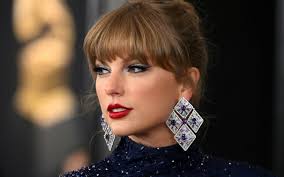
Universal Music Group has received a takeover offer valued at approximately $64.3bn (£48bn), in a potential deal that could reshape the global music industry.
The bid has been made by Pershing Square Capital Management, whose billionaire chief executive Bill Ackman said the proposal would involve a merger and lead to the combined company being listed in the United States. Pershing Square already holds a stake in Universal.
Universal Music, the world’s largest music company, represents a wide roster of global stars including Taylor Swift, Sabrina Carpenter and Kendrick Lamar. It also owns iconic assets such as Abbey Road Studios and major record labels including EMI and Island Records.
The company has yet to respond publicly to the offer.
Ackman praised Universal’s leadership, saying it had built a “world-class artist roster” and delivered strong business performance. He added that the company had successfully adapted to industry changes, particularly by embracing opportunities presented by artificial intelligence while safeguarding intellectual property.
However, he argued that Universal’s stock had underperformed due to factors unrelated to its core business, suggesting these issues could be resolved through the proposed transaction.
Pershing Square’s broader investment portfolio includes stakes in major technology firms such as Google, Meta Platforms and Amazon, as well as Restaurant Brands International, the parent company of Burger King.
Market analysts note that while Universal dominates the global music industry—home to nine of the top 10 recording artists of 2025—its revenue growth is closely tied to streaming platforms like Spotify and Apple Music, where slower-than-expected growth has raised concerns.
Although global music revenues have rebounded in recent years thanks to streaming subscriptions, debates continue over royalty payments to artists. At the same time, the rise of AI-generated deepfake music—where fraudsters imitate established artists—has emerged as a growing challenge for the industry.
In a letter to Universal’s board, Ackman said the company had “dramatically underperformed” key stock indexes, citing uncertainty around a significant stake held by Bolloré Group, controlled by billionaire Vincent Bolloré, as well as delays to a planned New York listing.


Former FBI Director James Comey Charged Over Alleged Threat Against Trump

Anthony Joshua signs deal to fight Fury

Manchester United Move Closer to Champions League Return with Important Win Over Brentford


-

 General1 week ago
Father Kills Eight Children in Louisiana Mass Shooting, Police Say
-
 News1 week ago
Warsh Says He Won’t Be Trump’s ‘Sock Puppet’ in Fed Role Amid Rate Debate
-

 News5 days ago
Hundreds of Wildfires Rage Across Florida and Georgia, Forcing Evacuations
-

 News6 days ago
Iran says reopening Strait of Hormuz ‘impossible’ amid US blockade
-
 Entertainment1 week ago
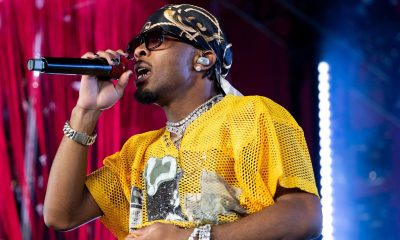
Singer D4vd Pleads Not Guilty to Murder Charges in Teen’s Death
-

 Entertainment5 days ago
MrBeast’s Company Faces Lawsuit Over Sexual Harassment Allegations
-

 General1 week ago
Israeli Soldiers Punished Over Vandalism of Jesus Statue in Lebanon
-
 News5 days ago
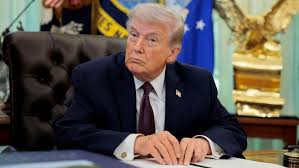
Donald Trump has announced that the Israel-Lebanon ceasefire has been extended by three weeks.