
News
Fast-Tracked Visas for Nigerians to South Africa

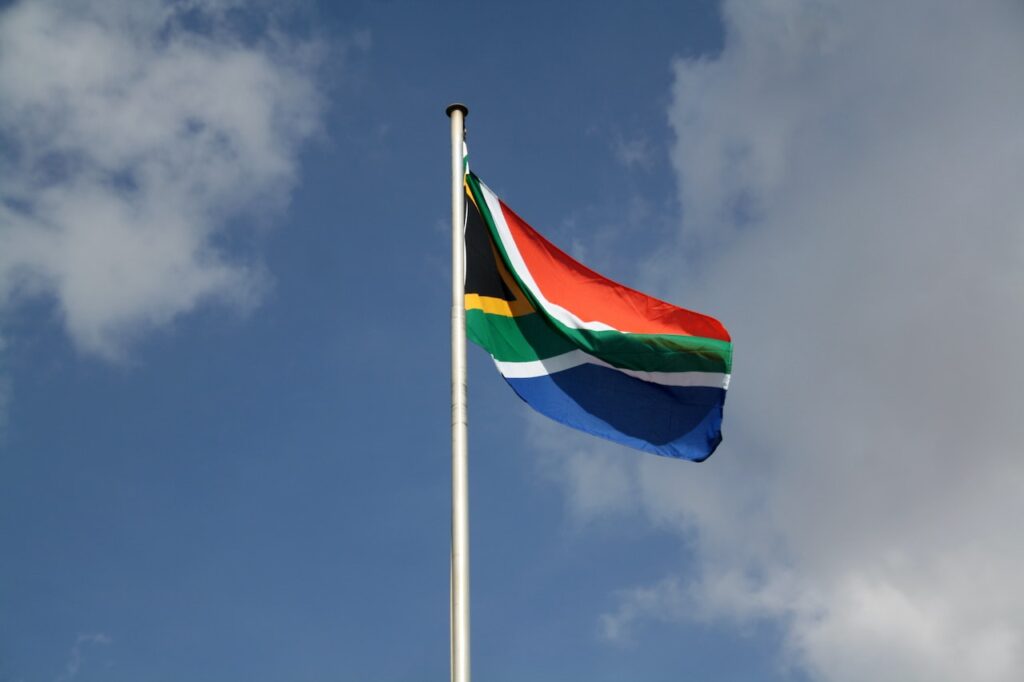
In a significant boost to diplomatic relations between South Africa and Nigeria, the Consul-General of South Africa to Nigeria, Prof. Bobby Moroe, announced that Nigerians wishing to visit South Africa can now obtain visas within seven days. This is a remarkable improvement from the previous six-month processing period.
Speaking at the July Breakfast Meeting in Lagos, sponsored by South Africa Airways and themed “Diplomatic Relations Between South Africa and Nigeria-Prospects and Challenges,” Moroe emphasized the importance of the new arrangement. He specified that applicants must attach photocopies of their travel passports to their applications and will receive a call to submit the original document for visa processing.
Moroe highlighted the trade dynamics between the two countries, noting that in 2022, Nigeria had a favorable trade volume of $72.1 billion compared to South Africa’s $447 million. He attributed South Africa’s trade benefits to products like magnetic rubber stoppers, used in industries to prevent water spillages, and the exportation of pears and apples, which accounted for $43.2 million.
“The high consumption of apples and pears in Nigeria, given its large population, contributes to the trade balance being in Nigeria’s favor,” Moroe explained. He expressed optimism about increasing the number of Nigerian companies operating in South Africa, suggesting that more can be done to enhance bilateral trade relations.
This fast-tracked visa process and the focus on improving trade ties mark a new chapter in the relationship between South Africa and Nigeria, promising greater ease of travel and stronger economic collaboration.
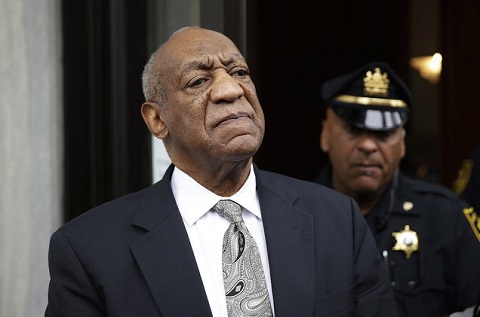
A jury in California has ordered Bill Cosby to pay $19.25m (£14.3m) in damages to a former waitress after finding he drugged and sexually assaulted her in 1972.
The plaintiff, Donna Motsinger, told the court that Cosby gave her wine and a pill—believed to be aspirin—that left her incapacitated after picking her up in a limousine to attend one of his shows. She said she drifted in and out of consciousness, recalling only flashes of light before later waking up at home partially clothed and realising she had been assaulted.
Cosby, now 88, has consistently denied Motsinger’s allegations, as well as similar claims made by numerous women over the years in both civil and criminal proceedings. His legal team indicated that he plans to appeal the verdict.
The case was heard in Santa Monica, where jurors ruled in favour of Motsinger and awarded compensatory damages, with the possibility of additional punitive damages still to be determined.
Motsinger, now 84, had worked at the Trident restaurant in Sausalito, a popular venue frequented by celebrities during the 1970s. According to court filings, Cosby invited her to one of his performances and allegedly administered the drug during the journey.
Cosby’s defence argued that Motsinger could not definitively recall what happened and challenged the credibility of her claims. His lawyer, Jennifer Bonjean, told US media that the ruling would be contested on appeal.
The case adds to a long list of legal battles that have defined Cosby’s later years. Once widely celebrated for his role in The Cosby Show, his legacy has been overshadowed by allegations of sexual misconduct dating back decades.
In 2021, Cosby was released from prison in Pennsylvania after serving nearly three years of a sentence for sexual assault, when his conviction was overturned on a legal technicality. He has maintained that all encounters were consensual.
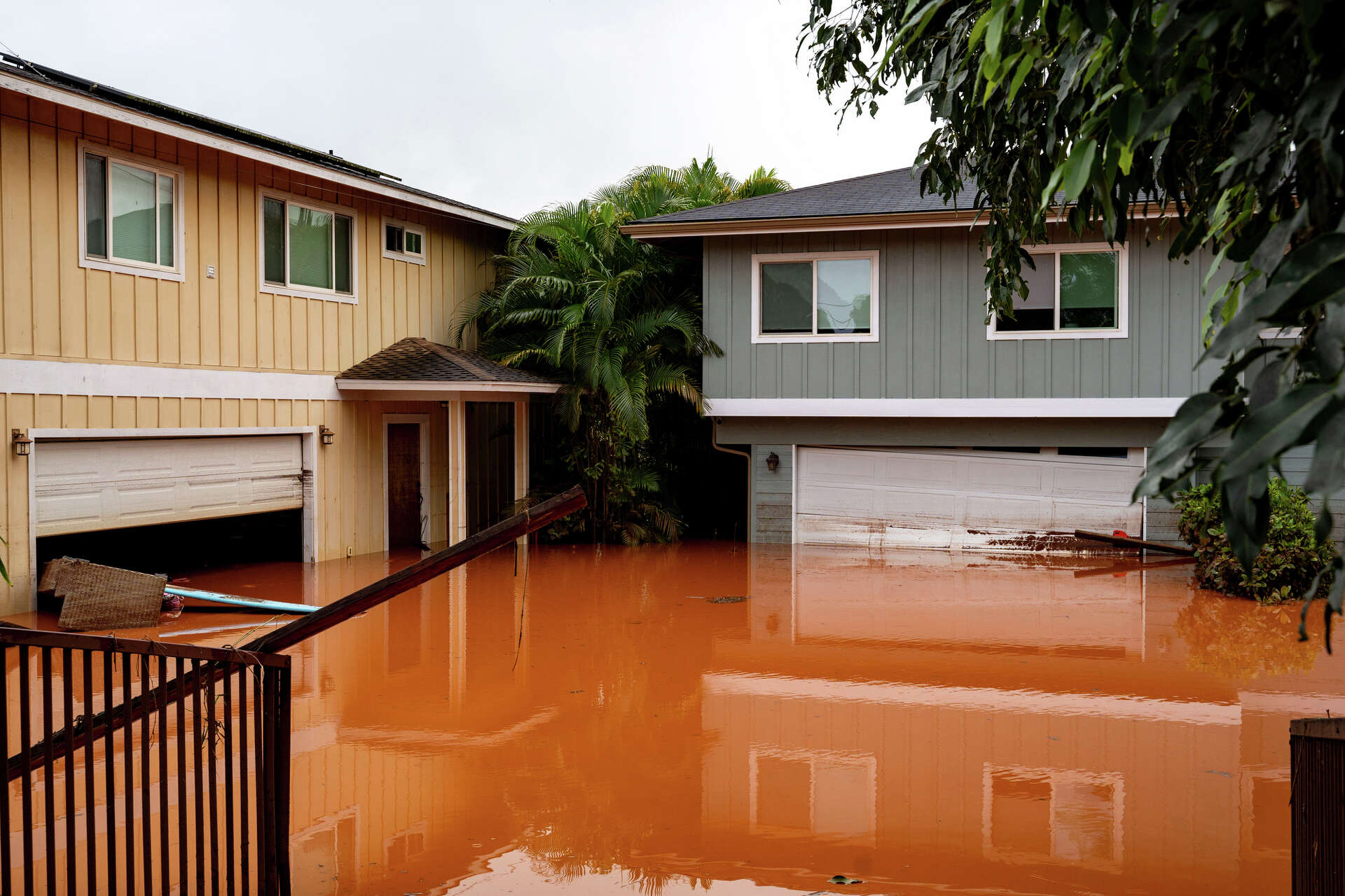
Thousands of residents across Hawaii have been forced to evacuate their homes as the islands endure their most severe flooding in decades, following a second powerful storm in just one week.
Authorities say the damage could exceed $1bn (£745m), according to Rick Blangiardi, mayor of Honolulu. More than 230 people have already been rescued, with emergency services continuing operations as heavy rainfall persisted into early Saturday.
Officials have raised alarms over a dam on Oahu—the state’s most populous island—warning it is at risk of collapse. Residents have been urged to take the situation seriously and follow evacuation guidance.
At a press briefing, Josh Green confirmed there had been no reported fatalities so far, while commending emergency responders for their ongoing efforts.
Floodwaters have surged through communities, lifting homes and vehicles, and prompting evacuation orders affecting approximately 5,500 people north of Honolulu. Multiple roads across the islands have been shut down due to hazardous conditions.
The Honolulu Department of Emergency Management has issued repeated flash flood warnings, advising residents to seek higher ground and avoid entering flooded areas.
Flood alerts have also been extended to other islands, including Maui, Molokai, and Hawaii Island.
Governor Green warned the storm would have “serious consequences” for the state, citing widespread damage to critical infrastructure such as airports, schools, roads, hospitals, and residential properties.
The extreme weather is being driven by a Kona Low—a slow-moving low-pressure system that pulls in warm, moisture-laden air, leading to prolonged heavy rainfall and flash flooding across the Hawaiian islands.
Gas prices across the UK and Europe surged sharply following escalating military strikes on key energy infrastructure in the Middle East, raising fresh concerns about global supply stability and economic ripple effects.
In early trading on Thursday, gas prices jumped by more than 25% before easing slightly later in the day. Despite the pullback, prices remain more than double their levels prior to the outbreak of hostilities involving Iran, the United States, and Israel, according to market analysts.
The spike follows a series of direct attacks on major gas facilities. Iran launched strikes on the Ras Laffan gas plant in Qatar, reportedly causing extensive damage. The move was described as retaliation after Israel targeted Iran’s South Pars gas field, a critical offshore energy site shared between Iran and Qatar.
The escalation has widened across the region. In the United Arab Emirates, both the Habshan gas facility and the Bab oil field have been shut down after sustaining damage from Iranian strikes. Meanwhile, Saudi Arabia said it successfully intercepted attempted attacks in its eastern region and in the capital, Riyadh, preventing further disruption.
Amid the growing crisis, Donald Trump stated that the United States had no prior knowledge of Israel’s strike on the South Pars field. He also issued a warning to Iran against carrying out additional attacks on Qatar, signaling the risk of further geopolitical escalation.
Military exchanges between Iran and Israel have continued, with the Israeli military reporting incoming fire from Iran. While emergency services have not confirmed new casualties, tensions remain high following Israel’s announcement that it had begun air strikes on targets in northern Iran—marking a significant expansion of its operations.
A critical flashpoint now centers on the Strait of Hormuz, one of the world’s most vital energy transit routes. Iranian lawmakers are reportedly considering imposing tolls on countries transporting goods through the strait. The waterway handles roughly 20% of global energy supplies, but shipping activity has effectively halted after Iran threatened to target vessels passing through.
Despite the volatility, analysts note that energy markets are beginning to adjust to the rapidly evolving situation. However, the ongoing disruptions—and the strategic importance of the affected infrastructure—suggest that prices could remain elevated in the near term, even as diplomatic efforts intensify to stabilize the region.


Fans Group Files Complaint Against FIFA Over ‘Excessive’ World Cup Ticket Prices

Jury Orders Bill Cosby to Pay $19m in Decades-Old Assault Case

OnlyFans owner Leonid Radvinsky dies at 43


-

 News1 week ago
Trump Urges Allies to Deploy Warships to Protect Strait of Hormuz After Iranian Attacks
-
 News1 week ago
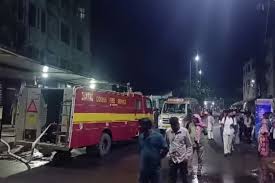
Ten killed in fire at India hospital intensive care unit
-
 News1 week ago
US Counterterrorism Chief Resigns Over Iran War, Urges Trump to ‘Reverse Course’
-
 News5 days ago
Gas prices in UK and Europe soar after strikes on energy facilities in Qatar and Iran
-

 Sports1 week ago
Middle East Conflict Forces Cancellation of Spain vs Argentina Finalissima
-

 News1 week ago
Israel says Iran’s security chief Ali Larijani has been killed in strike
-
 News6 days ago
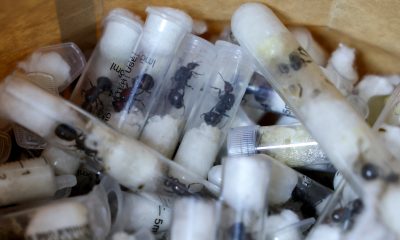
Chinese National and Kenyan Associate Charged Over Attempt to Smuggle 2,000 Ants
-

 Sports5 days ago
Lang Confirms Successful Surgery After Injury in Champions League Clash