
News
Democracy Day – Tinubu Honors Abiola and Other Heroes, Warns Against Anti Democratic Forces

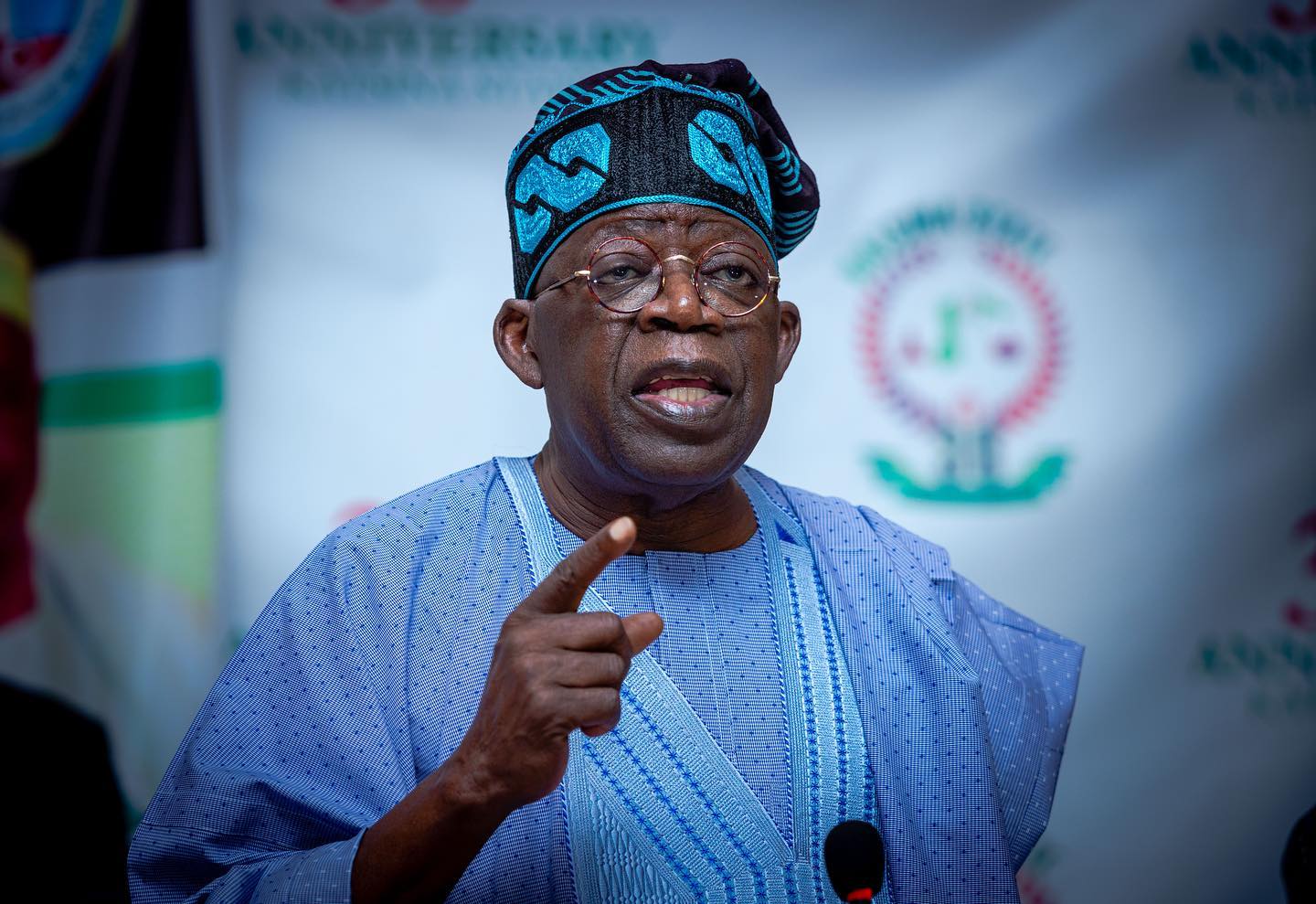
In his Democracy Day broadcast, President Bola Tinubu praised the winner of the annulled June 12, 1993, presidential election, Chief Moshood Abiola, and other democracy heroes such as General Shehu Musa Yar’Adua and Pa Alfred Rewane. Tinubu celebrated their sacrifices and highlighted the critical role they played in Nigeria’s democratic journey.
Recognition of Democracy Heroes
President Tinubu acknowledged various individuals who made significant sacrifices for Nigeria’s democracy, including:
- Chief Anthony Enahoro
- Chief Abraham Adesanya
- Commodore Dan Suleiman
- Chief Arthur Nwankwo
- Chief Chukwuemeka Ezeife
- Admiral Ndubuisi Kanu
- Chief Frank Kokori
- Chief Bola Ige
He emphasized that these heroes bravely surrendered their futures to secure a better one for the nation, making significant personal sacrifices in the process.
Economic Hardship and Commitment to Reforms
Addressing the nation’s economic challenges, Tinubu acknowledged the hardships faced by Nigerians but justified the need for economic reforms. He stated, “Our economy has been in desperate need of reform for decades,” and emphasized that these reforms are essential to create a stronger foundation for future growth.
Tribute to the Media
Tinubu also paid tribute to the media’s role in the democratic struggle, praising the indomitable spirit of Nigerian journalists and their establishments, such as The PUNCH, The Guardian, and Tribune, which played crucial roles in fighting against military dictatorship.
Warning Against Anti-Democratic Forces
The President warned Nigerians to beware of elements attempting to undermine the current democratic dispensation. He stressed that democracy, despite its complexities, is the best form of governance and urged the nation to remain vigilant against those seeking to exploit current economic challenges to destabilize democracy.
Commitment to Democracy
Tinubu reassured citizens of his commitment to democracy, stating, “I stand uniquely placed in this regard. I was among those who took the risk to midwife the birth of our democracy. I am now a direct and obvious beneficiary of the fruits of those historic efforts.”
He pledged to protect citizens’ rights and freedoms and to solidify democracy as Nigeria’s way of life, emphasizing the importance of maintaining political and economic democracy.
Upcoming Legislation on Minimum Wage
Tinubu revealed plans to submit an executive bill to the National Assembly to codify agreements reached in the ongoing minimum wage negotiations. This legislation aims to enshrine the agreed terms into law for the next five years or less, reflecting the administration’s commitment to addressing labor concerns through cooperation and dialogue.
Concluding Remarks
In his concluding remarks, Tinubu reiterated his dedication to Nigeria’s democratic principles and the well-being of its citizens, vowing to continue reforms and listen to the people to ensure fair pay and economic opportunities for all. He emphasized the need for reasoned discussion and principled compromise in governance, promising to lead impartially and work towards a nation where no one is oppressed.

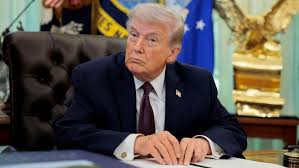
Donald Trump remains in “excellent health” and is fully capable of performing the duties of president, according to the results of his latest annual medical examination released by the White House.
The report, prepared by White House physician Sean Barbabella, stated that Trump, who will turn 80 next month, continues to demonstrate strong cardiovascular, pulmonary, neurological and overall physical health.
Barbabella concluded that the president is “fully fit to carry out all duties of the Commander-in-Chief and Head of State.”
Trump underwent the examination at Walter Reed National Military Medical Center on Tuesday. Afterwards, he wrote on his social media platform that “everything checked out perfectly.”
The assessment was his third publicly known medical check-up since returning to the White House.
Cognitive and Physical Health
According to the report, Trump achieved a perfect score of 30 out of 30 on the Montreal Cognitive Assessment, a widely used screening tool designed to evaluate memory, attention and other cognitive functions.
The examination found no significant concerns regarding his cognitive health.
Trump currently weighs 238 pounds (108kg), an increase of 14 pounds (6.3kg) compared with his April 2025 medical assessment. While noting his overall strong health, Barbabella recommended continued attention to diet, exercise and weight management.
The report also stated that Trump is taking medication to control cholesterol levels.
Heart Health and Activity Levels
The president’s resting heart rate was recorded at 73 beats per minute. According to the physician’s assessment, Trump’s cardiovascular condition compares favourably with his age group, with his estimated cardiac age being approximately 14 years younger than his actual age.
Barbabella noted that Trump’s demanding schedule, which includes frequent meetings, public appearances and regular physical activity, continues to support his overall wellbeing.
Update on Previous Health Concerns
Last year, visible bruising on Trump’s hands and swelling in his lower legs generated public discussion about his health.
In July, it was disclosed that he had been diagnosed with Chronic Venous Insufficiency, a condition in which veins in the legs struggle to return blood efficiently to the heart, potentially causing swelling in the lower limbs.
The latest report stated that some mild swelling remains but has improved since last year.
Barbabella also addressed the bruising on Trump’s hand, explaining that it is consistent with minor soft-tissue irritation caused by frequent handshaking while taking aspirin as part of a cardiovascular prevention regimen.
According to the physician, such bruising is a common and generally harmless side effect of aspirin therapy.
Ongoing Medical Care
The report indicated that Trump remains current on recommended preventive screenings and immunisations. In addition to aspirin, he continues to take two medications designed to manage cholesterol levels.
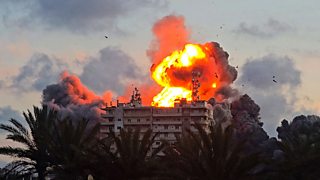
Israel has carried out a strike on the Lebanese capital, Beirut, marking only the second attack on the city since a ceasefire came into effect last month.
The Israel Defense Forces (IDF) said the operation, launched at about 14:00 local time (11:00 GMT), was conducted in a “targeted manner”, though officials did not immediately release further details about the intended target.
Israeli media, citing unnamed security sources, reported that the strike was aimed at Ali al-Husni, described as the head of the missile force in the Imam Hossein Division, an Iranian-backed militia aligned with Hezbollah.
The strike hit Dahieh, the densely populated southern suburb of Beirut regarded as Hezbollah’s main stronghold in the capital. Thick smoke rose above residential buildings following the explosion, while residents were heard calling out for relatives and neighbours as emergency crews rushed into the area.
The latest escalation comes despite efforts to maintain a fragile ceasefire between Israel and Hezbollah. Both sides have repeatedly accused each other of violating the agreement through cross-border attacks and military operations.
According to reports, Israel had previously avoided striking Beirut after a request from Donald Trump. However, the latest attack followed waves of Israeli airstrikes targeting Hezbollah infrastructure in southern Lebanon.
The renewed military activity also comes after Israeli Prime Minister Benjamin Netanyahu announced an expansion of ground operations following Hezbollah drone attacks on Israeli troops stationed in southern Lebanon and civilians in northern Israel.
On Wednesday, the IDF warned Lebanese residents to move north of the Zahrani River, approximately 40km from the Israeli border, saying Israeli forces would operate “with extreme force” in affected areas.
Lebanon’s health ministry said at least 11 people were killed in two separate Israeli strikes that targeted the city of Tyre and nearby eastern areas early on Thursday.
Videos shared on social media from Tyre showed streets illuminated by flames, smoke covering roads, and several vehicles damaged or burning. In daylight footage, a large fireball could be seen erupting near high-rise residential buildings, sending a mushroom-shaped plume of smoke into the sky as debris scattered through nearby streets.
The latest developments underline the continuing instability along the Israel-Lebanon border, with growing concerns that repeated exchanges of fire could trigger a wider regional confrontation involving Iran-backed armed groups and Israeli forces.
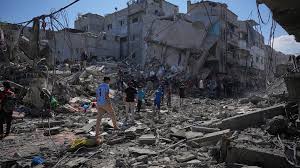
The head of the military wing of Hamas, Mohammed Odeh, has been killed in an Israeli strike in Gaza City, only days after the death of the group’s previous military commander in a separate attack.
Local medics and witnesses said the strike, which took place on Tuesday, also left dozens of people injured after a residential building in one of Gaza City’s busiest market districts was hit.
The Israeli military and the Shin Bet security agency said the operation targeted buildings allegedly being used as a hideout by Odeh. According to a joint statement, Israeli forces had tracked his movements and those of his associates over several months before carrying out the strike.
On Wednesday, Hamas confirmed that Odeh had died in the attack along with his wife and two of his children.
Although a ceasefire between Israel and Hamas was agreed in October, incidents of violence have continued to occur across the Gaza Strip on an almost daily basis, highlighting ongoing tensions despite international hopes for a more stable security situation.
Tuesday’s strike hit the top three floors of the al-Kayali building in central Gaza City, where crowds had gathered for shopping activities ahead of the Muslim holiday of Eid al-Adha.
Emergency and rescue teams quickly moved to the scene to assist victims and search through the damaged structure. However, witnesses said rescue operations were slowed by severe destruction to the building and heavy congestion in the surrounding streets.
In a statement, the Israel Defense Forces and Shin Bet said: “As part of the joint operation by the IDF and Shin Bet to eliminate the terrorist Mohammed Odeh, several buildings in the heart of Gaza City that served as a hideout for him were attacked, after months of intelligence surveillance in order to track his movements and the movements of his assistants in the organisation.”
The statement added that Israeli forces also struck “a nearby apartment belonging to a Hamas terrorist who raided on October 7 and was part of Odeh’s circle of assistants,” referring to the Hamas-led attack on southern Israel that sparked the war in Gaza.
The latest developments come as international mediators and humanitarian organisations continue to push for renewed efforts aimed at reducing violence and improving conditions for civilians affected by the prolonged conflict.


Paris Saint-Germain Retain Champions League Crown After Shootout Victory Over Arsenal

Trump in ‘excellent health’ but should lose weight and exercise more, his doctor says

Marcia Lucas, Oscar-Winning Star Wars Editor, Dies at 80


-
 News7 days ago
Marco Rubio Says US-Iran Deal Could Come Monday
-
 Entertainment6 days ago
BTS Triumph at American Music Awards as Black Eyed Peas Reunite
-

 Tech6 days ago
Ferrari Unveils First Fully Electric Car
-
 News1 week ago
At Least 90 Killed in China Coal Mine Explosion
-

 News7 days ago
Oil Prices Fall on Hopes of US-Iran Peace Deal
-
 Sports1 week ago
Bruno Fernandes Named Premier League Player of the Season
-
 News6 days ago
Four Killed After School Minibus Hit by Train in Belgium
-
 Sports4 days ago
Manchester United Move Closer to Signing Ederson in £38m Midfield Deal