
News
Syria strikes new ceasefire deal with SDF

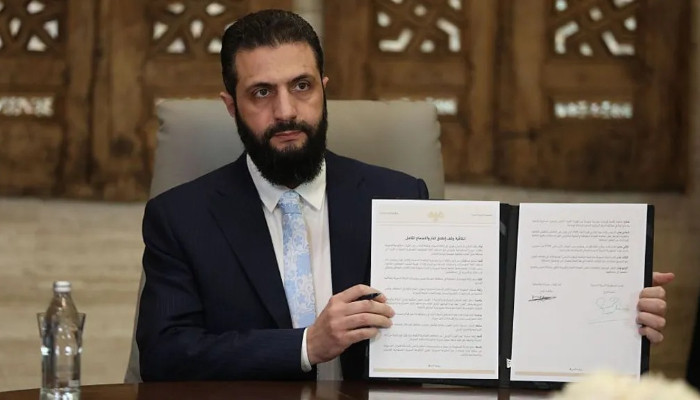
The Syrian government has announced an immediate nationwide ceasefire with the Kurdish-led Syrian Democratic Forces (SDF), a move that Syrian state media says effectively consolidates state authority across almost the entire country and brings an end to nearly two weeks of clashes.
The ceasefire is anchored in a comprehensive 14-point agreement that provides for the gradual integration of the SDF into Syria’s military and state institutions. Officials in Damascus described the accord as a major step toward restoring national unity after years of fragmentation brought on by the civil war.
Speaking in the capital, President Ahmed al-Sharaa said the agreement would enable Syrian state institutions to reassert formal control over three key eastern and northern governorates: al-Hasakah, Deir Ezzor and Raqqa. He emphasised that the deal creates a framework for stability, governance and security to return under a single national authority.
The announcement followed high-level talks in Damascus between President al-Sharaa and the US special envoy to Syria, Tom Barrack. Barrack welcomed the ceasefire and broader agreement, describing it as an important step toward a “unified Syria” and a reduction in long-running internal tensions.
SDF commander Mazloum Abdi was expected to attend the meeting in Damascus but was unable to travel due to adverse weather conditions. His visit has been rescheduled for Monday, according to President al-Sharaa, underscoring continued engagement between both sides as the agreement moves toward implementation.
Kurdish-led forces established their autonomous administration in northern and eastern Syria nearly a decade ago, during the height of the country’s civil war. The SDF received strong backing from the United States, which armed and trained the group as its primary local partner in the campaign against the Islamic State group (IS).
With sustained US military support, the SDF succeeded in driving IS from large parts of northeastern Syria and subsequently governed a mix of Kurdish- and Arab-majority areas, developing parallel civilian and security institutions during years of conflict.
Under the new agreement, Syrian authorities will assume control of civilian institutions, border crossings, and strategic oil and gas fields that have long underpinned Kurdish self-rule. These measures are intended to bring economic assets and administrative systems back under central state management.
The deal also outlines the integration of SDF military and security personnel into Syria’s defence and interior ministries, subject to a vetting process. In addition, Damascus will take over responsibility for prisons and detention camps holding tens of thousands of foreign IS fighters and their families, a move officials say will strengthen national oversight and long-term security arrangements.
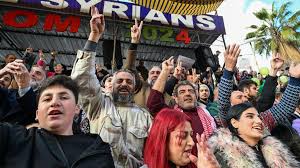

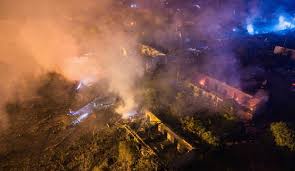
An explosion at a fireworks factory in southern China has killed 26 people and injured 61 others, according to state media, in one of the deadliest industrial accidents in the region in recent years.
The blast occurred on Monday afternoon at the Huasheng Fireworks plant in Liuyang, a major hub for China’s fireworks industry. Authorities launched a large-scale emergency response, deploying more than 1,500 rescue personnel along with dogs, drones and robotic equipment.
Rescue operations have now concluded, with seven people successfully pulled from the debris. Officials had earlier evacuated residents within a 3km (1.9 mile) radius of the site due to safety concerns.
According to state broadcaster China Central Television, two gunpowder warehouses within the factory posed a significant risk during the rescue effort, prompting additional precautions. Emergency teams reportedly humidified the area to reduce the chance of secondary explosions.
The force of the blast caused extensive damage, shattering windows in nearby residential buildings and scattering debris across the surrounding area. Injured victims, ranging in age from their 20s to 60s, suffered a variety of wounds, including fractures caused by flying debris.
Authorities have begun an investigation into the cause of the explosion. Police have taken “control measures” against individuals responsible for managing the fireworks company, though further details have not been disclosed.
Xi Jinping has called for full efforts to locate any remaining victims and treat the injured, while also ordering a thorough investigation to ensure accountability.
Local officials said environmental monitoring of air and water quality around the site is ongoing, with initial assessments indicating that conditions remain within normal safety levels.
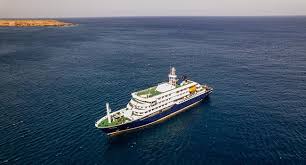
A second confirmed case of Hantavirus has emerged following the deaths of three passengers and a serious illness onboard a cruise ship crossing the Atlantic Ocean.
The vessel, the MV Hondius operated by Oceanwide Expeditions, is currently anchored near Cape Verde after local authorities barred passengers from disembarking over safety concerns.
A Dutch husband and wife and a German passenger have died. The Dutch woman tested positive for hantavirus, while the cause of death for the other two victims remains under investigation.
The virus has also been confirmed in a 69-year-old British passenger, who was evacuated to a hospital in Johannesburg, South Africa, where they are receiving intensive care.
In addition, two crew members—one British and one Dutch—are suspected cases, along with a close contact of the German passenger. Plans are underway to evacuate them for further medical assessment.
The ship, carrying 149 passengers from 23 countries, has been placed under strict precautionary measures, including isolation protocols and enhanced hygiene controls. It has been at sea for over a month, having departed from Argentina and travelled more than 6,000 miles.
Hantavirus is typically transmitted to humans through contact with infected rodents, particularly via their urine, saliva or droppings. It can lead to severe respiratory illness, though human-to-human transmission is considered extremely rare.
The World Health Organization is now involved in coordinating the response. Dr Maria Van Kerkhove said discussions are ongoing with Spanish authorities to potentially allow the ship to continue to the Canary Islands, where a comprehensive risk assessment could be carried out.
Possible docking locations include Las Palmas or Tenerife, where passengers could undergo further medical screening before disembarkation.
Van Kerkhove said the WHO’s immediate priority is ensuring proper treatment for those currently showing symptoms, particularly the crew members still onboard.
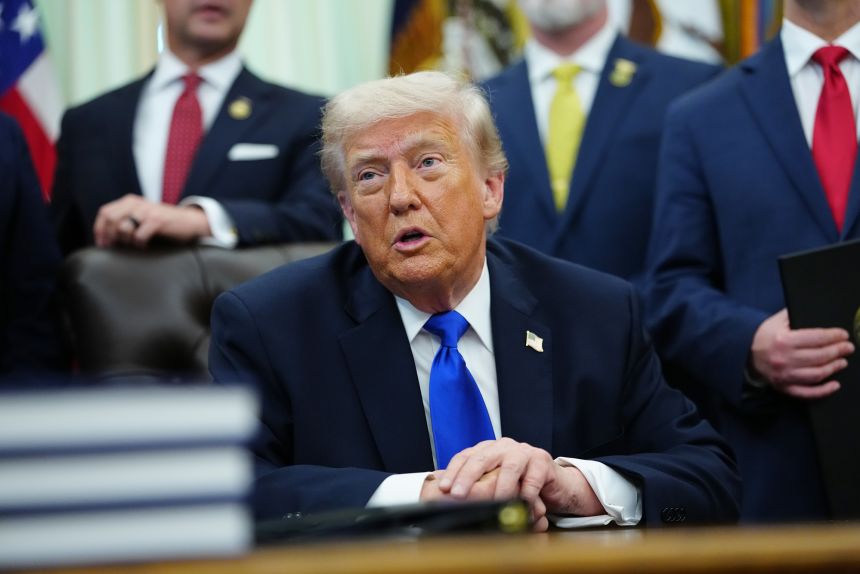
Donald Trump has again expressed dissatisfaction with Iran as legal and political pressure grows over the administration’s military involvement alongside Israel and a key congressional deadline approaches.
Speaking to reporters on Friday, Trump said recent talks with Iran had not yet produced the progress he wanted.
“We just had a conversation with Iran. Let’s see what happens. But, I would say that I am not happy,” he said.
Friday marked the 60th day since Trump formally notified Congress of military strikes against Iran on 2 March. Under the U.S. War Powers Resolution, a president must terminate the use of U.S. armed forces within 60 days of such notification unless Congress grants formal approval or authorises an extension.
The law, passed in 1973 during the Vietnam War era to limit presidential war-making powers under former President Richard Nixon, remains central to the legal debate now facing the White House.
Pete Hegseth defended the administration’s position during Senate questioning, arguing that the ongoing ceasefire between Iran and Israel effectively pauses the legal clock.
“We are in a ceasefire right now, which our understanding means the 60-day clock pauses or stops in a ceasefire,” Hegseth said.
However, Democratic Senator Tim Kaine challenged that interpretation, warning that the administration may be approaching a significant legal confrontation.
“I do not believe the statute would support that. I think the 60 days runs maybe tomorrow, and it’s going to pose a really important legal question for the administration there,” Kaine responded.
A senior administration official insisted that hostilities had “terminated,” stressing that a ceasefire has been in place since early April. Despite the pause in direct conflict, no long-term diplomatic agreement has yet been secured.
Iranian state media, including IRNA, reported on Friday that Tehran had sent a new proposal for negotiations to U.S. officials through intermediaries in Pakistan. Details of the proposal were not made public, and it remains unclear whether Washington has formally received it.
Trump said one reason negotiations have been difficult is that Iran’s leadership remains destabilised following the deaths of several top military commanders during the conflict.
He also revealed that he had been presented with sharply different strategic options by U.S. Central Command, ranging from a major military escalation to a negotiated diplomatic settlement.
“I was briefed with options… from ‘blast the hell out of them and finish them forever’ to ‘make a deal,’” Trump said.
Global markets have been closely watching developments, particularly after Iran’s closure of the Strait of Hormuz caused major disruptions to international oil supply routes. Although oil prices eased slightly following reports of Tehran’s latest proposal, the vital waterway remains effectively closed, continuing to generate significant economic concerns worldwide.


Pussycat Dolls Cancel US Tour Dates Amid Weak Ticket Sales

Deadly Blast at Fireworks Factory in China’s Hunan Province Kills 26

Dolly Parton Cancels Las Vegas Residency as She Focuses on Recovery


-

 News1 week ago
Court Hearing Looms as White House Dinner Shooting Suspect Faces Federal Charges
-

 Sports1 week ago
Anthony Joshua signs deal to fight Fury
-

 Sports1 week ago
Manchester United Move Closer to Champions League Return with Important Win Over Brentford
-

 News5 days ago
Aung San Suu Kyi Moved to House Arrest as Myanmar Military Announces Sentence Change
-

 News7 days ago
Former FBI Director James Comey Charged Over Alleged Threat Against Trump
-

 Entertainment4 days ago
Zayn Malik cancels US tour Plans After Hospital Recovery
-
 News5 days ago
Trainee Bus Driver Rescued After Vehicle Plunges Into River Seine
-

 General5 days ago
Stephen Fry Seeks Damages After Serious Fall at London Tech Conference