
News
Trump Sentencing Delayed Until After Presidential Election

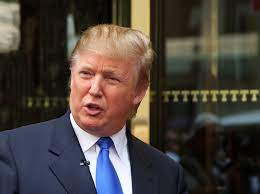
Former President Donald Trump’s sentencing in the Manhattan hush money case has been postponed until after the November 2024 election. Justice Juan Merchan announced the new sentencing date as 26 November, citing the “unique time frame” of the case and the upcoming election as reasons for the delay.
Trump, who faces up to four years in prison following his conviction on 34 felony counts of falsifying business records, had originally been scheduled for sentencing on 18 September. His legal team successfully pushed for a delay, arguing that the upcoming election should not interfere with the proceedings.
Justice Merchan emphasized that the jury’s verdict must be respected and addressed without the influence of the election. The sentencing is now set for three weeks after the 5 November election, ensuring the case remains focused solely on the jury’s decision.
The case centers on allegations that Trump concealed a payment to silence Stormy Daniels, a former adult-film star, during the 2016 election campaign. Prosecutors argued that Trump disguised the payment as legal expenses, violating election law.
Trump continues to deny any wrongdoing, calling the case a “witch hunt.” A decision on the implications of a recent Supreme Court ruling, which granted some immunity to presidents from criminal prosecution for “official acts,” is expected on 12 November.




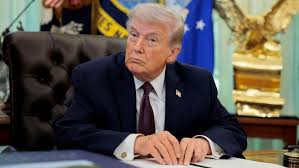
U.S. President Donald Trump has announced a major escalation in tensions with Iran, declaring that the United States will begin a naval blockade of the Strait of Hormuz following the collapse of negotiations over Tehran’s nuclear ambitions.
In a series of lengthy social media posts, Trump said he had instructed the U.S. Navy to “seek and interdict every vessel in international waters that has paid a toll to Iran,” describing such payments as illegal. He added that any ship complying with Iran’s system would no longer be guaranteed “safe passage” on the high seas.
While the president did not specify how that threat would be enforced, recent U.S. naval operations — including the boarding of vessels linked to sanctioned countries — suggest that interdictions, inspections, or seizures could be used. Trump also indicated that “other countries” may participate in the blockade effort, though he did not name any potential allies.
The move follows the breakdown of diplomatic efforts between Washington and Tehran, with both sides remaining far apart on key issues surrounding Iran’s nuclear programme. Despite Trump’s suggestion that Iran may be willing to reopen the strait, Iranian officials have consistently signaled the opposite, emphasizing their control over the vital maritime corridor as a key source of strategic leverage.
In recent months, Iran has implemented a selective restriction of traffic through the Strait of Hormuz, one of the world’s most critical energy chokepoints. Passage has largely been limited to vessels from countries considered friendly to Tehran or ships believed to have paid a reported toll of around $2 million.
The U.S. response now aims to disrupt that arrangement entirely, effectively countering Iran’s influence over the waterway. Analysts note that while this does not yet amount to a full-scale resumption of hostilities, it represents a significant escalation with potentially far-reaching consequences.
The Strait of Hormuz is a vital artery for global energy supplies, with roughly one-fifth of the world’s oil and gas passing through it. Any sustained disruption could tighten supply, drive up global oil prices, and trigger wider economic impacts.
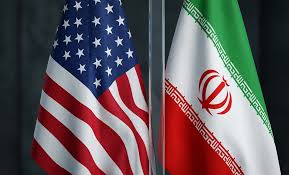
After nearly half a century of hostility—including two wars in the past two years—Iran and the United States are now engaged in extended face-to-face talks, signaling a notable shift in relations between the two adversaries.
Negotiations in Islamabad have stretched for hours, with parallel discussions among technical experts also continuing. The sustained engagement reflects a level of seriousness and coordination not often seen between Washington and Tehran in recent years.
The breakthrough appears driven by the seniority and authority of both delegations, alongside a mutual willingness to re-engage diplomatically despite deep-rooted mistrust. Iran, in particular, arrived at the talks emphasizing skepticism toward negotiations, especially after previous diplomatic efforts over the past year were derailed by renewed conflict.
Tehran reportedly insisted on engaging with top-level US leadership, including JD Vance, who is viewed within Donald Trump’s administration as a leading voice against prolonged military interventions.
The current effort draws inevitable comparisons to the Iran nuclear deal, which required 18 months of complex negotiations, marked by repeated setbacks before reaching agreement. By contrast, Trump has often favored faster, more decisive diplomatic outcomes.
While the present talks remain in their early stages, their continuation alone represents a meaningful development. With tensions still high and the risk of further escalation lingering, even incremental diplomatic progress could play a critical role in reducing the likelihood of renewed conflict.
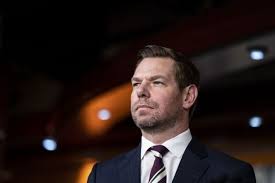
Eric Swalwell is facing mounting calls to withdraw from the race to succeed Gavin Newsom as governor of California, following multiple allegations of sexual misconduct from former staff members—claims he has firmly denied.
In a statement, Swalwell described the accusations as false and politically timed, saying they surfaced “on the eve of an election against the frontrunner for governor.” The allegations range from sexual harassment to rape, significantly intensifying scrutiny on his campaign.
The controversy quickly led to a wave of political fallout. Within hours, prominent Democrats—including Adam Schiff and Hakeem Jeffries—withdrew their support, increasing pressure on Swalwell to step aside.
The first public allegation was reported by the San Francisco Chronicle. A former staff member claimed that shortly after joining Swalwell’s district office in Castro Valley, he made inappropriate comments, including requests for sex and explicit messages.
The accuser, who has not been identified, also alleged that in September 2019 she woke up naked in Swalwell’s hotel room with limited memory of the previous night. She further claimed that during a later encounter at a gala several years afterward, she again felt uncomfortable, recalling that she pushed him away and said “no.”
Swalwell has stated he intends to defend himself with “facts” as the situation develops. The allegations and their political repercussions have introduced significant uncertainty into an already closely watched gubernatorial race.


Prograis announces retirement after Benn Defeat in Emotional Farewell

Trump Orders U.S. Navy to Blockade Strait of Hormuz After Iran Talks Collapse

Salah and Ngumoha Fire Liverpool Past Fulham in Premier League Clash


-
 News1 week ago
Netanyahu claims most of Iran’s steel production destroyed as Tehran targets Gulf energy sites
-

 News1 week ago
French Court Clears Muslim Gathering in Paris, Upholding Civil Liberties
-
News1 week ago
Trump Escalates Pressure on Iran With Final Deadline Over Strait of Hormuz
-

 News6 days ago
Gunman Killed in Shootout Near Israeli Consulate in Istanbul, Two Officers Injured
-
 News7 days ago
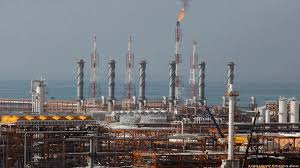
Israel Strikes Iranian Petrochemical Sites as Tensions Surge Over Hormuz Threats
-
 News1 week ago
US Army Leadership Shake-Up as Hegseth Requests Chief’s Immediate Exit
-
 Entertainment6 days ago
Rapper Offset Shot Outside Florida Casino
-

 News1 week ago
Trump says US can ‘easily’ open the Strait of Hormuz