
News
Syrian Rebels Advance on Homs as Russia Urges Citizens to Exit


The Russian Embassy in Syria has issued an urgent advisory for its citizens to leave the country, citing the escalating “difficult military-political situation.” The embassy’s statement, released via Telegram, recommended departing on commercial flights through available airports.
This development underscores the growing instability in Syria, where rebel forces, including the Islamist militant group Hayat Tahrir al-Sham (HTS) and allied factions, are making significant advances. Having already seized towns and villages across Aleppo, Idlib, and Hama provinces, they are now closing in on Homs, a critical stronghold.
The offensive, which began last week, has displaced at least 370,000 people according to the UN, with fears that the number could soar to 1.5 million. Stéphane Dujarric, spokesperson for the UN Secretary-General, emphasized the dire situation:
“Since the escalation of hostilities, at least 370,000 men, women, and children have been displaced, including 100,000 who left their homes more than once.”
Samer AbdelJaber of the UN’s World Food Programme highlighted the rapid displacement figures:
“The number of displaced rose from 48,000 to nearly 280,000 in just the initial hours after the escalation on 27 November.”
Russia, a key ally of Syrian President Bashar al-Assad, has been deeply involved in the conflict, supporting the regime through military interventions. Last week, Russian airstrikes targeted the rebel-held city of Idlib in an attempt to slow their advances. Amid growing pressure, Ukrainian intelligence suggested that Russia might deploy mercenaries from private military companies to bolster Assad’s forces.
The humanitarian toll of the offensive is mounting, with the UN warning that millions could be at risk if the fighting continues.





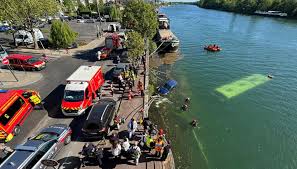
A trainee bus driver drove a vehicle into the River Seine on Thursday morning after reportedly hitting a parked car and losing control near Juvisy-sur-Orge, officials have said.
The incident happened around 20km (12 miles) south of Paris, prompting a major emergency response involving firefighters, police officers and rescue divers.
According to the local transport authority, the driver was nearing the end of her practical training and was completing one of her final supervised driving sessions when the accident occurred.
A spokesperson for Île-de-France Mobilités said the trainee was accompanied by a lead driver, while two additional passengers were also on board at the time of the crash.
Officials confirmed that drug and alcohol tests carried out after the incident were negative, and the exact cause of the crash remains under investigation.
The Essonne Prefecture said all four people on board were successfully rescued from the water. More than 90 firefighters, alongside divers and police personnel, took part in the recovery operation.
Juvisy-sur-Orge Mayor Lamia Bensara Reda said the driver had lost control of the bus near a station close to the riverbank before the vehicle plunged into the Seine and dragged a parked car with it.
“Everyone was quickly rescued and, thankfully, is safe and sound,” she said in a post shared on Facebook.
Witnesses described a rapid response from members of the public before emergency services arrived. A local resident, 55-year-old Elisabeth, said bystanders rushed to help and threw life rings into the river to assist those trapped in the water.
The president of the transport authority has since ordered an internal investigation into the incident to determine exactly what led to the crash and whether additional safety measures may be needed during driver training.
Local politician Claire Lejeune also commented on the incident on X, confirming that the bus had fallen into the Seine with four people on board, including the trainee driver, and praised emergency responders for their swift action.
Authorities are continuing their investigation as recovery efforts at the scene move forward.
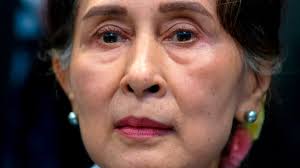
Detained former Myanmar leader Aung San Suu Kyi has been moved from prison to house arrest, according to state media in Myanmar, marking a significant development in her years-long detention following the 2021 military coup.
The 80-year-old Nobel Peace Prize laureate has been held in custody since she was removed from office when the military seized power in February 2021. She was believed to have been detained in a military prison in the capital, Nay Pyi Taw.
A statement from military leader Min Aung Hlaing, who led the coup, said he had “commuted her remaining sentence to be served at the designated residence,” effectively transferring her from prison to house arrest.
State media also released a photograph showing Suu Kyi seated alongside two uniformed personnel, though the image did little to reassure her family.
Her son, Kim Aris, expressed strong scepticism over the announcement, saying he had no independent confirmation that his mother was alive or where she was being held.
He described the released image as “meaningless,” noting that it had been taken in 2022 rather than recently.
“So, until I’m allowed communication with her, or somebody can independently verify her condition and her whereabouts, then I won’t believe anything,” he said.
Before the 2021 coup, Suu Kyi had led Myanmar’s civilian government after her party won a historic election in 2015, following years of military-backed rule and limited democratic reforms.
She had previously spent more than 15 years under house arrest during earlier decades of military rule, becoming an international symbol of peaceful resistance and democracy. Her calm defiance and speeches delivered from her family home inspired supporters both inside Myanmar and abroad.
She was awarded the Nobel Peace Prize in 1991 for her non-violent struggle for democracy and human rights.
Following the coup, she was sentenced to 33 years in prison on multiple charges ranging from corruption to election fraud—charges her supporters and international observers widely described as politically motivated. Her sentence has since been reduced several times.
However, Suu Kyi’s global reputation had already been significantly damaged before the coup. Her decision to defend Myanmar at the International Court of Justice against accusations of genocide over the military’s 2017 campaign against the Muslim Rohingya population drew widespread international criticism.
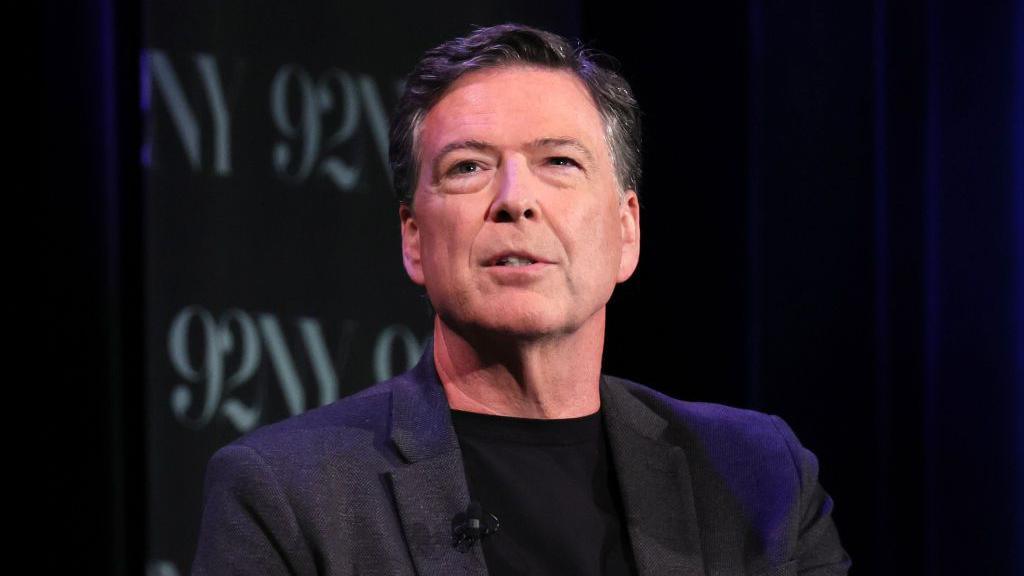
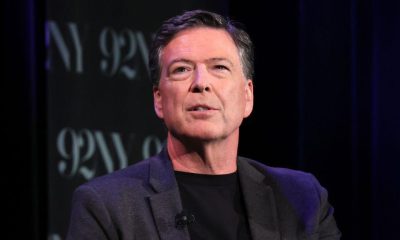
Former Federal Bureau of Investigation Director James Comey has been charged with threatening the life of Donald Trump, following renewed legal action linked to a social media post he briefly shared last year.
The charges stem from an image Comey posted on Instagram showing seashells arranged to form the numbers “86 47.” The phrase “eighty-six” is commonly used as slang meaning to remove, reject, or get rid of something, while Trump supporters and administration officials interpreted “47” as a reference to Trump as the 47th president of the United States.
Comey has strongly denied that the post was intended as a threat, maintaining that he did not understand the violent interpretation some people attached to the numbers. He later deleted the post and explained that he had assumed the shells represented a political message rather than anything more serious.
“I didn’t realise some folks associate those numbers with violence,” Comey said at the time. “It never occurred to me, but I oppose violence of any kind so I took the post down.”
Despite that explanation, Trump publicly dismissed the defense, saying, “a child knows what that meant,” and senior administration figures pushed for further investigation.
Acting U.S. Attorney General Todd Blanche said on Tuesday that the case would be treated seriously despite the high-profile nature of the defendant.
“While this case is unique, and this indictment stands out because of the name of the defendant, his alleged conduct is the same kind of conduct that we will never tolerate and that we will always investigate and regularly prosecute,” Blanche said.
Both felony counts against Comey carry a maximum prison sentence of 10 years each.
The case follows an earlier indictment brought in September, when the Justice Department accused Comey of lying to Congress over alleged press leaks and obstructing a congressional proceeding. However, that case was dismissed two months later after a federal judge ruled that the interim prosecutor who brought the charges had been improperly appointed.
U.S. District Judge Cameron Currie ruled that prosecutor Lindsey Halligan was not legally authorised to present the case to a grand jury, making the indictment invalid. Halligan, a former White House aide, had never previously prosecuted a case.
The judge left open the possibility for the government to refile charges, a possibility Comey himself acknowledged at the time.
“I believe Trump will probably come after me again,” he said following the dismissal.
Comey, who was fired by Trump during his first term while leading the investigation into Russian interference in the 2016 U.S. presidential election, has remained a frequent political target of the president ever since.
In a related legal development, another federal judge ruled on Tuesday that former federal prosecutor Maurene Comey, James Comey’s daughter, can proceed with her legal challenge against her dismissal by the Trump administration, adding another layer to the ongoing tensions between the Comey family and the White House.


Stephen Fry Seeks Damages After Serious Fall at London Tech Conference

Trainee Bus Driver Rescued After Vehicle Plunges Into River Seine

Aung San Suu Kyi Moved to House Arrest as Myanmar Military Announces Sentence Change


-
 News1 week ago
Hundreds of Wildfires Rage Across Florida and Georgia, Forcing Evacuations
-
 News1 week ago
Iran says reopening Strait of Hormuz ‘impossible’ amid US blockade
-

 Entertainment1 week ago
MrBeast’s Company Faces Lawsuit Over Sexual Harassment Allegations
-

 Entertainment1 week ago
Singer D4vd Pleads Not Guilty to Murder Charges in Teen’s Death
-
 News1 week ago
Warsh Says He Won’t Be Trump’s ‘Sock Puppet’ in Fed Role Amid Rate Debate
-

 Sports1 week ago
Manchester City Go Top as Burnley Relegated After Turf Moor Defeat
-
 News1 week ago
Donald Trump has announced that the Israel-Lebanon ceasefire has been extended by three weeks.
-
 General1 week ago
Israeli Soldiers Punished Over Vandalism of Jesus Statue in Lebanon