
News
Sniper shot Trump gunman’s weapon and delayed him

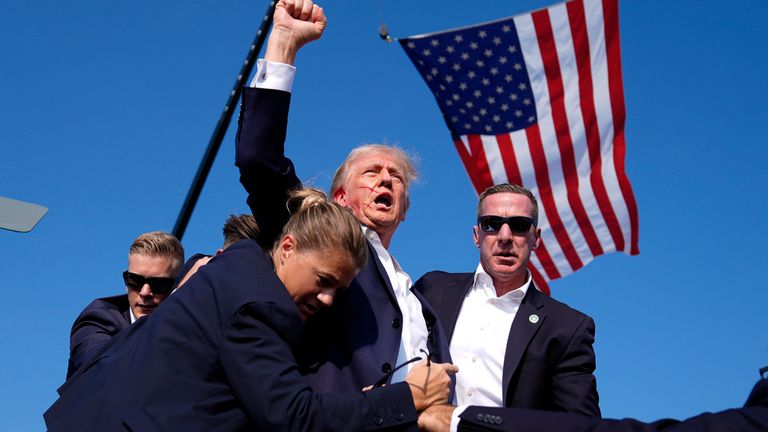
A police sniper in Butler, Pennsylvania, played a crucial role in thwarting an assassination attempt on former President Donald Trump by disabling the gunman’s weapon, according to a recent investigation. The report, authored by Louisiana Congressman Clay Higgins, details how the sniper’s precise shot struck Thomas Matthew Crooks’s rifle, disrupting his aim and buying valuable seconds before the assailant could continue his attack.
The incident occurred on 13 July during a Trump rally, where Crooks, 20, opened fire from a rooftop just outside the rally’s security perimeter. The sniper, identified as a member of the Butler SWAT team, fired from 100 yards away, damaging Crooks’s rifle and momentarily knocking him off balance. Despite this, Crooks quickly regained his position and continued his assault, but was ultimately neutralized by a Secret Service sharpshooter.
Tragically, Crooks managed to kill one attendee and critically injure two others before he was stopped. The investigation into the security breach has prompted the Secret Service to temporarily reassign bodyguards from President Joe Biden to Trump and to provide the former president with bulletproof glass protection for future outdoor rallies.
This increased security comes in response to the close call, where a bullet nearly struck Trump in the head during the rally. The FBI and congressional leaders are conducting inquiries into how the gunman was able to get so close and the overall effectiveness of the security measures in place.







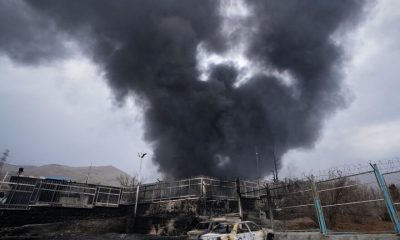


US President Donald Trump has called on allied nations to send naval forces to help secure the vital Strait of Hormuz following a series of attacks on commercial shipping linked to tensions with Iran.
Trump suggested that countries including the United Kingdom, Japan, China and South Korea could contribute warships to escort tankers through the narrow waterway.
However, defence analysts say the proposal may be premature, particularly as there is little indication that the conflict in the region is close to ending.
Even the United States Navy is not currently escorting tankers through the shipping corridor, which links the Persian Gulf with the Gulf of Oman and serves as one of the world’s most important routes for oil exports.
The strait has become increasingly dangerous for commercial vessels, with several tankers already reported to have been struck while attempting to pass through the area.
Meanwhile, Emmanuel Macron, president of France, said his country would be willing to deploy naval forces to the region but only for what he described as a “purely escort mission.”
Macron added that such a deployment would likely occur only after the most intense phase of the conflict had subsided.
Trump’s appeal for allied support comes despite comments he made last week suggesting the United States did not require additional military help from Britain.
At the time, Trump said the US did not need the UK to deploy an aircraft carrier to the region “after we’ve already won.”
The Royal Navy operates two aircraft carriers, including HMS Prince of Wales. The vessel has recently been placed on high readiness but is currently scheduled to sail to the North Atlantic rather than the Middle East.
At present, the Royal Navy has no warships directly stationed in the region. However, the destroyer HMS Dragon is on its way to provide additional air defence support for Cyprus as tensions continue to rise across the wider Middle East.

India’s highest court has rejected a petition seeking mandatory menstrual leave for working women and female students, saying such a policy could unintentionally reduce women’s employment opportunities.
A two-judge bench led by Chief Justice Surya Kant at the Supreme Court of India said introducing compulsory menstrual leave could discourage employers from hiring women.
The judges warned that if the court mandated such a rule, “no-one will hire women,” adding that it might also lead young women to believe they were “not at par” with their male colleagues and could ultimately be harmful to their professional growth.
The court made the remarks while hearing a petition filed by lawyer Shailendra Mani Tripathi, who had called for a nationwide menstrual leave policy.
According to legal website LiveLaw, Tripathi had argued that working women should receive two to three days of leave each month to help manage menstrual pain and related health issues.
However, the judges said such a mandate could reinforce gender stereotypes and make employers in the private sector hesitant to recruit women.
They suggested that if such a policy were to be introduced, it should be developed by the government after consultation with stakeholders rather than imposed by the court.
The decision has once again reignited debate across India, where the topic of menstrual leave has long divided opinion.
Some supporters agree with the court’s view, arguing that additional leave specifically for women could create workplace inequality or discourage companies from hiring female employees.
Others say time off during painful periods would improve women’s health and dignity at work.
In many parts of India, menstruation still carries social stigma, with some women discouraged from entering temples or participating in certain activities during their periods.
Supporters of menstrual leave policies point out that several countries have already adopted similar measures, including Spain, Japan, South Korea and Indonesia.
Some Indian states have also introduced limited policies. Bihar and Odisha allow two days of menstrual leave per month for government employees, while Kerala offers similar provisions for university and industrial training institute staff.
Last year, the southern state of Karnataka approved a law granting one day of menstrual leave each month for women employees.
In recent years, several private companies across India have also adopted menstrual leave policies for their female staff, reflecting a gradual shift in workplace practices.
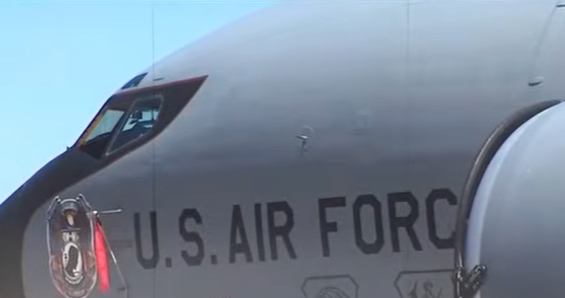
All six crew members aboard a US military refuelling aircraft have been confirmed dead after the plane crashed in western Iraq, according to the United States Central Command (Centcom).
The US military initially reported that four of the crew had been found dead, but later confirmed that all six personnel aboard the aircraft had died. Officials said there was no evidence that either hostile or friendly fire caused the crash involving the Boeing KC-135 Stratotanker on Thursday.
The tanker aircraft had been taking part in ongoing US operations linked to the conflict with Iran. It was one of two aircraft involved in the mission, while the second plane landed safely.
Centcom said the crash occurred at about 14:00 ET (19:00 GMT) and that an investigation into the circumstances surrounding the incident has been launched.
Following the crash, a search and rescue operation was carried out to locate the remaining crew members who were initially unaccounted for.
The US military said the identities of the deceased personnel would be withheld for 24 hours to allow time for their families to be notified.
During a news conference on Friday, Dan Caine, chairman of the Joint Chiefs of Staff, said the aircraft had gone down while the crew were on a combat mission.
US Defence Secretary Pete Hegseth paid tribute to the crew, describing them as “American heroes” and saying their sacrifice would strengthen the resolve of the mission.
The KC-135 typically operates with a crew that includes a pilot, co-pilot and a boom operator responsible for controlling the aircraft’s refuelling arm used to supply fuel to other planes mid-flight.
Centcom said the crash occurred in friendly airspace. However, the region of western Iraq where the aircraft went down is known to host pro-Iranian militia groups. Iran’s military later claimed on state television that an allied group had targeted the aircraft with a missile.
The crash increases the official US military death toll in the ongoing war involving the United States, Israel and Iran, which began two weeks ago, to 13.
The US military has now lost at least four aircraft during the conflict.
Earlier this month, three McDonnell Douglas F-15 Eagle fighter jets were shot down in what officials described as an apparent friendly-fire incident over Kuwait. All six crew members aboard those aircraft were able to eject safely.
The KC-135 Stratotanker, manufactured by Boeing in the 1950s and early 1960s, has long been a cornerstone of the US military’s aerial refuelling fleet, enabling combat aircraft to conduct extended missions without needing to land.


Trump Urges Allies to Deploy Warships to Protect Strait of Hormuz After Iranian Attacks

Iran Hits Back at Trump Over World Cup Remarks

India’s Supreme Court Rejects Menstrual Leave Petition


-

 Sports6 days ago
Police separate Celtic and Rangers fans after Ibrox pitch invasion
-

 News6 days ago
Tornadoes Leave Six Dead, Including 12-Year-Old Boy, as Powerful Storms Strike Michigan and Oklahoma
-

 News1 week ago
Nepal Heads to the Polls in First Election Since Youth-Led Uprising
-

 Sports1 week ago
Caf Delays Wafcon 2026 Weeks Before Kick-Off
-

 Entertainment1 week ago
Britney Spears Arrested on Suspicion of DUI in California
-

 News6 days ago
Explosion at U.S. Embassy in Oslo May Have Been Terrorism, Norwegian Police Say
-
 News6 days ago
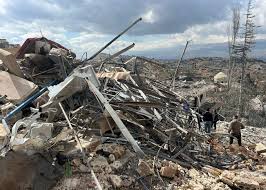
Lebanon Says Nearly 400 Killed in Israeli Strikes as U.S. Warns Iranians to Stay Indoors
-

 Sports3 days ago
Trump Says Iran ‘Welcome’ at World Cup Despite Ongoing Conflict