
News
England Beaten by Spain in Euro 2024 Final


Spain emerged victorious in the Euro 2024 final, defeating England 2:1 to extend the Three Lions’ 58-year wait for a major men’s trophy. A crucial goal by Nico Williams early in the second half secured the win for Spain.
England, under the management of Gareth Southgate, were presented with another golden opportunity to end their trophy drought. The atmosphere at the Berlin stadium was electric, with supporters from both nations creating a vibrant sea of white and red.
England’s last major trophy win dates back to July 30, 1966, when Sir Alf Ramsey’s team clinched the World Cup. Despite numerous attempts in the years since, including a heartbreaking loss in the 2021 Euro final to Italy on penalties, the wait continues.
In their journey to the Euro 2024 final, England displayed remarkable resilience. Notable moments included Jude Bellingham’s stoppage-time equalizer against Slovakia and Harry Kane’s header in extra time that secured a victory for the Three Lions in the knockout stages.
The semi-final against the Netherlands was another intense battle. Dutch prodigy Xavi Simons scored early, but Kane equalized with a penalty. As the game neared its conclusion, Ollie Watkins scored the decisive goal, propelling England to the final.
Despite the valiant efforts and a well-fought campaign, the English team fell short once again, leaving their fans hoping for future success.
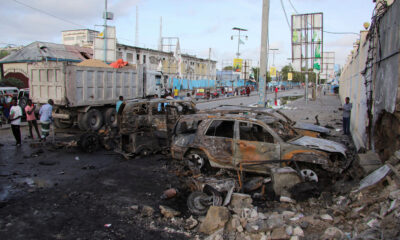




Mali has been hit by a wave of coordinated attacks after explosions and sustained gunfire were reported in the capital, Bamako, as well as several northern and central regions of the country.
The military confirmed on Saturday that active fighting was underway, stating that defence and security forces were engaged in repelling attackers. Authorities described those behind the assaults as unidentified “terrorist groups” and said efforts were ongoing to restore full control.
Witnesses said that loud explosions and heavy gunfire were heard around Kati, which hosts one of Mali’s major military bases just outside the capital. Security forces reportedly deployed soldiers to seal off roads in the area and tighten movement restrictions.
Additional attacks were reported in the northern cities of Gao and Kidal, as well as Sévaré in the country’s central region. Analysts have described the violence as one of the largest coordinated militant offensives Mali has experienced in recent years.
The country has long faced instability from insurgent violence involving jihadist groups linked to Al-Qaeda and Islamic State, alongside separatist movements in the north.
Early reports suggest the separatist Azawad Liberation Front (FLA), which seeks an independent Tuareg state, may have concentrated its operations in northern cities. At the same time, the jihadist group Jama’at Nusrat al-Islam wal-Muslimin (JNIM) is believed to have launched simultaneous strikes across several locations nationwide.
Although military officials said the situation was under control, unconfirmed reports indicate that clashes may still be continuing in some areas. While some residents described relative calm in parts of Bamako, others reported ongoing gunfire and heightened security presence.
Checkpoints were established on roads leading to Bamako’s international airport, with security personnel conducting vehicle searches. One resident returning from Ethiopia said flights into the city had been cancelled early on Saturday, though the full operational status of the airport remains unclear.
The UK Foreign Office has advised against all travel to Mali following the attacks and said Bamako International Airport had been temporarily closed.
Ulf Laessing, who leads the Sahel programme at the Konrad Adenauer Foundation in Mali, described the incident as the largest coordinated jihadist assault the country has seen in years.
The United States Department of State’s Africa bureau strongly condemned the violence, offering condolences to victims and reaffirming support for the Malian government and its people. Meanwhile, the U.S. Embassy urged American citizens in the country to shelter in place and avoid travel due to security concerns around the airport and Kati.
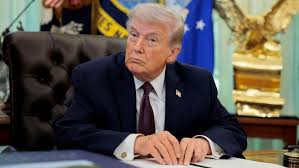
Donald Trump has announced a three-week extension of the ceasefire between Israel and Lebanon, pointing to renewed diplomatic engagement aimed at stabilizing the region.
In a post on Truth Social, Trump said the decision followed a high-level meeting in the Oval Office involving officials from both countries. He described the discussions as highly productive, noting that they included JD Vance and Marco Rubio.
According to Trump, the United States will deepen its cooperation with Lebanon to strengthen its internal security framework, particularly in relation to Hezbollah. He framed the talks as part of a broader effort to support Lebanon’s sovereignty and reduce the influence of armed non-state actors.
Calling the meeting “historic,” Trump said he is preparing to host Benjamin Netanyahu and Joseph Aoun at the White House in the coming weeks. The anticipated visits are expected to focus on negotiating a more durable peace arrangement between the two neighboring countries.
Speaking again to reporters in the Oval Office, alongside senior U.S. officials and diplomatic representatives from both nations, Trump emphasized the complexity of the situation, particularly Lebanon’s need to manage internal dynamics involving Hezbollah. He indicated that Washington’s approach would combine diplomatic engagement with security cooperation.
Trump also suggested that progress on the Israel–Lebanon track could align with broader U.S. strategic efforts in the region, including ongoing initiatives related to Iran. He expressed optimism that simultaneous diplomatic advances could contribute to wider regional stability.

At least five people have been critically injured and 13 others hurt following a head-on train collision in Denmark, authorities have confirmed.
The crash occurred early Thursday on a railway line connecting the towns of Hillerød and Kagerup, northwest of Copenhagen. Police said a total of 37 people were on board the two trains at the time of the accident.
Emergency services responded immediately after the collision, which happened at approximately 06:29 local time. All injured passengers were transported to hospital by ambulance or airlift, according to Tim Ole Simonsen of the Greater Copenhagen fire department.
Local officials described the incident as deeply distressing. Trine Egetved, mayor of the Gribskov municipality, said she was “deeply shaken” and confirmed that those critically injured had been taken to the national hospital in Copenhagen.
Danish Prime Minister Mette Frederiksen expressed concern over what she called a “terrible train accident,” as authorities began investigating the cause.
The Danish Accident Investigation Board has launched an inquiry alongside police, examining all possible causes. Investigators say it is too early to determine what led to the crash but are considering multiple scenarios, including a potential signalling system failure or human error.
The trains, operated by Lokaltog, were shown in footage with significant front-end damage, having collided in a wooded area.
Rail operator officials described the incident as one of the most severe imaginable in the industry and said efforts are now focused on gathering data to understand how the collision occurred.


Co-ordinated Armed Attacks Shake Mali as Security Forces Respond Across Multiple Cities

Sessegnon Strike Lifts Fulham’s European Hopes as Villa Stumble

Donald Trump has announced that the Israel-Lebanon ceasefire has been extended by three weeks.


-
 News1 week ago
Oil Prices Tumble as Iran Reopens Strait of Hormuz During Ceasefire
-
 News1 week ago
Strait of Hormuz ‘completely open’ to commercial ships
-

 Entertainment1 week ago
US Singer D4vd Arrested on suspicion Over Teen Girl’s Death
-

 General7 days ago
Father Kills Eight Children in Louisiana Mass Shooting, Police Say
-
 News6 days ago
Warsh Says He Won’t Be Trump’s ‘Sock Puppet’ in Fed Role Amid Rate Debate
-
 News3 days ago
Hundreds of Wildfires Rage Across Florida and Georgia, Forcing Evacuations
-
Entertainment6 days ago
Singer D4vd Pleads Not Guilty to Murder Charges in Teen’s Death
-
News4 days ago
Iran says reopening Strait of Hormuz ‘impossible’ amid US blockade