
News
New Hamas Military Commander Killed in Gaza City Strike

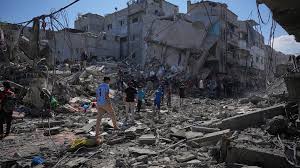
The head of the military wing of Hamas, Mohammed Odeh, has been killed in an Israeli strike in Gaza City, only days after the death of the group’s previous military commander in a separate attack.
Local medics and witnesses said the strike, which took place on Tuesday, also left dozens of people injured after a residential building in one of Gaza City’s busiest market districts was hit.
The Israeli military and the Shin Bet security agency said the operation targeted buildings allegedly being used as a hideout by Odeh. According to a joint statement, Israeli forces had tracked his movements and those of his associates over several months before carrying out the strike.
On Wednesday, Hamas confirmed that Odeh had died in the attack along with his wife and two of his children.
Although a ceasefire between Israel and Hamas was agreed in October, incidents of violence have continued to occur across the Gaza Strip on an almost daily basis, highlighting ongoing tensions despite international hopes for a more stable security situation.
Tuesday’s strike hit the top three floors of the al-Kayali building in central Gaza City, where crowds had gathered for shopping activities ahead of the Muslim holiday of Eid al-Adha.
Emergency and rescue teams quickly moved to the scene to assist victims and search through the damaged structure. However, witnesses said rescue operations were slowed by severe destruction to the building and heavy congestion in the surrounding streets.
In a statement, the Israel Defense Forces and Shin Bet said: “As part of the joint operation by the IDF and Shin Bet to eliminate the terrorist Mohammed Odeh, several buildings in the heart of Gaza City that served as a hideout for him were attacked, after months of intelligence surveillance in order to track his movements and the movements of his assistants in the organisation.”
The statement added that Israeli forces also struck “a nearby apartment belonging to a Hamas terrorist who raided on October 7 and was part of Odeh’s circle of assistants,” referring to the Hamas-led attack on southern Israel that sparked the war in Gaza.
The latest developments come as international mediators and humanitarian organisations continue to push for renewed efforts aimed at reducing violence and improving conditions for civilians affected by the prolonged conflict.







Two schoolchildren and two adults have died after a train collided with a school minibus in the Belgian town of Buggenhout.
The crash happened shortly after 08:00 local time as the minibus was transporting pupils to a special education school, according to Belgian federal police.
Police spokeswoman An Berger said the vehicle was carrying seven children, along with a driver and a chaperone, when the collision occurred at a level crossing.
Berger explained that the driver had been travelling along a road parallel to the railway line before turning left onto the crossing while the safety barriers were already lowered.
A train passing through Buggenhout then struck the minibus.
Belgian mobility minister Jean-Luc Crucke confirmed reports that the crossing barriers had been down at the time of the accident.
“My first thoughts are with the victims,” he said following the tragedy.
Images from the scene showed the heavily damaged minibus lying on its side near the railway tracks in Buggenhout, a town near Aalst northwest of Brussels.
Authorities said nobody aboard the train was injured, although one passenger was treated for shock.
Zuhal Demir described the incident as “heartbreaking news” and said her thoughts were with the victims, their families and everyone affected.
Ursula von der Leyen also reacted to the crash, saying: “Today, Europe grieves with Belgium.”

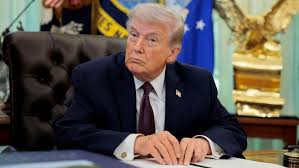
Global oil prices dropped sharply while Asian stock markets rose after growing optimism that the United States, Iran and Israel could move closer to ending their conflict.
Marco Rubio said during a visit to India that negotiators had “a pretty solid thing on the table” and suggested an agreement could potentially be reached on Monday.
Following the comments, global benchmark Brent crude fell 5.5% to $97.90 a barrel, while US crude dropped 5.9% to $90.93.
Earlier, Donald Trump indicated that a possible agreement would involve reopening the Strait of Hormuz, the crucial shipping route through which about one-fifth of global oil and liquefied natural gas supplies normally pass.
The strategic waterway has effectively remained closed since fighting began on 28 February, creating major disruption in global energy markets.
Rubio said negotiations were still ongoing and cautioned against assuming a breakthrough was guaranteed, though he acknowledged progress had been made.
Trump also said over the weekend that he held a “very good call” with leaders from Saudi Arabia, the United Arab Emirates and Qatar regarding a “Memorandum of Understanding pertaining to PEACE”.
The US president stated that an agreement had been “largely negotiated” between Washington, Tehran and other involved countries, although final details were still being discussed.
Trump added that he also spoke with Israeli Prime Minister Benjamin Netanyahu and described the conversation as positive.
While Trump insisted any eventual deal would prevent Iran from obtaining nuclear weapons, he later warned that negotiators should “take their time and get it right”.
Iranian foreign ministry spokesman Esmaeil Baqaei said the positions of Tehran and Washington had moved closer in recent days, though he cautioned that major disagreements still remained.
Energy markets have experienced heavy volatility since early March after Iran threatened shipping in the Strait of Hormuz in response to attacks by the US and Israel.
Despite Monday’s sharp decline, oil prices remain significantly above pre-war levels, with Brent crude trading around $70 per barrel before the conflict began.
Analysts say any agreement could help stabilise energy markets, although full recovery may take years.
Saul Kavonic, head of energy research at MST Financial, said there was now “some light at the end of the tunnel” for oil markets, but warned that supply conditions could remain tight through 2027 due to the time needed to restore shipping routes, repair infrastructure and rebuild depleted global oil reserves.
Lars Jensen, chief executive of Vespucci Maritime and former Maersk director, said the shipping industry would still remain cautious even if a deal were announced quickly.
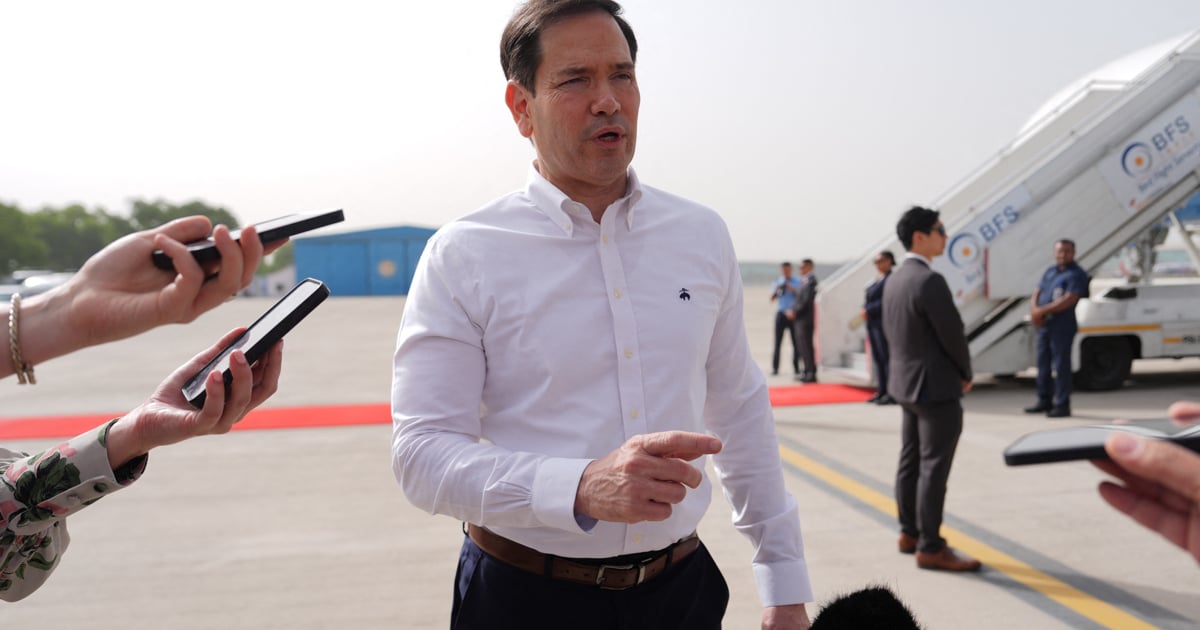
Marco Rubio says negotiators from the United States and Iran may reach an agreement as early as Monday, describing ongoing talks as having “a pretty solid thing on the table”.
Speaking during a visit to India, Rubio said discussions were still continuing but progress had been made.
The remarks came after Donald Trump said he had instructed negotiators “not to rush into a deal”, despite earlier suggesting an agreement was close.
According to reports, the proposed arrangement would include a 60-day ceasefire extension, the reopening of the strategically vital Strait of Hormuz, and further negotiations over Iran’s nuclear programme.
Rubio said the discussions involved Iran reopening the Strait of Hormuz — a critical global shipping route through which roughly 20% of the world’s oil and liquefied natural gas supplies pass.
Markets reacted positively to the reports, with oil prices falling sharply while Asian stock markets rose amid hopes of easing tensions in the region.
However, Rubio cautioned against assuming an agreement was guaranteed, noting that Washington was still awaiting a formal response from Tehran.
Iranian foreign ministry spokesperson Esmail Baghaei said over the weekend that both sides were simultaneously “very close and very far” from reaching a deal.
US media reports suggest the proposed agreement would not represent a final settlement but rather a temporary framework, leaving major issues for later negotiations. These include sanctions relief, the release of frozen Iranian assets and US demands aimed at limiting Iran’s nuclear activities.
The reported deal has also exposed divisions among Republicans in Washington.
Ted Cruz criticised the proposal as “a disastrous mistake”, while Roger Wicker argued that a ceasefire would undermine the impact of Operation Epic Fury.
Lindsey Graham, a longtime Trump ally, also voiced concerns about any agreement that could leave Iran appearing dominant in the region.
“It makes one wonder why the war started to begin with,” Graham said.


Manchester United Move Closer to Signing Ederson in £38m Midfield Deal

New Hamas Military Commander Killed in Gaza City Strike

BTS Triumph at American Music Awards as Black Eyed Peas Reunite


-

 News1 week ago
Train Driver in Deadly Bangkok Crash Tested Positive for Drugs
-

 News1 week ago
Bodies of Missing Italian Divers Found in Maldives
-

 News1 week ago
WHO Warns Ebola Cases in DR Congo Likely to Rise Further
-
News1 week ago
Six Americans Exposed in DR Congo Ebola Outbreak
-
News6 days ago
Democratic Republic of the Congo Cancels World Cup Camp Over Ebola Outbreak
-

 Sports6 days ago
Mohamed Salah Set to Captain Egypt at World Cup
-
 News6 days ago
US Charges Raúl Castro Over 1996 Plane Shootdown
-

 News2 days ago
Marco Rubio Says US-Iran Deal Could Come Monday