
News
Police Use Tear Gas on Journalists and Protesters in Abuja

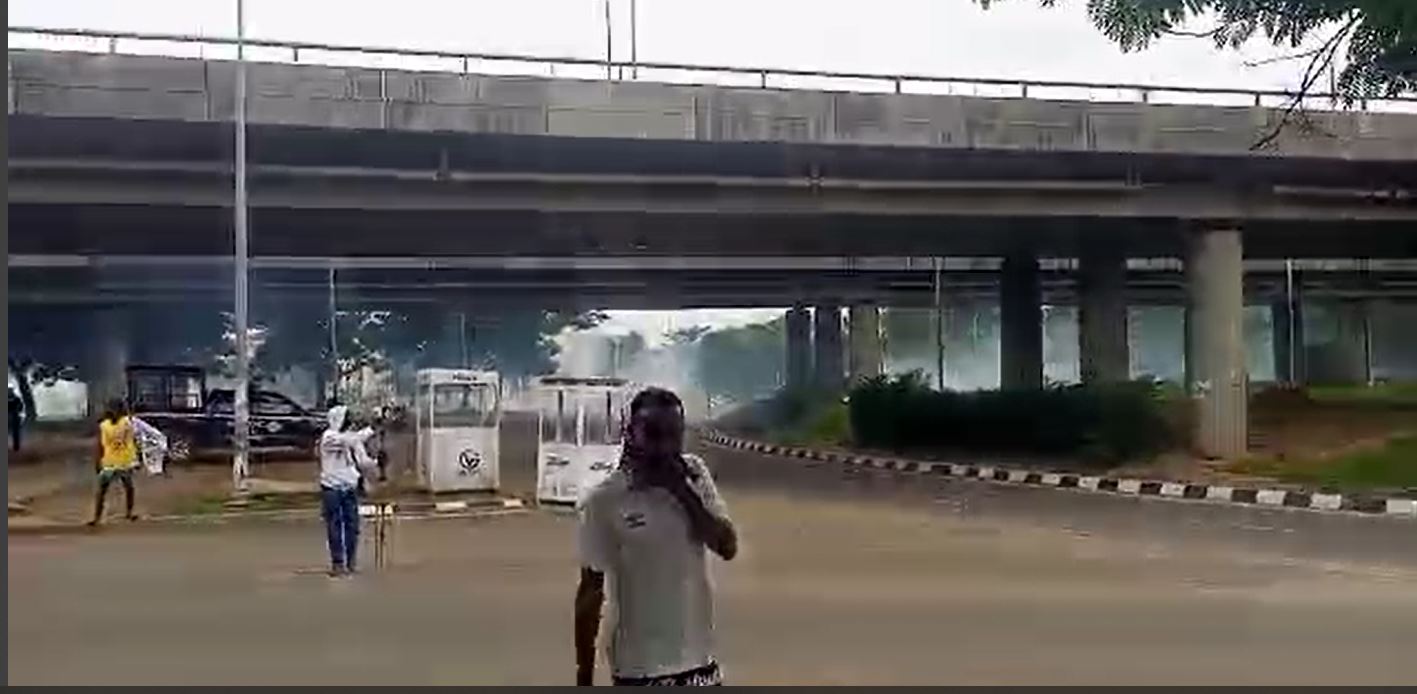
In a dramatic turn of events, police officers deployed tear gas to disperse protesters gathering at the Berger roundabout in Abuja. This move also affected journalists who were covering the protest, as they too were targeted and tear-gassed at a different location.
The incident unfolded as protesters were assembling to voice their concerns. The deployment of tear gas by the police was aimed at breaking up the gathering, leading to chaos and disruption in the area. Journalists, present to report on the protest, found themselves caught in the crossfire, experiencing the effects of the tear gas firsthand.
The use of tear gas against both protesters and journalists has raised concerns about press freedom and the right to peaceful assembly. The actions of the police have sparked criticism and drawn attention to the challenges faced by journalists working in such environments.
As the situation develops, calls for accountability and restraint in handling protests are likely to grow, highlighting the importance of protecting journalists and upholding citizens’ rights to protest peacefully.










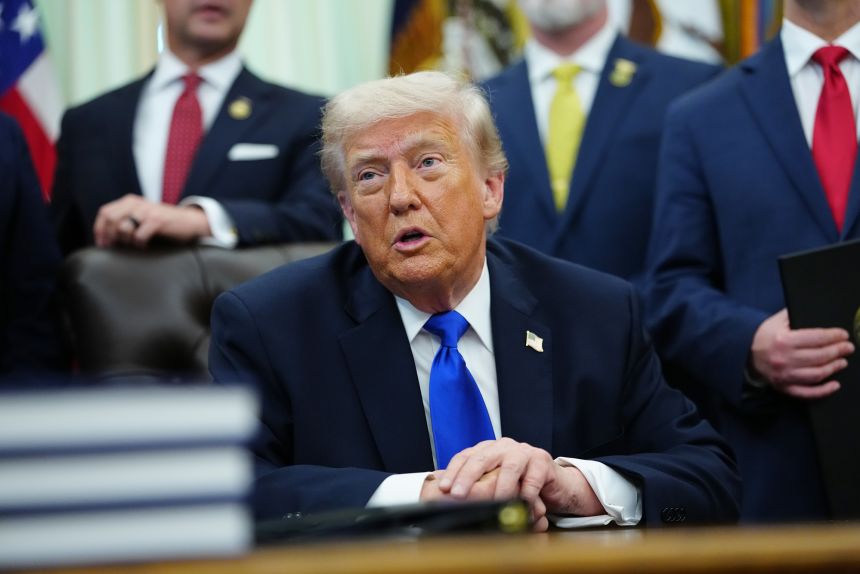
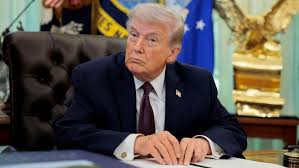
Donald Trump has again expressed dissatisfaction with Iran as legal and political pressure grows over the administration’s military involvement alongside Israel and a key congressional deadline approaches.
Speaking to reporters on Friday, Trump said recent talks with Iran had not yet produced the progress he wanted.
“We just had a conversation with Iran. Let’s see what happens. But, I would say that I am not happy,” he said.
Friday marked the 60th day since Trump formally notified Congress of military strikes against Iran on 2 March. Under the U.S. War Powers Resolution, a president must terminate the use of U.S. armed forces within 60 days of such notification unless Congress grants formal approval or authorises an extension.
The law, passed in 1973 during the Vietnam War era to limit presidential war-making powers under former President Richard Nixon, remains central to the legal debate now facing the White House.
Pete Hegseth defended the administration’s position during Senate questioning, arguing that the ongoing ceasefire between Iran and Israel effectively pauses the legal clock.
“We are in a ceasefire right now, which our understanding means the 60-day clock pauses or stops in a ceasefire,” Hegseth said.
However, Democratic Senator Tim Kaine challenged that interpretation, warning that the administration may be approaching a significant legal confrontation.
“I do not believe the statute would support that. I think the 60 days runs maybe tomorrow, and it’s going to pose a really important legal question for the administration there,” Kaine responded.
A senior administration official insisted that hostilities had “terminated,” stressing that a ceasefire has been in place since early April. Despite the pause in direct conflict, no long-term diplomatic agreement has yet been secured.
Iranian state media, including IRNA, reported on Friday that Tehran had sent a new proposal for negotiations to U.S. officials through intermediaries in Pakistan. Details of the proposal were not made public, and it remains unclear whether Washington has formally received it.
Trump said one reason negotiations have been difficult is that Iran’s leadership remains destabilised following the deaths of several top military commanders during the conflict.
He also revealed that he had been presented with sharply different strategic options by U.S. Central Command, ranging from a major military escalation to a negotiated diplomatic settlement.
“I was briefed with options… from ‘blast the hell out of them and finish them forever’ to ‘make a deal,’” Trump said.
Global markets have been closely watching developments, particularly after Iran’s closure of the Strait of Hormuz caused major disruptions to international oil supply routes. Although oil prices eased slightly following reports of Tehran’s latest proposal, the vital waterway remains effectively closed, continuing to generate significant economic concerns worldwide.
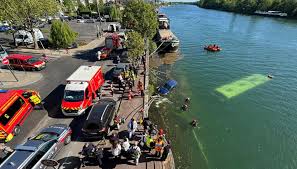
A trainee bus driver drove a vehicle into the River Seine on Thursday morning after reportedly hitting a parked car and losing control near Juvisy-sur-Orge, officials have said.
The incident happened around 20km (12 miles) south of Paris, prompting a major emergency response involving firefighters, police officers and rescue divers.
According to the local transport authority, the driver was nearing the end of her practical training and was completing one of her final supervised driving sessions when the accident occurred.
A spokesperson for Île-de-France Mobilités said the trainee was accompanied by a lead driver, while two additional passengers were also on board at the time of the crash.
Officials confirmed that drug and alcohol tests carried out after the incident were negative, and the exact cause of the crash remains under investigation.
The Essonne Prefecture said all four people on board were successfully rescued from the water. More than 90 firefighters, alongside divers and police personnel, took part in the recovery operation.
Juvisy-sur-Orge Mayor Lamia Bensara Reda said the driver had lost control of the bus near a station close to the riverbank before the vehicle plunged into the Seine and dragged a parked car with it.
“Everyone was quickly rescued and, thankfully, is safe and sound,” she said in a post shared on Facebook.
Witnesses described a rapid response from members of the public before emergency services arrived. A local resident, 55-year-old Elisabeth, said bystanders rushed to help and threw life rings into the river to assist those trapped in the water.
The president of the transport authority has since ordered an internal investigation into the incident to determine exactly what led to the crash and whether additional safety measures may be needed during driver training.
Local politician Claire Lejeune also commented on the incident on X, confirming that the bus had fallen into the Seine with four people on board, including the trainee driver, and praised emergency responders for their swift action.
Authorities are continuing their investigation as recovery efforts at the scene move forward.
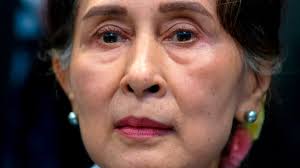
Detained former Myanmar leader Aung San Suu Kyi has been moved from prison to house arrest, according to state media in Myanmar, marking a significant development in her years-long detention following the 2021 military coup.
The 80-year-old Nobel Peace Prize laureate has been held in custody since she was removed from office when the military seized power in February 2021. She was believed to have been detained in a military prison in the capital, Nay Pyi Taw.
A statement from military leader Min Aung Hlaing, who led the coup, said he had “commuted her remaining sentence to be served at the designated residence,” effectively transferring her from prison to house arrest.
State media also released a photograph showing Suu Kyi seated alongside two uniformed personnel, though the image did little to reassure her family.
Her son, Kim Aris, expressed strong scepticism over the announcement, saying he had no independent confirmation that his mother was alive or where she was being held.
He described the released image as “meaningless,” noting that it had been taken in 2022 rather than recently.
“So, until I’m allowed communication with her, or somebody can independently verify her condition and her whereabouts, then I won’t believe anything,” he said.
Before the 2021 coup, Suu Kyi had led Myanmar’s civilian government after her party won a historic election in 2015, following years of military-backed rule and limited democratic reforms.
She had previously spent more than 15 years under house arrest during earlier decades of military rule, becoming an international symbol of peaceful resistance and democracy. Her calm defiance and speeches delivered from her family home inspired supporters both inside Myanmar and abroad.
She was awarded the Nobel Peace Prize in 1991 for her non-violent struggle for democracy and human rights.
Following the coup, she was sentenced to 33 years in prison on multiple charges ranging from corruption to election fraud—charges her supporters and international observers widely described as politically motivated. Her sentence has since been reduced several times.
However, Suu Kyi’s global reputation had already been significantly damaged before the coup. Her decision to defend Myanmar at the International Court of Justice against accusations of genocide over the military’s 2017 campaign against the Muslim Rohingya population drew widespread international criticism.


Trump Announces 25% Tariff on EU Cars

Zayn Malik cancels US tour Plans After Hospital Recovery

Trump Voices Fresh Frustration With Iran as War Powers Deadline Draws Near


-
 News1 week ago
Hundreds of Wildfires Rage Across Florida and Georgia, Forcing Evacuations
-
 News1 week ago
Iran says reopening Strait of Hormuz ‘impossible’ amid US blockade
-

 Entertainment1 week ago
MrBeast’s Company Faces Lawsuit Over Sexual Harassment Allegations
-

 Sports1 week ago
Manchester City Go Top as Burnley Relegated After Turf Moor Defeat
-
 News1 week ago
Donald Trump has announced that the Israel-Lebanon ceasefire has been extended by three weeks.
-

 Sports1 week ago
Injured Lamine Yamal ‘expected to be fit’ for World Cup
-

 News1 week ago
Five Critically Injured After Head-On Train Collision in Denmark
-

 Sports6 days ago
Sessegnon Strike Lifts Fulham’s European Hopes as Villa Stumble