
News
Global Travel and Banking Disrupted by Major Cybersecurity Incident

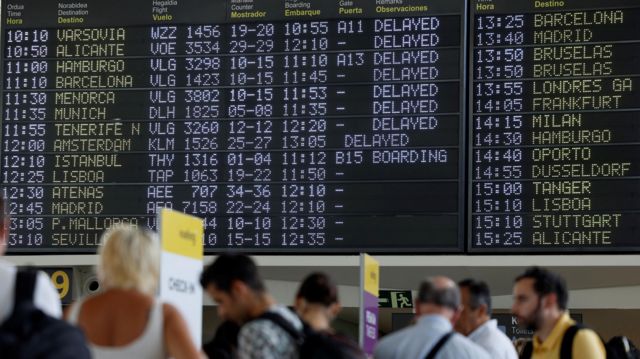
A massive cybersecurity incident has disrupted travel and banking services worldwide, causing chaos and delays. Approximately 110,000 commercial flights were scheduled globally today, but as of 11:00 BST, 1,390 flights have been cancelled, according to aviation analytics company Cirium. Here is the current breakdown of flight cancellations by country:
- United States: 512 flights
- Germany: 92 flights
- India: 56 flights
- Italy: 45 flights
- Canada: 21 flights
Cybersecurity experts have identified the source of the problem as a faulty update from Crowdstrike, a well-known cybersecurity vendor. The update has caused systems to “blue screen” and crash, preventing computers from restarting and receiving the necessary fix.
Kevin Beaumont, a cybersecurity researcher, explained the complexity of resolving the issue: “As systems no longer start, impacted systems will need to be started in ‘Safe Mode’ to remove the faulty update. This is incredibly time-consuming and will take organisations days to do at scale. Essentially, we have one of the world’s highest impact IT incidents caused by a cybersecurity vendor.”
Microsoft has acknowledged the widespread impact of the incident, stating that while the “underlying cause” of the mass IT outage has been fixed for its apps, there is still “residual impact” affecting some services. The issue was initially attributed to “an update from a third-party software platform,” which has now been confirmed to be Crowdstrike.
As organizations worldwide work to restore their systems, the ripple effects of the disruption continue to affect various sectors. The process of restarting systems in Safe Mode and removing the faulty update is expected to take several days, emphasizing the scale and severity of the incident.
Travelers and banking customers are advised to stay informed through official channels and prepare for potential delays and disruptions as efforts to resolve the issue continue.
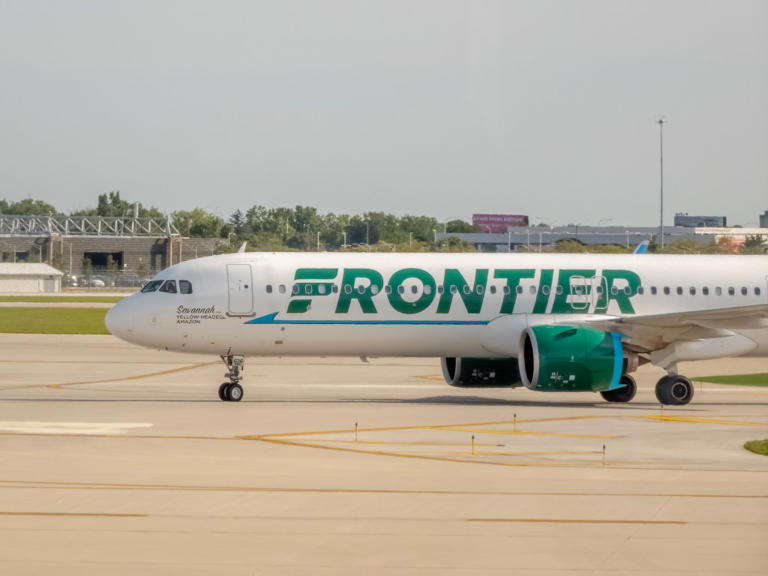
A passenger plane operated by Frontier Airlines struck and killed a person who had entered a runway at Denver International Airport late Friday night, forcing an emergency evacuation of more than 220 passengers after an engine fire broke out.
Air traffic control audio captured the dramatic moments after the collision as the pilot of Frontier Flight 4345 informed controllers: “We just hit somebody.”
“We’re stopping on the runway,” the pilot added before reporting an engine fire onboard the aircraft.
The flight, an Airbus A321 bound for Los Angeles International Airport, was preparing for departure at around 11:00pm local time when it struck the individual.
According to authorities, the person had jumped over an airport perimeter fence just two minutes before the collision and was seen walking across the runway moments before impact.
The aircraft was carrying 224 passengers and seven crew members at the time. The pilot later informed the control tower there were “231 souls on board.”
Smoke was seen inside the cabin after the incident as flames erupted near the aircraft’s right wing. Emergency crews from the Denver Fire Department quickly extinguished the fire.
All passengers were evacuated using inflatable emergency slides as a precaution.
Airport authorities said 12 passengers suffered minor injuries during the evacuation, while five were transported to local hospitals. Their conditions have not been disclosed.
US Transportation Secretary Sean Duffy said the aircraft was travelling at high speed during the incident.
“Late last night, a trespasser breached airport security at Denver Int’l Airport, deliberately scaled a perimeter fence, and ran out onto a runway,” Duffy said in a statement.
“No one should EVER trespass on an airport,” he added.
Commercial passenger aircraft typically reach speeds of between 150mph and 180mph during take-off.
Denver International Airport confirmed the individual who died was not believed to be an airport employee and said inspections found the airport perimeter fence remained intact.
After evacuating, passengers were transported back to the terminal by bus while emergency crews secured the scene. Airport officials later confirmed that most passengers were eventually placed on another Frontier flight.
The runway involved in the incident was temporarily closed as investigations were launched by the Federal Aviation Administration and the National Transportation Safety Board.
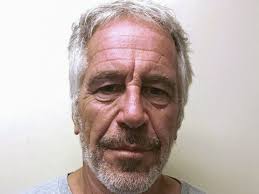
A US judge has ordered the release of a handwritten document said to have been written by disgraced financier and convicted sex offender Jeffrey Epstein shortly before his death in prison in 2019.
The note, which was unsealed on Wednesday, was reportedly discovered by Epstein’s former cellmate, Nicholas Tartaglione, after Epstein allegedly attempted suicide in July 2019, about a month before he was later found dead in his jail cell.
Authorities ruled Epstein’s death a suicide at the time as he awaited trial on federal sex-trafficking charges, though the case has remained the subject of widespread public scrutiny and conspiracy theories.
According to the newly released court filing, the handwritten note contains several short statements, including: “They investigated me for month – FOUND NOTHING!!!” and “It is a treat to be able to choose one’s time to say goodbye.”
The note also reportedly says: “Watcha want me to do – Bust out cryin!! NO FUN – NOT WORTH IT!”
The document, consisting of just seven handwritten lines, offers limited context and leaves uncertainty about its intended meaning.
The note had previously been sealed as part of criminal proceedings involving Tartaglione, who was being held in the same jail unit as Epstein while awaiting trial for four murders. Tartaglione, a former police officer, was later convicted in the killings.
Epstein had at one point accused Tartaglione of assaulting him in jail, allegations Tartaglione denied. The former inmate publicly discussed the existence of the note during a podcast appearance last year.
Court filings released alongside the note included a May 2021 letter from former Tartaglione attorney John A Wieder, who described the document as “the original” note that US District Judge Kenneth M Karas had ordered submitted to the court.
The United States Department of Justice did not immediately comment on the release of the document.
Epstein, who had longstanding connections to wealthy and influential figures, was arrested in 2019 on charges of sexually exploiting underage girls. His death inside a Manhattan federal jail before trial ended the criminal proceedings against him but intensified public interest in the broader investigation surrounding his associates and activities.
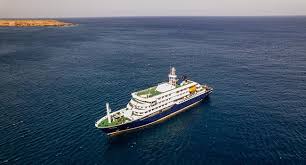
Health authorities are intensifying efforts to trace passengers exposed to hantavirus following an outbreak aboard the expedition cruise ship MV Hondius that has left three people dead and several others ill after the vessel travelled through remote regions of South America.
The outbreak has sparked an international response as passengers from the ship have already returned to countries including the UK, South Africa, the Netherlands, the United States and Switzerland.
According to health officials, three passengers died either while onboard or after leaving the ship, while four others were medically evacuated for treatment. The World Health Organization confirmed that eight cases linked to the vessel — three confirmed and five suspected — have so far been identified.
Despite the seriousness of the outbreak, the WHO stressed that the virus does not pose the same level of global threat as highly contagious respiratory diseases.
“This is not Covid, this is not influenza, it spreads very, very differently,” said Maria Van Kerkhove during a briefing on Thursday.
Experts believe the outbreak involves the Andes strain of hantavirus, one of the rare hantavirus strains capable of spreading between humans. However, officials say the risk of widespread international transmission remains low because the virus is far less contagious than illnesses such as COVID-19 or Measles.
Hantavirus infections are usually linked to rodents, with people becoming infected after inhaling virus particles from rodent urine, saliva or droppings. Investigators are still working to determine how the outbreak on board began.
The cruise had reportedly visited remote wildlife areas in South America, raising the possibility that a passenger may have been exposed to the virus before boarding or during excursions ashore.
Health experts say some of the cases on the ship may have resulted from close human contact in the vessel’s confined environment. Cruise ships often involve shared dining spaces, cabins and indoor facilities that can increase the risk of infection spreading among passengers.
Previous outbreaks involving the Andes strain in parts of Argentina and Chile have shown that human-to-human transmission can occur, although usually after prolonged close contact.
Symptoms of hantavirus often begin with fever, fatigue, headaches and muscle aches before progressing in severe cases to breathing difficulties and serious lung complications.
Authorities across several countries are now monitoring passengers and close contacts as part of efforts to prevent further spread while reassuring the public that the overall risk remains low.


Frontier Airlines Plane Strikes and Kills Runway Trespasser During Take-Off at Denver Airport

Shakira Unveils Official Song for 2026 World Cup Featuring Burna Boy

Valverde Hospitalised Following Alleged Clash With Tchouameni


-

 News1 week ago
Aung San Suu Kyi Moved to House Arrest as Myanmar Military Announces Sentence Change
-

 News1 week ago
Trump Voices Fresh Frustration With Iran as War Powers Deadline Draws Near
-

 General1 week ago
Stephen Fry Seeks Damages After Serious Fall at London Tech Conference
-

 Entertainment1 week ago
Zayn Malik cancels US tour Plans After Hospital Recovery
-
 News1 week ago
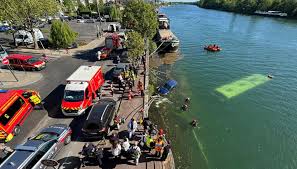
Trainee Bus Driver Rescued After Vehicle Plunges Into River Seine
-

 Business1 week ago
Trump Announces 25% Tariff on EU Cars
-
 News5 days ago
Second hantavirus case confirmed after deaths on Atlantic Cruise Ship
-

 Entertainment5 days ago
Dolly Parton Cancels Las Vegas Residency as She Focuses on Recovery