
Politics
UK Foreign Secretary David Lammy Visits India to Strengthen Trade and Diplomatic Ties

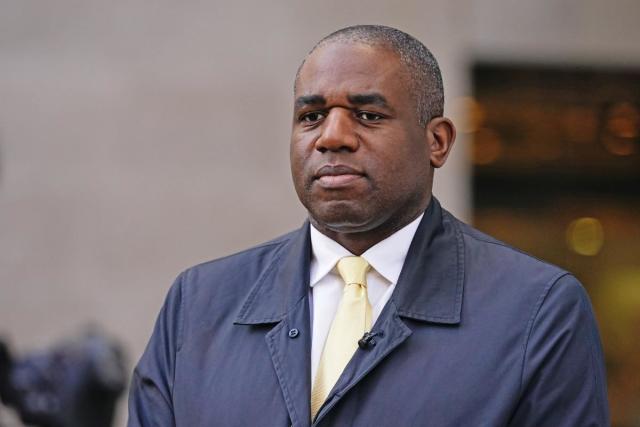
Britain’s Foreign Secretary, David Lammy, has arrived in India to engage in crucial talks with ministers and business leaders. This visit marks an important step in the UK’s efforts to reset its relationship with India and the broader Global South.
Lammy has hailed India as “an indispensable partner” in the UK government’s initiatives to bolster economic growth and address climate change challenges. With India’s economy poised to become the third-largest in the world, the newly elected Labour government, led by Sir Keir Starmer, is keen to secure a free trade agreement to enhance economic ties.
Lammy’s visit, only three weeks into the Labour administration, underscores the strategic importance of India in the UK’s foreign policy and trade agenda. As the UK looks to stimulate economic growth, fostering stronger business relations with India is seen as a key priority.
Negotiations for a free trade agreement with India have been stalled for months despite ongoing discussions over the past two years. In contrast, India successfully signed a free trade agreement with Norway, Switzerland, Iceland, and Liechtenstein in March, highlighting the potential for non-EU states to establish robust economic partnerships with India.
Lammy emphasized that the UK’s commitment to securing a trade deal with India is a foundational step in Britain’s broader ambitions. “Reinforcing the UK’s commitment to secure a deal would be a floor, not a ceiling, to Britain’s ambitions,” he stated.
Under the former Conservative government, sources indicated that trade talks with India had reached their “final but trickier” stages. Achieving a trade deal with India is viewed as one of the most significant potential agreements for the UK post-Brexit.
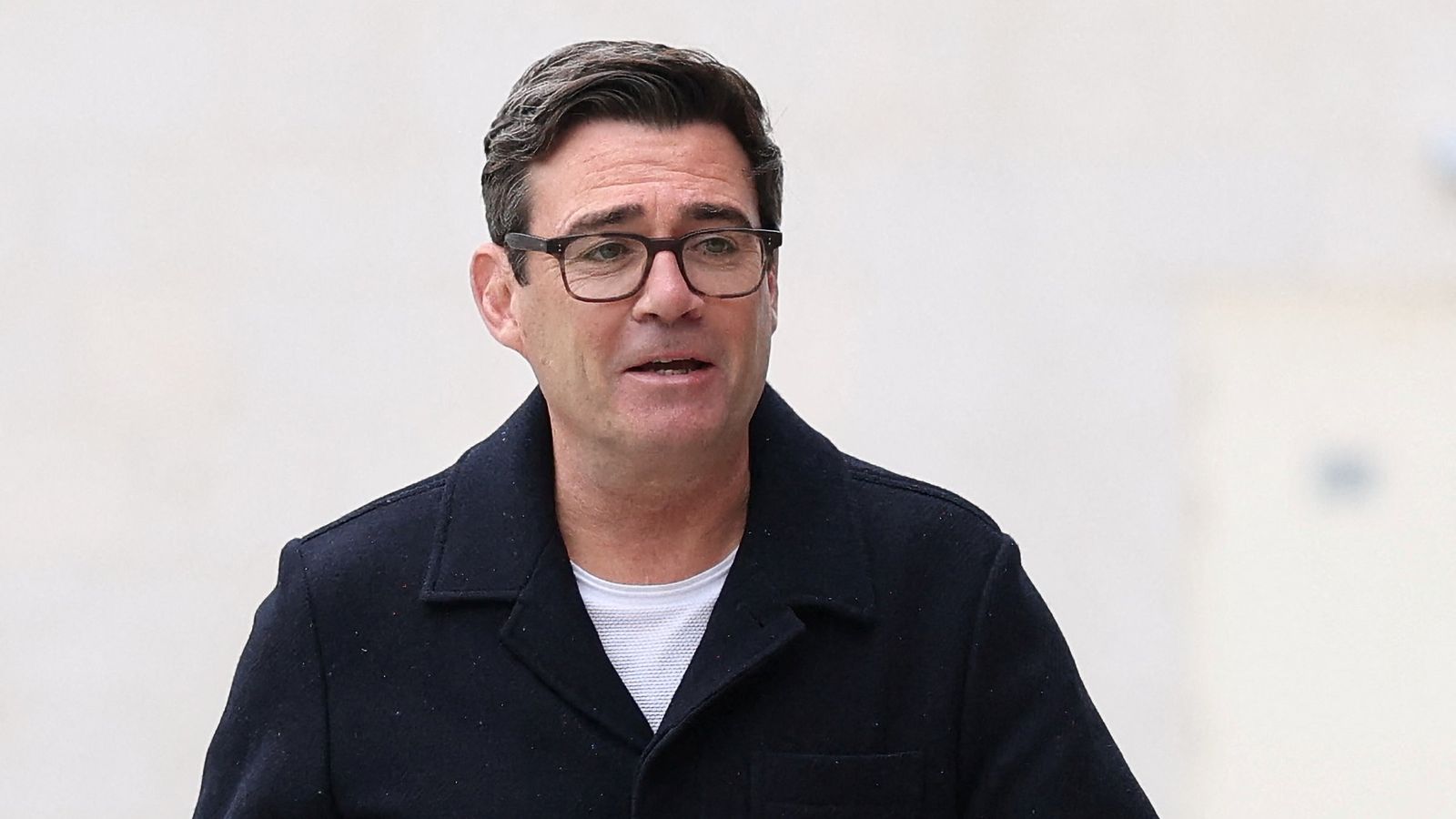
Josh Simons has announced he will resign as MP for Makerfield in order to allow Andy Burnham the opportunity to return to Parliament.
In a statement released on Thursday, Simons said stepping down had “not been an easy” decision but insisted the move was necessary for both his constituency and the country.
“Today, I am putting the people I represent and the country I love first and will be resigning as MP for Makerfield,” Simons said.
“I am standing aside so that Andy Burnham can return to his home.”
Simons praised Burnham as the figure best placed to lead major reforms within the Labour Party and restore public confidence in politics.
“If elected, Andy could drive the change our country is crying out for,” he said.
The Labour MP warned that the party had lost the trust of many traditional supporters and argued that urgent reforms were needed.
“We have lost the trust of those our party was built to serve,” Simons stated.
“It is my unwavering belief that nothing short of urgent, radical, courageous reform will make a difference.”
He added that Labour faced a critical moment politically, saying the party had “one last chance” to deliver meaningful change by driving economic growth, strengthening border security and reforming government institutions.
“That is the fight. I believe Andy is the one to lead it,” Simons said.
Burnham, a former cabinet minister and ex-Labour leadership contender, currently serves as mayor of Greater Manchester and remains one of the party’s most prominent figures outside Westminster.
No official announcement has yet been made regarding whether Burnham intends to contest the Makerfield seat.
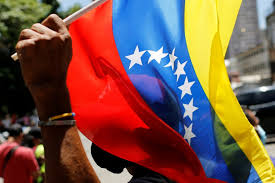
The United Nations says it has received troubling reports that detainees in Venezuela continue to face torture and mistreatment even after the removal of former president Nicolás Maduro earlier this year.
Speaking to the United Nations Human Rights Council, UN High Commissioner for Human Rights Volker Türk said allegations indicate that serious human rights abuses may still be taking place inside the country’s detention system.
Maduro was captured by United States Armed Forces during a January operation and later transferred to US custody to face charges related to narcotics trafficking.
Following his removal, former vice-president Delcy Rodríguez assumed power and has introduced an amnesty law aimed at freeing detainees. Türk welcomed the measure but warned that deeper human rights problems remain.
“Structural and systemic human rights concerns have persisted,” he said.
According to Türk, many Venezuelans remain in arbitrary detention despite the amnesty legislation passed last month. He noted that at least one child is among those reportedly being held.
Authorities in Caracas say thousands of people have been granted freedom under the new law. The Venezuelan parliament — dominated by Maduro loyalists — claims more than 7,700 individuals have been released or had restrictions lifted.
However, the prisoners’ rights organisation Foro Penal says it has been able to verify the release of fewer than 700 detainees so far and estimates that more than 500 people remain imprisoned for political reasons.
Türk highlighted the gap between official figures and independent assessments, urging the Venezuelan authorities to provide more transparency.
His office has requested an official list of detainees released under the amnesty law as well as unrestricted access to several detention facilities, but those requests have so far not been granted.
The UN also says it has received information indicating continued abuse of prisoners at detention centres including Rodeo 1 detention centre and Fuerte Guaicaipuro.
Türk’s remarks come shortly after the Independent International Fact‑Finding Mission on Venezuela updated the Human Rights Council on its latest findings.
The mission reported that Venezuela’s repressive state structures remain largely intact despite Maduro’s removal and that institutions linked to previous abuses are still operating.
In earlier investigations, the mission documented numerous cases in which detainees were subjected to torture, sexual violence and other cruel or degrading treatment inside Venezuelan detention facilities.
Venezuelan officials have repeatedly rejected such accusations, describing previous UN reports as politically motivated and driven by hostile interests.

The race to replace former Georgia congresswoman Marjorie Taylor Greene is heading to a runoff after no candidate secured a majority in Tuesday’s special election.
Republican candidate Clay Fuller, who received the backing of US President Donald Trump, is projected to face Democrat Shawn Harris in the runoff to represent Georgia’s 14th congressional district.
The two candidates emerged from a crowded field of 17 contenders competing for the seat.
Trump gave Fuller his “complete and total endorsement” in a post on Truth Social and reiterated his support during a rally in Rome, Georgia last month.
Tuesday’s vote is being seen as an early test of Trump’s political influence ahead of the upcoming 2026 United States midterm elections scheduled for November.
Speaking on election night, Fuller credited Trump for his strong showing.
“For those of you who questioned how important Donald J Trump is to this country, to Georgia 14, and the state of Georgia, you see what this man means to this community, what he means to the people in this country, and what he means to the MAGA movement,” said Fuller, a former district attorney.
The runoff election between Fuller and Harris is scheduled for 7 April.
The winner will serve out the remainder of Greene’s congressional term, which ends in January. However, the victor will immediately need to begin campaigning again to secure a full term during the November midterms.
Harris finished with the highest vote total on Tuesday night, likely benefiting from a split among Republican voters across the large number of GOP candidates in the race.
In the runoff, Harris will face only Fuller, who is expected to consolidate Republican support.
By Wednesday morning, Trump had already moved to rally support behind Fuller.
“Clay Fuller is going to be a fantastic Congressman in representing the Great State of Georgia,” Trump wrote on Truth Social. “Now we have to be careful and finish it off. MAKE AMERICA GREAT AGAIN!!!”
Democrats have also begun mobilising support for Harris. Former presidential candidate Pete Buttigieg congratulated him in a message posted on X.


Why I Believe Portugal or Brazil Will Win the 2026 FIFA World Cup

Premier League Record Holder James Milner Retires After Remarkable 24-Year Career

Rugby League Great John Kear Dies Aged 71


-
 News1 week ago
Marco Rubio Says US-Iran Deal Could Come Monday
-
 Entertainment1 week ago
BTS Triumph at American Music Awards as Black Eyed Peas Reunite
-

 Tech1 week ago
Ferrari Unveils First Fully Electric Car
-

 News1 week ago
Oil Prices Fall on Hopes of US-Iran Peace Deal
-

 News1 week ago
Four Killed After School Minibus Hit by Train in Belgium
-

 Sports5 days ago
Sinner Shock Exit Blows French Open Wide Open After Five-Set Defeat
-

 Sports6 days ago
Manchester United Move Closer to Signing Ederson in £38m Midfield Deal
-
 News6 days ago
New Hamas Military Commander Killed in Gaza City Strike