
News
Prosecutors Suggest Delaying Trump Sentencing Until Post-Presidency


New York prosecutors have indicated they will oppose efforts by President-elect Donald Trump to overturn his criminal conviction but are open to deferring his sentencing until the end of his upcoming presidential term in 2029.
The Manhattan district attorney’s office filed a motion urging Justice Juan Merchan to consider postponing Trump’s sentencing, currently set for November 26, while rejecting any dismissal of the conviction. Prosecutors suggested deferring the proceedings to balance constitutional concerns surrounding the conviction of a sitting president.
Trump was found guilty in May of falsifying business records in connection with alleged attempts to conceal a potential sex scandal during his 2016 presidential campaign. The case, the only one of four criminal prosecutions against Trump to reach a guilty verdict, has become a legal flashpoint as he prepares for his second term in the White House.
Trump’s legal team argues for the conviction’s dismissal, citing presidential immunity following a U.S. Supreme Court ruling earlier this year that grants broad protections for official acts. Prosecutors countered that the charges are unrelated to presidential duties and predate the ruling.
Mitchell Epner, a former prosecutor, commented that the DA’s proposal essentially “pauses the case until after Trump leaves office,” emphasizing that it avoids dismissal while addressing constitutional concerns.
If accepted, this proposal could delay Trump’s sentencing until after January 20, 2029, when his presidential term concludes. Legal experts, including former Manhattan prosecutor Diana Florence, anticipate that the November hearing will likely be rescheduled.
Potential sentences range from fines and probation to a maximum of four years in prison. However, with Trump’s impending inauguration and constitutional questions at play, the prospect of any immediate legal repercussions remains uncertain.
Meanwhile, Trump spokesperson Steven Cheung declared the situation a “total and definitive victory,” although Justice Merchan has yet to issue a ruling on the matter.
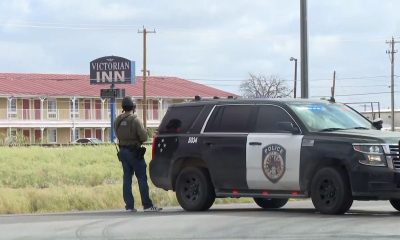
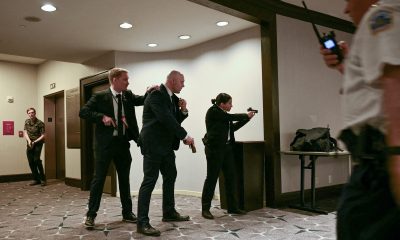







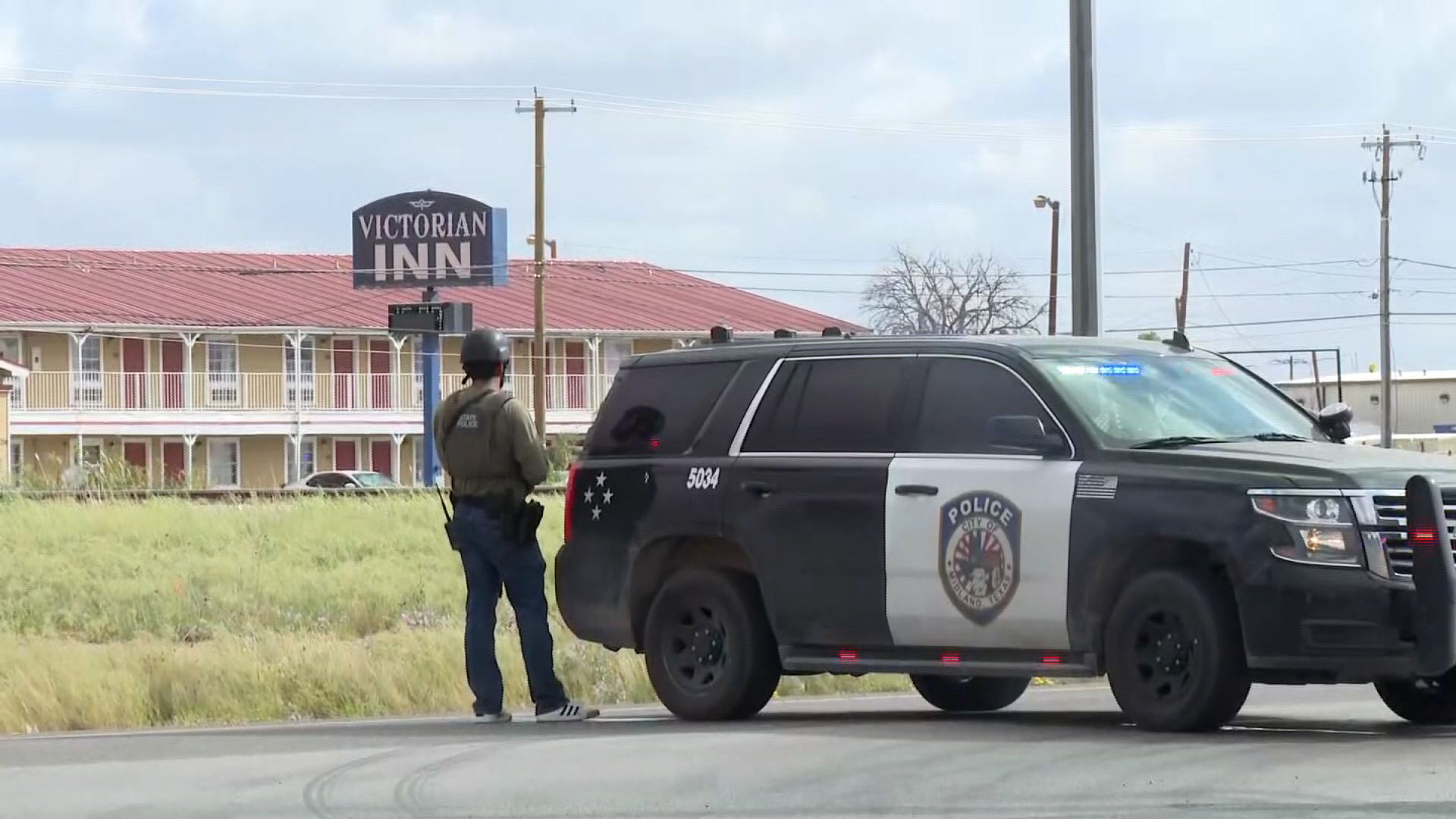
One person was killed and at least 10 others were wounded in a shooting incident in Midland, Texas, on Friday, prompting a large-scale response from law enforcement authorities.
Police initially engaged in a standoff with the suspected gunman, but later confirmed that the incident had been resolved and that the suspect was dead.
Speaking during a press conference, local officials said there were 11 known victims in total, including the person who was killed. Midland Memorial Hospital confirmed it had received nine victims, four of whom were undergoing surgery. Another injured person was transported to a separate medical facility for treatment.
Midland Mayor Lori Blong expressed sympathy for those affected by the tragedy.
“My heart breaks for the victims and their families,” she said, adding that the community was praying for everyone impacted by the violence as well as the first responders who put themselves at risk to protect residents.
Authorities said the incident began in one part of the city before moving to another area near a veterinary hospital, where the standoff ultimately came to an end. Witnesses reported hearing dozens of gunshots during the ordeal.
A local employee working near the scene told reporters that it sounded as though at least 40 rounds had been fired.
Special Weapons and Tactics (SWAT) teams and multiple law enforcement agencies were deployed to contain the suspect. Shortly afterward, the Midland Police Department announced that the active shooter incident had been resolved and the suspect was confirmed deceased.
Officials have not yet released details regarding the identity or possible motive of the gunman. Information about the victims has also remained limited, although hospital authorities said the five patients not undergoing surgery were listed in stable condition.
Mayor Blong noted that she was not aware of any police officers being injured during the response.
Reacting to the incident, Dan Patrick said Texans were heartbroken by the news and called for prayers for the victims, their families and the Midland community, while also thanking emergency personnel for their bravery.
The latest shooting revives painful memories in Midland, a city of approximately 140,000 residents. In 2019, the community was shaken by another mass shooting when a gunman drove through Midland and nearby Odessa, randomly opening fire and killing seven people while injuring more than two dozen others.
Investigations into Friday’s shooting remain ongoing as authorities work to establish the circumstances surrounding the attack.
Police in South Africa have launched a major manhunt after 12 people were killed and nine others wounded in a mass shooting at an informal settlement in Johannesburg.
The attack occurred late on Tuesday night at the Jumpers Informal Settlement in Cleveland, a suburb east of Johannesburg. According to police, more than 10 heavily armed suspects entered the community and opened fire on residents before escaping in a white Toyota Quantum vehicle.
Authorities said officers responded to reports of an active shooting at about 11:10 p.m. local time. Preliminary investigations indicate that the gunmen were dropped off near a petrol station before entering the settlement through multiple access points and firing at people in different locations.
Police confirmed that eight men and three women died at the scene, while another man later succumbed to his injuries in hospital. At least nine other victims were taken to medical facilities for treatment of gunshot wounds.
Investigators are still working to determine the motive behind the attack. However, members of the local community believe the violence may be linked to ongoing turf wars involving illegal mining groups operating in the area.
During a visit to the scene on Wednesday, provincial police commissioner Tommy Mthombeni said investigators could not rule out a connection to illegal mining activities.
“As you know, this area is adjacent to the illegal mining area. We are having those suspicions,” he told reporters, describing the attack as both “heartless” and “barbaric.”
Illegal mining has become a growing challenge in South Africa, where criminal groups often target abandoned gold mines and sell extracted minerals on the black market. The trade is known for violent rivalries and clashes between competing groups.
The problem has become so serious that earlier this year, Cyril Ramaphosa deployed military personnel to assist efforts aimed at shutting down illegal mining operations in affected communities.
Mass shootings in informal settlements are not uncommon in South Africa and are frequently associated with gang-related violence, criminal disputes, and competition over illicit economic activities. Police have appealed for information from the public as efforts continue to identify and apprehend those responsible for the deadly attack.
News
Belfast Violence Escalates After Knife Attack Leaves Man Blind in One Eye, Suspect Appears in Court
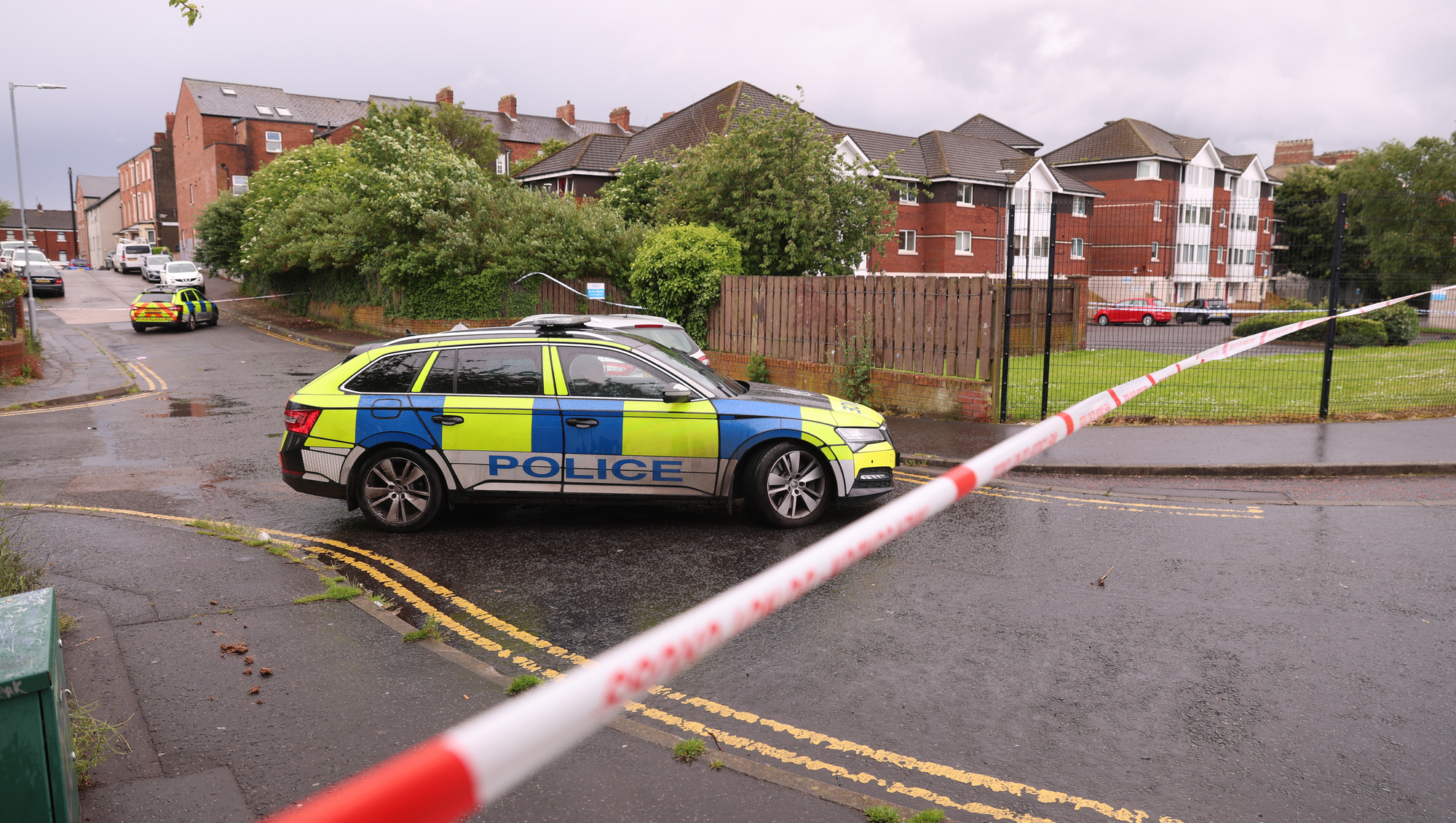
A 30-year-old Sudanese man has appeared before a Belfast court charged with attempted murder following a serious knife attack that left a man with life-changing injuries.
Hadi Alodid, of Duncairn Avenue in north Belfast, appeared via video link from Musgrave Serious Crime Suite. He faces charges of attempted murder, possession of a knife in a public place, and making threats to kill an NHS worker.
The charges stem from an incident that occurred on Kinnaird Avenue in north Belfast on Monday night. The victim, a man in his 40s, remains in hospital receiving treatment for severe injuries to his eyes, neck and back.
During court proceedings, it was revealed that the victim lost his left eye as a result of the attack. Alodid was remanded in custody pending further legal proceedings.
The incident was followed by significant disorder in parts of north Belfast on Tuesday night. Emergency services responded to multiple fires, including two vehicles set ablaze, while several properties and rubbish bins were also set on fire.
An African family became trapped inside a house after its windows were smashed during the unrest. Members of the Northern Ireland Fire and Rescue Service, assisted by a local pastor, helped bring the family to safety.
Witnesses reported that one occupant collapsed into the arms of firefighters while being evacuated. Four fire officers carried the individual to a vehicle, while the remaining family members were able to leave the property on foot, though visibly distressed by the ordeal.
Reacting to the violence, Keir Starmer described the scenes in Belfast as “shocking and completely unacceptable.”
In a statement, the Prime Minister said there could be no justification for the violence and disorder that threatened local communities, nor for those who encouraged it either online or elsewhere. He added that it was clear some individuals had been targeted because of their background and stressed that such actions would not be tolerated.
Starmer said those responsible would face the full force of the law and confirmed he had spoken with police, emergency services and political leaders in Northern Ireland. He urged calm and called on the public to allow law enforcement authorities to continue their investigations and restore order.


Thomas Partey Ruled Out of Ghana’s World Cup Opener After Canada Denies Entry

Tearful Taylor Swift Becomes Youngest Woman Inducted into Songwriters Hall of Fame

One Dead, Ten Others Injured After Gunman Opens Fire in Texas City


-

 Sports5 days ago
My 2026 FIFA World Cup Predictions: Who Will Qualify From Each Group?
-

 Sports5 days ago
Eriksen Recovering Well After On-Field Collapse, Doctor Confirms
-

 News7 days ago
Hegseth Criticises Europe’s Migration Policies in D-Day Speech
-

 News1 week ago
China Bans Four New Zealand MPs Over Taiwan Trip
-

 Sports5 days ago
Somali Referee Omar Artan Denied Entry to United States Ahead of 2026 World Cup
-

 News1 week ago
Israel, Lebanon Agree to Renew Ceasefire if Hezbollah stops attacks
-
 News5 days ago
Pashinyan’s Party Wins Key Armenian Election
-

 Sports7 days ago
West Ham Co-Chairman David Sullivan Steps Down Amid Allegations