
Business
New Champions Emerge in Nathan’s Hot Dog Contest Amid Chestnut Controversy

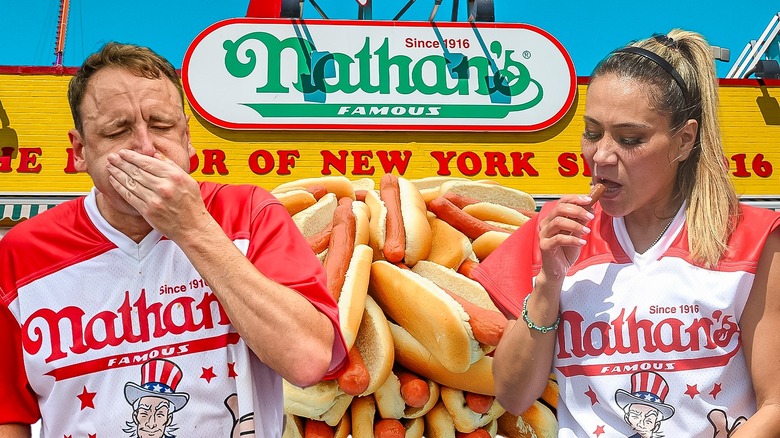
There’s a new top dog in the frankfurter eating world.
Patrick Bertoletti won Nathan’s Hot Dog Eating Contest, the annual competition held on July 4, marking the end of an era after 16-time winner Joey Chestnut’s falling out with the event’s organizer, Major League Eating (MLE).
Bertoletti, 39, from Illinois, consumed 58 hot dogs in this year’s 10-minute event, earning him the Mustard Yellow Belt in the men’s category. Miki Sudo set a new record in the women’s division with 51 wieners downed.
After the dispute between Chestnut and MLE, MLE announced last month that it was parting ways with Chestnut, citing a rule that participants cannot strike endorsement deals with rivals of hot dog maker Nathan’s. MLE alleged that Chestnut had partnered with a plant-based meat alternative company. Chestnut, also known as “Jaws,” has recently begun posting images on Instagram that feature Impossible Foods.
“For nearly two decades we have worked under the same basic hot dog exclusivity provisions,” MLE said in a statement in June. “However, it seems that Joey and his managers have prioritized a new partnership with a different hot dog brand over our long-time relationship.”
Chestnut responded in a statement at the time that he was “gutted to learn from the media” of his banishment after 19 years. The 40-year-old claimed he did not have a contract with MLE or Nathan’s and said the endorsement ban was a departure from the organization’s rules around partnerships in prior years.
“I love competing in that event, I love celebrating America with my fans all over this great country on the 4th, and I have been training to defend my title,” he said last month.
During ESPN’s broadcast of the 2024 contest, the channel frequently mentioned Chestnut and what the competition looks like without him. In one reference, Chestnut was referred to as the “Warren Buffett of the buffet.”
Chestnut fans can still see him in action this holiday.
He’s livestreaming a hot dog eating contest from the Fort Bliss Army Base in Texas as a fundraiser for charity, according to a recent Instagram post. The show begins at 5 p.m. ET on Thursday.
“The 4th wouldn’t be the same if I wasn’t celebrating by eating a whole lot of all-beef hot dogs,” he wrote.










The International Monetary Fund has warned that the global economy faces a serious risk of slipping into recession if the ongoing conflict involving Iran, the United States, and Israel continues and keeps energy prices elevated.
In its latest World Economic Outlook report, the IMF outlined a worst-case scenario in which oil, gas, and food prices surge and remain high through 2026. Under such conditions, global economic growth could fall below 2% next year — a level historically associated with near-recession conditions worldwide.
“This would mean a close call for a global recession, which has happened only four times since 1980,” the IMF noted, pointing to the most recent downturn during the COVID-19 pandemic.
Energy markets have been under intense pressure since the conflict escalated more than six weeks ago, particularly after disruptions to the Strait of Hormuz, a vital shipping corridor for global oil and gas supplies. The collapse of peace talks between Washington and Tehran has further heightened uncertainty.
The IMF cautioned that the most severe economic impact would occur if oil prices average $110 per barrel this year and rise to $125 by 2027. In that scenario, global inflation could climb as high as 6% next year, potentially forcing central banks to raise interest rates to contain price pressures.
IMF Chief Economist Pierre-Olivier Gourinchas said that while defining a global recession can be complex, growth around 2% would feel like one for many people worldwide, with rising unemployment and increased food insecurity in several regions.
Although oil prices briefly approached $120 per barrel during the conflict, they have since eased, trading at around $98.85 as of Tuesday. However, the IMF stressed that the risk of recession would increase significantly if current disruptions persist over an extended period.
A quicker resolution to the conflict could help stabilise the outlook. The IMF said that if fighting subsides in the coming weeks and energy production normalises by mid-year, global growth in 2026 could reach 3.1%, slightly below its earlier forecast of 3.3%.
Among advanced economies, the United Kingdom is expected to be the hardest hit by the energy shock, with growth forecast downgraded to 0.8% this year before a modest recovery to 1.3%.
Oil-exporting nations in the Gulf are also projected to face significant economic strain. Iran’s economy is expected to contract by 6.1% this year, though it could rebound by 3.2% in 2027 if the conflict ends soon.
Elsewhere in the region, Qatar — a major supplier of liquefied natural gas — has seen key infrastructure targeted, including the Ras Laffan industrial complex. Its economy is forecast to shrink by 8.6% in 2026 before rebounding strongly the following year.
Neighbouring Iraq is also expected to suffer a 6.8% slowdown this year, followed by a projected recovery to 11.3% growth in 2027. Meanwhile, Saudi Arabia is forecast to maintain positive growth of 3.1% in 2026, accelerating to 4.5% the year after.

Stefano Gabbana, co-founder of Dolce & Gabbana, has stepped down as chair of the company he established in 1985 alongside Domenico Dolce.
The move comes as the luxury fashion house navigates mounting financial challenges, including a debt burden of approximately €450m (£391m/$528m), alongside a broader slowdown in the global luxury retail market. Reduced consumer spending—particularly in China—has added pressure on high-end brands.
Despite stepping down from the chairmanship, Gabbana will remain deeply involved in the creative direction of the brand, continuing his longstanding collaboration with Dolce in designing collections and maintaining the identity that has defined the label for decades.
Leadership responsibilities have transitioned to Alfonso Dolce, brother of Domenico Dolce and the company’s chief executive, who officially assumed the role of chair on 1 January. Corporate filings indicate that Gabbana communicated his decision internally in December.
In response to shifting market dynamics, Dolce & Gabbana has been expanding into new sectors, including hospitality and home furnishings. Its recent offerings feature high-end lifestyle pieces such as a leopard-print porcelain vase priced at £1,084, reflecting an effort to diversify revenue streams.
Industry observers highlight the scale of the company’s financial obligations. Fashion expert Priya Raj noted that the brand remains privately owned, with both Gabbana and Domenico Dolce each holding significant 40% stakes—leaving open questions about future ownership structures.
Reports in March indicated that the company had engaged financial advisers and entered discussions with creditors as it seeks to manage its debt. In a statement on Friday, the firm confirmed that negotiations with banks are ongoing, declining further comment at this stage.
Despite financial headwinds and past controversies—including criticism earlier this year during Milan Fashion Week over a predominantly white model cast, which drew backlash from figures like Bella Hadid—the brand has demonstrated resilience. Analysts note that its distinctive aesthetic continues to attract a loyal global following, even as industry trends evolve.
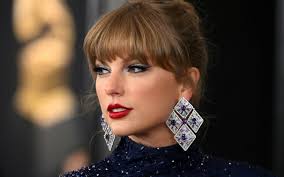
Universal Music Group has received a takeover offer valued at approximately $64.3bn (£48bn), in a potential deal that could reshape the global music industry.
The bid has been made by Pershing Square Capital Management, whose billionaire chief executive Bill Ackman said the proposal would involve a merger and lead to the combined company being listed in the United States. Pershing Square already holds a stake in Universal.
Universal Music, the world’s largest music company, represents a wide roster of global stars including Taylor Swift, Sabrina Carpenter and Kendrick Lamar. It also owns iconic assets such as Abbey Road Studios and major record labels including EMI and Island Records.
The company has yet to respond publicly to the offer.
Ackman praised Universal’s leadership, saying it had built a “world-class artist roster” and delivered strong business performance. He added that the company had successfully adapted to industry changes, particularly by embracing opportunities presented by artificial intelligence while safeguarding intellectual property.
However, he argued that Universal’s stock had underperformed due to factors unrelated to its core business, suggesting these issues could be resolved through the proposed transaction.
Pershing Square’s broader investment portfolio includes stakes in major technology firms such as Google, Meta Platforms and Amazon, as well as Restaurant Brands International, the parent company of Burger King.
Market analysts note that while Universal dominates the global music industry—home to nine of the top 10 recording artists of 2025—its revenue growth is closely tied to streaming platforms like Spotify and Apple Music, where slower-than-expected growth has raised concerns.
Although global music revenues have rebounded in recent years thanks to streaming subscriptions, debates continue over royalty payments to artists. At the same time, the rise of AI-generated deepfake music—where fraudsters imitate established artists—has emerged as a growing challenge for the industry.
In a letter to Universal’s board, Ackman said the company had “dramatically underperformed” key stock indexes, citing uncertainty around a significant stake held by Bolloré Group, controlled by billionaire Vincent Bolloré, as well as delays to a planned New York listing.


Co-ordinated Armed Attacks Shake Mali as Security Forces Respond Across Multiple Cities

Sessegnon Strike Lifts Fulham’s European Hopes as Villa Stumble

Donald Trump has announced that the Israel-Lebanon ceasefire has been extended by three weeks.


-

 News1 week ago
Oil Prices Tumble as Iran Reopens Strait of Hormuz During Ceasefire
-

 General1 week ago
Israel-Lebanon talks will happen today as Leaders Signal Possible Direct Contact
-

 News1 week ago
Strait of Hormuz ‘completely open’ to commercial ships
-
 Entertainment1 week ago
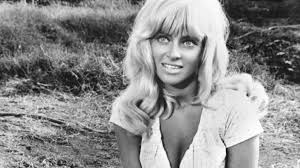
‘Cool Hand Luke’ Actress Joy Harmon Dies Aged 87
-

 Entertainment1 week ago
US Singer D4vd Arrested on suspicion Over Teen Girl’s Death
-
 News1 week ago
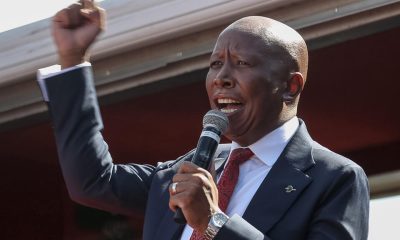
South African opposition figure Malema sentenced to five years in prison
-

 General6 days ago
Father Kills Eight Children in Louisiana Mass Shooting, Police Say
-
 News5 days ago
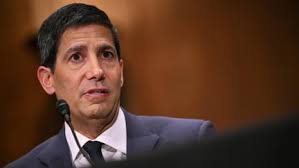
Warsh Says He Won’t Be Trump’s ‘Sock Puppet’ in Fed Role Amid Rate Debate