
News
LASG Begins Construction of Interchange Hubs at Mile 2 and Marina

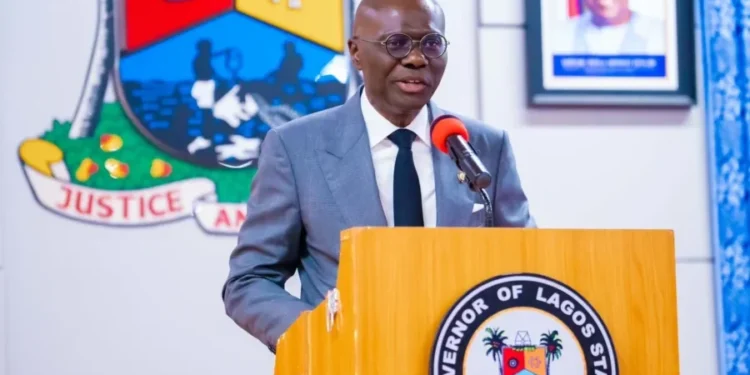
The Lagos State Government has commenced the construction of two major interchange hubs at Mile 2 and Marina, aiming to integrate various modes of transportation and ensure seamless connectivity among rail, water, and road networks. This initiative is part of the state’s efforts to improve public transportation infrastructure.
The groundbreaking ceremony for these interchange hubs was conducted on Tuesday by the Lagos State Commissioner for Transportation, Mr. Oluwaseun Osiyemi. The event also featured officials from the Agence Française de Développement (AFD) and the Lagos Metropolitan Area Transportation Authority (LAMATA).
According to a statement posted on LAMATA’s official X (formerly Twitter) account, the project seeks to enhance public transportation by creating hubs that facilitate the integration of different transport modes.
“The construction of two interchange hubs at Mile 2 and Marina commenced today with the groundbreaking ceremony performed by the Lagos State Commissioner for Transportation, Mr. Oluwaseun Osiyemi, leading Agence Francaise De Developpment (AFD) and the Lagos Metropolitan Area Transportation Authority (LAMATA) officials at the event.
“The interchange project aims to improve public transportation in Lagos by integrating different modes of transportation and providing seamless connectivity among rail, water, and road transportation,” the statement read in part.
During the event, Mr. Osiyemi emphasized the significant benefits these hubs will bring to Lagos residents, including reduced journey times and smoother transitions between different transport modes. He also noted that this project aligns with the traffic management and transportation pillar of the Lagos State T.H.E.M.E.S+ development agenda.
The statement further disclosed that the project is funded through a credit from the Agence Française de Développement (AFD) alongside counterpart funds from the Lagos State Government. AFD’s Country Director for Nigeria, Mr. Xavier Muron, highlighted AFD’s commitment to addressing the transportation challenges in Lagos by investing in key projects like the interchange hubs and Quality Bus Corridors (QBC).
“We can’t wait to see the impact of these hubs, which are set to be a game changer in the transportation sector of Lagos State,” said Mr. Muron.

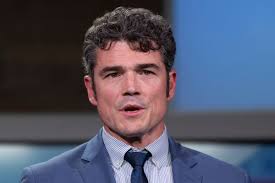
The head of US counterterrorism has stepped down in protest over the ongoing war with Iran, publicly urging President Donald Trump to change direction.
Joe Kent, director of the National Counterterrorism Center, announced his resignation in a letter posted on social media, sharply criticising the administration’s handling of the conflict.
In the letter, Kent argued that Iran posed “no imminent threat” to the United States and claimed the war had been initiated under pressure from Israel and its allies within the US.
Kent, a 45-year-old veteran of US special forces and the Central Intelligence Agency, also called on the administration to “reverse course,” warning of the broader consequences of continued military escalation.
The White House swiftly rejected his claims, maintaining that the president had acted on credible intelligence indicating an imminent Iranian threat.
Speaking from the Oval Office, Trump downplayed Kent’s departure, describing him as a “nice guy” but “weak on security.”
The president added that the resignation letter reinforced his belief that Kent’s exit was justified and reiterated his disagreement with the former counterterrorism chief’s assessment of Iran.
Kent’s resignation marks one of the most senior-level public breaks within the administration over the conflict, highlighting growing divisions in Washington over US policy toward Iran.
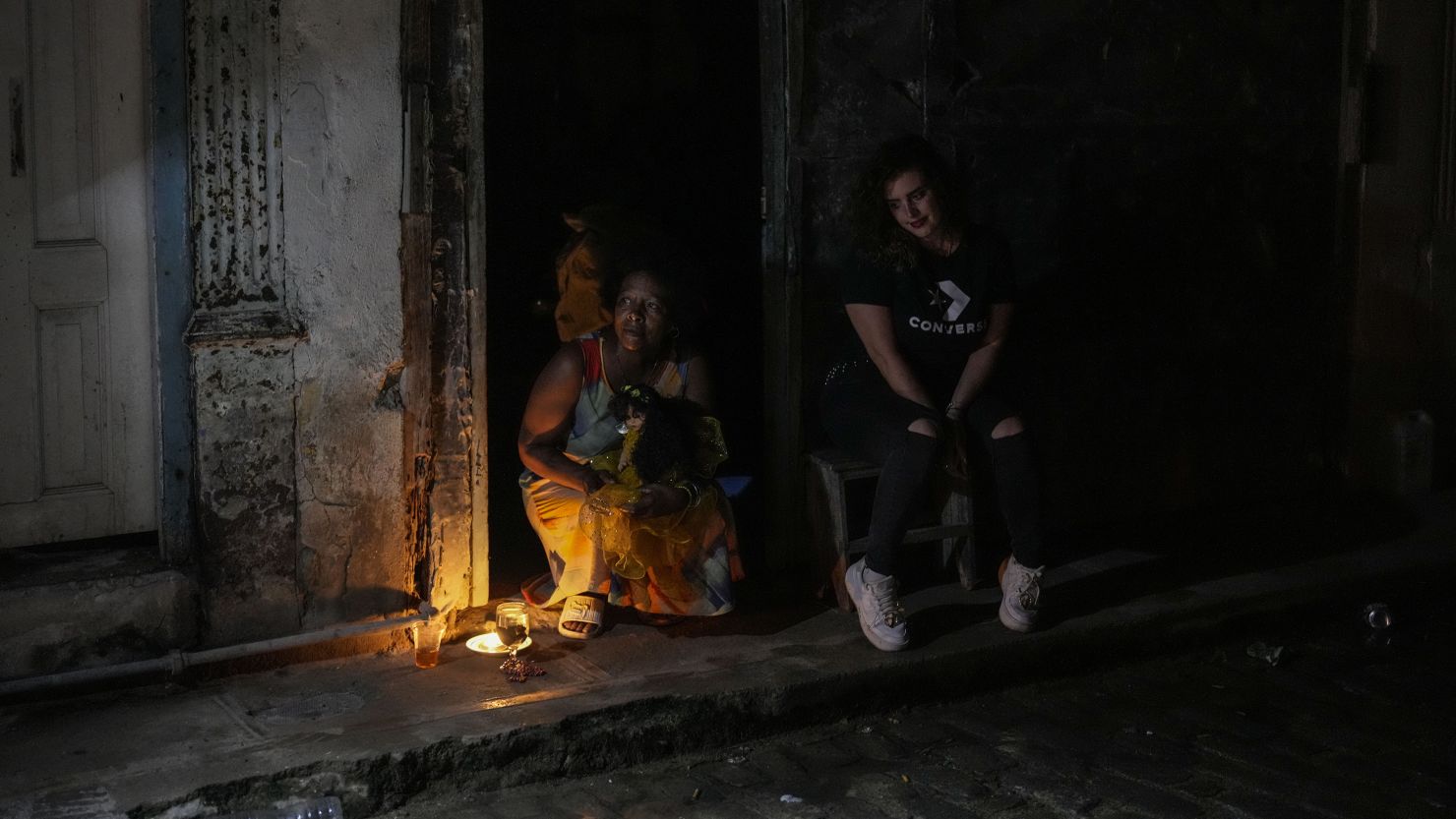
Millions of people across Cuba were left without electricity after the country’s national power grid collapsed on Monday, triggering widespread outages across the island.
Large parts of the country, including the capital Havana, were plunged into darkness, with residents relying on headlamps, generators and battery-powered lights overnight.
State power operator UNE said early on Tuesday that electricity was gradually being restored to several provinces and cities, though the process was expected to take time.
The blackout marks the latest in a series of major power failures affecting the Caribbean nation, where aging infrastructure and persistent fuel shortages have placed significant strain on the electricity system.
Cuba’s energy crisis has been exacerbated by reduced fuel imports, including declining supplies from Venezuela, as well as restrictions linked to policies by the United States targeting oil shipments to the island.
The outage has had a cascading impact on daily life. In many areas, water supply systems stopped functioning due to the lack of electricity needed to power pumps, worsening already difficult living conditions.
The crisis has also sparked public frustration. In central Havana, some residents staged protests, banging pots and pans in a rare display of dissent.
“It is not just the blackout,” said one resident, describing shortages of food, water and fuel, as well as rising prices driven by transportation challenges.
Another resident said the situation had become routine, reflecting the frequency of outages in recent months.
Cuba, home to around 10 million people, relies heavily on imported fuel to sustain its electricity generation. Officials have warned that the country has gone months without receiving major oil shipments, further straining its already fragile grid.
Amid the worsening crisis, Donald Trump has increased pressure on the Cuban government, warning of potential consequences if the country does not “make a deal,” while also suggesting the United States could take a more direct role in its future.
Authorities in Cuba say efforts are ongoing to stabilise the grid and restore full power, as engineers work to prevent further nationwide disruptions.
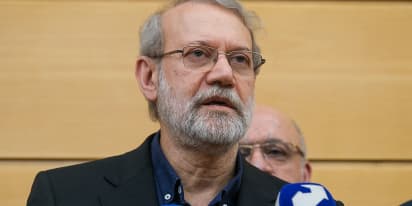
Israel says it has killed Iran’s senior security figure Ali Larijani in a targeted strike, vowing to “continue hunting down” key leaders within the Iranian establishment.
The announcement comes amid a widening escalation between Israel, Iran, and allied forces. According to Israeli officials, the operation is part of a broader effort to dismantle Iran’s top command structure, which has already seen several high-ranking figures killed.
Among those previously reported dead is Iran’s Supreme Leader Ali Khamenei, whose death was announced on 28 February following the first day of coordinated US-Israeli strikes. Also killed in the initial wave were prominent figures including security adviser Ali Shamkhani, defence minister Amir Nasirzadeh, Revolutionary Guards commander Mohammad Pakpour, and armed forces chief of staff Abdolrahim Mousavi.
Israel’s foreign minister Gideon Saar said the deaths of Larijani and Basij commander Gholamreza Soleimani would make “Iranians safer,” arguing that the strikes are weakening what he described as Iran’s “repression mechanism.”
Speaking in Jerusalem, Saar added that while Israel’s actions are aimed at destabilising Iran’s leadership, any ultimate change in government would have to come from within the country. However, he suggested such a shift would likely require external support.
Saar also warned that Iran’s effective obstruction of the Strait of Hormuz has become a “global problem,” echoing comments from US President Donald Trump, who has called on other nations to help stabilise the critical shipping route.


US Counterterrorism Chief Resigns Over Iran War, Urges Trump to ‘Reverse Course’

Nationwide Blackout Leaves Millions in Cuba Without Power After Grid Collapse

Israel says Iran’s security chief Ali Larijani has been killed in strike


-

 Sports1 week ago
Police separate Celtic and Rangers fans after Ibrox pitch invasion
-
 News1 week ago
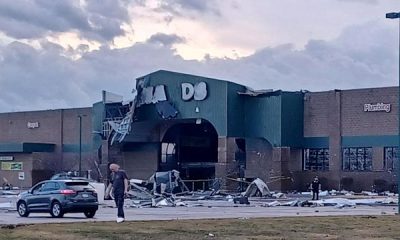
Tornadoes Leave Six Dead, Including 12-Year-Old Boy, as Powerful Storms Strike Michigan and Oklahoma
-
 News1 week ago
Explosion at U.S. Embassy in Oslo May Have Been Terrorism, Norwegian Police Say
-

 Entertainment1 week ago
Woman Arrested After Gunfire Strikes Rihanna’s Beverly Hills Mansion
-

 Sports7 days ago
Trump Says Iran ‘Welcome’ at World Cup Despite Ongoing Conflict
-
 News1 week ago
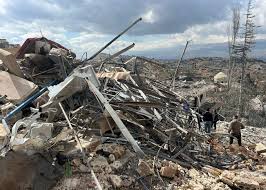
Lebanon Says Nearly 400 Killed in Israeli Strikes as U.S. Warns Iranians to Stay Indoors
-

 News1 week ago
UK MPs Reject Under-16 Social Media Ban but Approve Flexible Government Powers
-
 General1 week ago
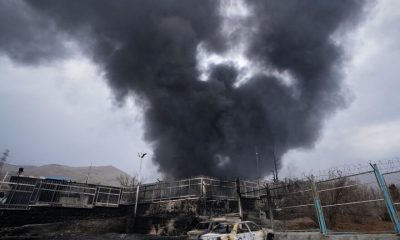
Explosions Reported in Tehran as US Warns of ‘Most Intense’ Day of Strikes on Iran