
Politics
Chelsea and Atletico Madrid Agree on Joao Felix and Conor Gallagher Swap Deal

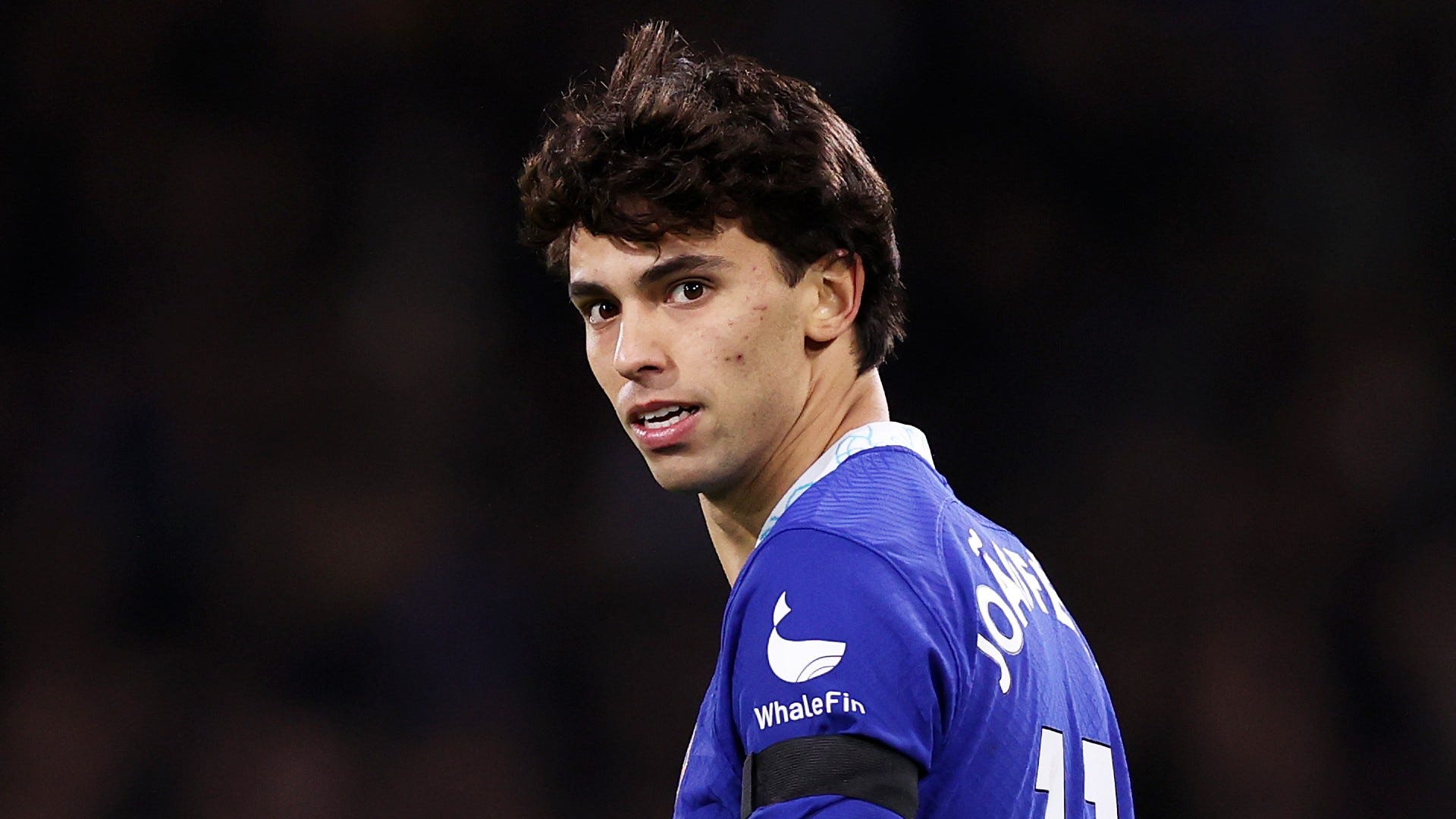
Chelsea have reached an agreement with Atletico Madrid to bring forward Joao Felix back to Stamford Bridge, with midfielder Conor Gallagher moving in the opposite direction as part of the deal. The fee for Felix, though undisclosed, will see the 24-year-old Portugal international sign a six-year contract with an option for an additional season.
Felix, who previously spent a loan spell at Chelsea in 2023, scoring four goals in 20 appearances, is set to rejoin the London club pending a medical. His return marks a significant addition to Chelsea’s attacking options.
In exchange, England international Conor Gallagher is set to join Atletico Madrid on a five-year contract. Gallagher had been training alone at Chelsea’s Cobham training ground after a week of uncertainty surrounding his transfer. His move was initially delayed due to complications with Chelsea’s pursuit of striker Samu Omorodion, which postponed Atletico’s ability to finalize Gallagher’s £33 million transfer.
Gallagher’s switch to Atletico Madrid comes after he was spotted at the Wanda Metropolitano Stadium nine days ago, anticipating the move before returning to London due to the delay.
With this swap deal nearing completion, Chelsea are expected to focus on player sales ahead of the transfer deadline on August 30. The club remains interested in Napoli striker Victor Osimhen, as Napoli continues to pursue a loan deal for Romelu Lukaku. Napoli has reportedly made a second loan offer for Lukaku, which includes a £25.5 million obligation to buy, though this falls short of Chelsea’s £35 million asking price.










The United Nations says it has received troubling reports that detainees in Venezuela continue to face torture and mistreatment even after the removal of former president Nicolás Maduro earlier this year.
Speaking to the United Nations Human Rights Council, UN High Commissioner for Human Rights Volker Türk said allegations indicate that serious human rights abuses may still be taking place inside the country’s detention system.
Maduro was captured by United States Armed Forces during a January operation and later transferred to US custody to face charges related to narcotics trafficking.
Following his removal, former vice-president Delcy Rodríguez assumed power and has introduced an amnesty law aimed at freeing detainees. Türk welcomed the measure but warned that deeper human rights problems remain.
“Structural and systemic human rights concerns have persisted,” he said.
According to Türk, many Venezuelans remain in arbitrary detention despite the amnesty legislation passed last month. He noted that at least one child is among those reportedly being held.
Authorities in Caracas say thousands of people have been granted freedom under the new law. The Venezuelan parliament — dominated by Maduro loyalists — claims more than 7,700 individuals have been released or had restrictions lifted.
However, the prisoners’ rights organisation Foro Penal says it has been able to verify the release of fewer than 700 detainees so far and estimates that more than 500 people remain imprisoned for political reasons.
Türk highlighted the gap between official figures and independent assessments, urging the Venezuelan authorities to provide more transparency.
His office has requested an official list of detainees released under the amnesty law as well as unrestricted access to several detention facilities, but those requests have so far not been granted.
The UN also says it has received information indicating continued abuse of prisoners at detention centres including Rodeo 1 detention centre and Fuerte Guaicaipuro.
Türk’s remarks come shortly after the Independent International Fact‑Finding Mission on Venezuela updated the Human Rights Council on its latest findings.
The mission reported that Venezuela’s repressive state structures remain largely intact despite Maduro’s removal and that institutions linked to previous abuses are still operating.
In earlier investigations, the mission documented numerous cases in which detainees were subjected to torture, sexual violence and other cruel or degrading treatment inside Venezuelan detention facilities.
Venezuelan officials have repeatedly rejected such accusations, describing previous UN reports as politically motivated and driven by hostile interests.

The race to replace former Georgia congresswoman Marjorie Taylor Greene is heading to a runoff after no candidate secured a majority in Tuesday’s special election.
Republican candidate Clay Fuller, who received the backing of US President Donald Trump, is projected to face Democrat Shawn Harris in the runoff to represent Georgia’s 14th congressional district.
The two candidates emerged from a crowded field of 17 contenders competing for the seat.
Trump gave Fuller his “complete and total endorsement” in a post on Truth Social and reiterated his support during a rally in Rome, Georgia last month.
Tuesday’s vote is being seen as an early test of Trump’s political influence ahead of the upcoming 2026 United States midterm elections scheduled for November.
Speaking on election night, Fuller credited Trump for his strong showing.
“For those of you who questioned how important Donald J Trump is to this country, to Georgia 14, and the state of Georgia, you see what this man means to this community, what he means to the people in this country, and what he means to the MAGA movement,” said Fuller, a former district attorney.
The runoff election between Fuller and Harris is scheduled for 7 April.
The winner will serve out the remainder of Greene’s congressional term, which ends in January. However, the victor will immediately need to begin campaigning again to secure a full term during the November midterms.
Harris finished with the highest vote total on Tuesday night, likely benefiting from a split among Republican voters across the large number of GOP candidates in the race.
In the runoff, Harris will face only Fuller, who is expected to consolidate Republican support.
By Wednesday morning, Trump had already moved to rally support behind Fuller.
“Clay Fuller is going to be a fantastic Congressman in representing the Great State of Georgia,” Trump wrote on Truth Social. “Now we have to be careful and finish it off. MAKE AMERICA GREAT AGAIN!!!”
Democrats have also begun mobilising support for Harris. Former presidential candidate Pete Buttigieg congratulated him in a message posted on X.
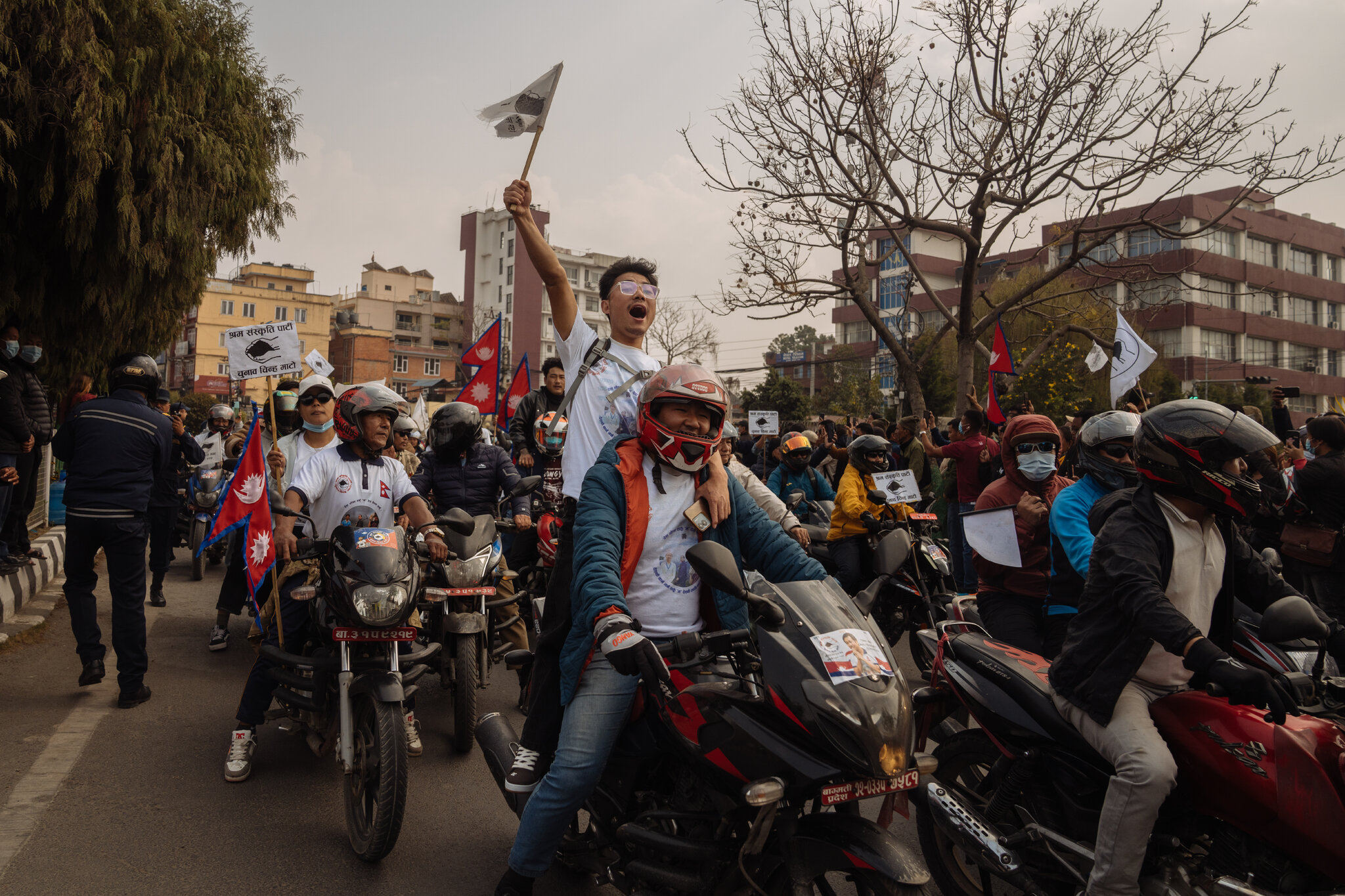
Millions of voters in Nepal have cast their ballots in the country’s first general election since violent youth-led protests toppled the government last September.
The demonstrations, driven largely by members of Generation Z, erupted over widespread concerns about corruption, economic stagnation and social inequality. The unrest turned deadly, with 77 people killed during clashes, many of them protesters shot by police.
The election is widely viewed as a turning point for Nepal’s political future, as established political figures compete against a younger generation of leaders seeking to channel the frustrations of Gen Z voters demanding sweeping reforms.
Votes are being counted for all 275 seats in the country’s parliament, the House of Representatives of Nepal. Officials say the process could take several days, with final results not expected until next week.
Counting is particularly slow due to Nepal’s rugged mountainous terrain, which makes transporting ballot boxes difficult. In addition, votes are counted manually across many districts.
Nearly 19 million people were registered to vote in the 5 March election, including close to one million first-time voters. The Election Commission of Nepal said shortly after polls closed that turnout was expected to reach about 60%.
Despite the country’s tense political climate, voting was largely peaceful. Security forces were heavily deployed nationwide to prevent unrest.
Among the leading figures in the race is former prime minister KP Sharma Oli, who was removed from office during last year’s protests. He is representing the Communist Party of Nepal (Unified Marxist–Leninist) and has insisted the protests were not a rejection of his leadership.
Another major contender is Balen Shah, a former rapper who stepped down as mayor of Kathmandu in January to challenge Oli in the closely watched Jhapa 5 constituency. Shah is running under the banner of the Rastriya Swatantra Party.
Shah avoided direct interaction with journalists on Thursday, appearing briefly in his trademark black sunglasses before moving through a crowd of reporters without comment. Some members of Nepal’s media fear this approach could continue if he were elected to national office.
However, many younger voters say Shah’s energy and outsider status represent the kind of leadership Nepal needs, seeing him as a symbol of political renewal.
Meanwhile, Gagan Thapa of the Nepali Congress said the country’s youth are increasingly frustrated with what he described as “unholy alliances” and poor governance in previous coalition governments. He said his party is paying close attention to the demands of younger voters.
Not everyone is convinced that the election will bring meaningful change. Rakshya Bam, a prominent Gen Z activist involved in last year’s movement, expressed skepticism.
“They want to sell the name of Gen Z and come into power so they are using the term Gen Z movement,” she said. “I don’t have much expectations from the elections.”


Liverpool Reveal Design for Permanent Diogo Jota and Andre Silva Memorial

Philippine Vice-President Sara Duterte Impeached Again

US and French Passengers Test Positive After Deadly Hantavirus Cruise Ship Outbreak


-

 News4 days ago
Frontier Airlines Plane Strikes and Kills Runway Trespasser During Take-Off at Denver Airport
-

 Sports6 days ago
Valverde Hospitalised Following Alleged Clash With Tchouameni
-
 News1 week ago
Second hantavirus case confirmed after deaths on Atlantic Cruise Ship
-

 Entertainment1 week ago
Dolly Parton Cancels Las Vegas Residency as She Focuses on Recovery
-

 News7 days ago
Trump Pauses ‘Project Freedom’ Mission in Strait of Hormuz Days After Launch
-
News6 days ago
WHO Says Global Risk Remains Low Despite Hantavirus Cruise Ship Outbreak
-
 News1 week ago
Deadly Blast at Fireworks Factory in China’s Hunan Province Kills 26
-

 Entertainment1 week ago
Pussycat Dolls Cancel US Tour Dates Amid Weak Ticket Sales