
Business
Binance Covers 90% of $6.3bn Losses Following Major Cryptocurrency Hack


Binance, the world’s largest cryptocurrency exchange, says it has covered 90% of the $6.3bn (£4.7bn) worth of assets stolen in a major cyberattack on Thursday.
The company said the remaining 10% could take longer to recover or replace because of difficulties sourcing the required amounts.
Binance has repeatedly promised to cover all losses resulting from what is suspected to be one of the largest cryptocurrency hacks on record. The exchange said it had set aside more than $6.34bn in company funds to compensate affected users.
In a statement released on Saturday, Binance assured customers that they would not bear the financial consequences of the attack.
“Binance will absorb the financial impact of these stolen funds, not our users,” the company said.
On Sunday, the exchange announced that withdrawals had been restored across several of its networks after being suspended following the breach. It had earlier indicated that withdrawals would resume gradually in phases.
The Federal Bureau of Investigation (FBI) said on Saturday that North Korea was responsible for the cyberattack.
According to the agency, hackers had begun converting the stolen assets into Ethereum, with further transfers expected through decentralised finance platforms and instant cryptocurrency swap services.
However, US President Donald Trump said the government was still investigating the identity of those responsible.
Speaking to reporters on Saturday night, Trump said: “We’re learning about it. We don’t know if it’s North Korea – but if it is, we’ll talk to North Korea about it.”
Binance said it had replenished the stolen funds through a combination of available resources and its corporate treasury.
The exchange added that affected holdings of Bitcoin, Ethereum and Tether, alongside seven other widely traded cryptocurrencies, would be covered under its compensation arrangement.







Dozens of supermarkets across seven European countries have been affected by a cyber-attack targeting refrigeration systems, raising concerns over food safety and security.
Around 40 Delhaize supermarkets in Belgium and Luxembourg were impacted, alongside a smaller number of stores in Sweden, Ireland, the Netherlands, Estonia and Finland.
Belgian refrigeration manufacturer Sabcobel said the affected units had their evaporators switched into defrost mode, causing temperatures to rise. The method is believed to be similar to an attack last month that disrupted hundreds of French supermarkets.
Millions of euros worth of food reportedly had to be discarded following the October incident in France.
Sabcobel chief executive Stephan Moelans told Belgian news agency Belga on Monday that the latest incident was a cyber-attack and that the company had worked overnight to disconnect affected refrigeration units from its network.
He said the company had been working to protect customers’ refrigerators against the vulnerability since the French attack, but warned that physical modifications were required rather than software updates alone.
Most supermarkets across Europe connect their refrigeration systems to the internet, allowing maintenance and troubleshooting to be carried out remotely.
“The simplest solution is to manage the fridges over a secure internet connection. Most of our customers switched to that after the attack in France,” Moelans said.
Reports indicated that temperatures in refrigeration units at several affected stores across Europe had climbed as high as 50C (122F).
Authorities have yet to identify those responsible for the latest attack.
Meanwhile, US authorities are investigating refrigeration malfunctions reported at several American military bases in August, working alongside French officials to determine whether the incidents could be connected.
Belgium and Sweden’s national cybersecurity agencies confirmed they were monitoring the situation.
The UK’s National Cyber Security Centre said it was working with international partners and industry representatives to establish the full details of the incident.
No cyber-attacks involving supermarket refrigeration systems have been reported in the UK.
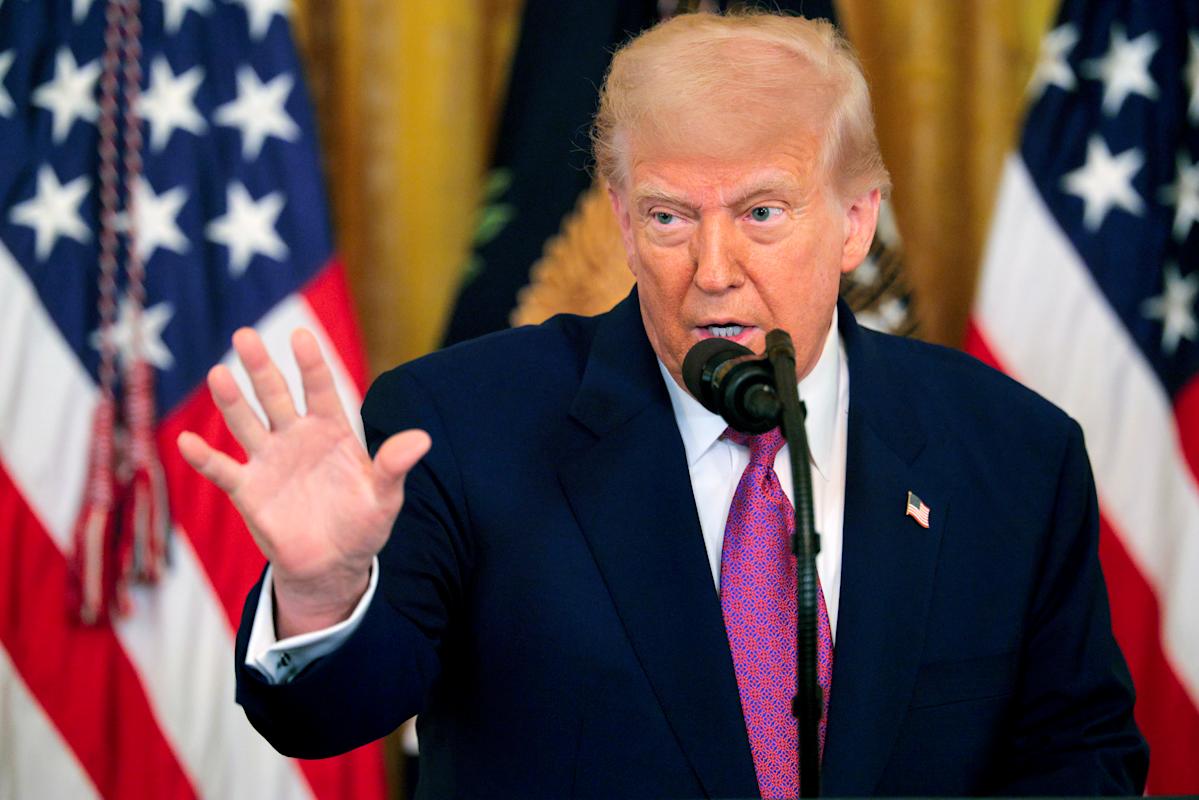
US President Donald Trump has appointed the director of national intelligence to lead a new taskforce focused on artificial intelligence.
Jay Clayton will head the taskforce, which Mr Trump said would coordinate the federal government’s engagement with consumers, companies, public interest groups and “religious organizations”.
The move has drawn criticism from Democrats, including Senator Elizabeth Warren, who has called for stronger regulation of AI.
Mr Trump has opposed laws that could restrict the development of the technology, despite growing debate over the potential risks of AI and its implications for society.
Last week, the president and leaders of major AI companies signed a “morally binding” agreement making the companies responsible for ensuring the safety of their own technology.
Mr Trump, who has sought to promote the term “super intelligence” for AI, wrote on social media that the new “Super Intelligence Force” would coordinate the federal government’s engagement with “Consumers, Public Interest Groups, Religious Organizations, Critical Infrastructure Providers, and Super Intelligence Companies”.
Mr Clayton, a former chair of the Securities and Exchange Commission, will be joined on the taskforce by Andrew Ferguson, head of the Federal Trade Commission, and Emil Michael, undersecretary of defence for research and engineering.
The taskforce will report directly to Mr Trump and White House Chief of Staff Susie Wiles.
Mr Trump has repeatedly rejected calls for a slowdown in AI development, saying the US is leading China in the technology race.
“And, frankly, I want to keep it that way because whoever wins AI, wins,” he said.
President Xi Jinping recently travelled to Washington for a state visit. Days later, Mr Trump ruled out a joint venture between the US and China to develop AI.
“If we do that, we’re going to be giving a lot of secrets that we have that they [China] would want to have, or anybody else,” he said.
The announcement comes amid growing pressure from prominent figures in the technology industry, including executives at OpenAI and Anthropic, for tighter regulation of AI.
Mr Trump first announced the taskforce in September, prompting Senator Warren to criticise the plan.
“Congress cannot meet the pressing threat of AI by just forming another committee or continuing to have drawn-out discussions about it,” she said.
“Let’s actually pass some meaningful regulations on AI to protect people.”

A US ban on several Canadian imports, including alcohol, dairy products and motorcycles, has come into effect as trade tensions between the two neighbouring countries continue.
The latest measure by the Trump administration follows Canada’s introduction of tariffs on a range of US goods earlier this month after trade talks between the two countries broke down.
Canada is not expected to impose further retaliatory measures, with Prime Minister Mark Carney saying earlier this month that the impact of the US import bans on Canada’s economy would be “modest”.
“They call us now and then and we have good conversations about potential deals. But there’s no urgency on our side,” Mr Greer said in an interview with the US network last week.
Tuesday’s ban covers nearly C$1bn ($710m; £530m) worth of Canadian liquor exported to the US, as well as whey products used in protein powder.
Motorcycle exports to the US will also be affected, although Canada exported about 5,000 motorcycles to the US in 2025, worth around C$120m, according to Statistics Canada.
The measures were first announced by President Trump in a series of executive orders signed on 8 September.
In the orders, Mr Trump said the restrictions were in response to what he described as “continued discrimination” by Canada against US dairy, automotive and alcohol products.
Mr Carney said earlier this month that the bans were “relatively modest measures” compared with other trade actions imposed by the US.
He acknowledged, however, that the measures would hurt businesses and sectors directly targeted by the restrictions.
Derek Holt, an economist at Canadian bank Scotiabank, described the measures in an analysis as “face-saving” actions by the US administration rather than substantive measures.
About 93% of Canada’s liquor exports in 2025 went to the US. Spirits Canada, which represents Canadian liquor producers, has warned that the consequences for the industry “could be significant”.
Economists and businesses have also warned that the measures could increase uncertainty over the future of Canada’s trade relationship with the US, its largest trading partner.
The latest restrictions come in addition to US tariffs of 50% on a range of Canadian goods, including dairy, alcohol, steel and aluminium products, and 25% tariffs on Canadian-built cars.
Canada has responded with retaliatory tariffs ranging from 15% to 50% on more than 700 US products, as well as a 25% levy on certain steel and aluminium products.
Most Canadian provinces have also stopped selling US liquor.
Tariffs, which are taxes paid on imported goods, are a central part of Mr Trump’s economic agenda. He has argued that they raise government revenue and encourage consumers to buy American-made products.


Raducanu Set for January Return at United Cup After Six-Month Injury Absence

Pochettino Ready to Accept Manchester United Job as Carrick Faces Sack

Thousands of Schools in Italy, Scotland and Northern Ireland Receive Bomb Threats in Suspected Hoax


-

 Sports1 week ago
Cristiano Ronaldo announces retirement from Portugal national team
-

 News1 week ago
JD Vance Blames Iran War for Republicans’ Crushing Midterm Election Defeat
-

 Sports1 week ago
Jobe Bellingham Joins Brother Jude in England Squad After Impressive Rise
-

 Sports1 week ago
Newcastle’s Dedic questioned by police after being spotted with bow and arrows
-

 News1 week ago
At least 18 flights targeted by bomb threats across Europe
-

 Sports1 week ago
Real Madrid Reach Verbal Agreement to Sign Manchester United Wonderkid Gabriel
-

 News1 week ago
Meghan Markle’s Father Thomas Markle Arrested Over Alleged Child Abuse Material
-

 Entertainment1 week ago
Russell Brand found guilty of rape and three counts of sexual assault